Top Stories; Trump cancels Witkoff, Kushner's Pakistan trip for Iran talks, says regime is suffering from 'infighting'
Top Stories — Sunday, April 26, 2026
What is trending in the USA today? Here is Breaking News:
- Trump cancels Witkoff, Kushner's Pakistan trip for Iran talks, says regime is suffering from 'infighting' — Fox News
- Trump Cancels Witkoff and Kushner’s Trip for Iran Talks, Saying, ‘We Have All the Cards.’ — nyt News
- Semyon Gluzman, 79, Dies; Doctor Dared to Criticize Soviet Psychiatry — nyt News
Trump cancels Witkoff, Kushner's Pakistan trip for Iran talks, says regime is suffering from 'infighting'
Source: Fox News • Published: 4/25/2026, 11:24:19 PM
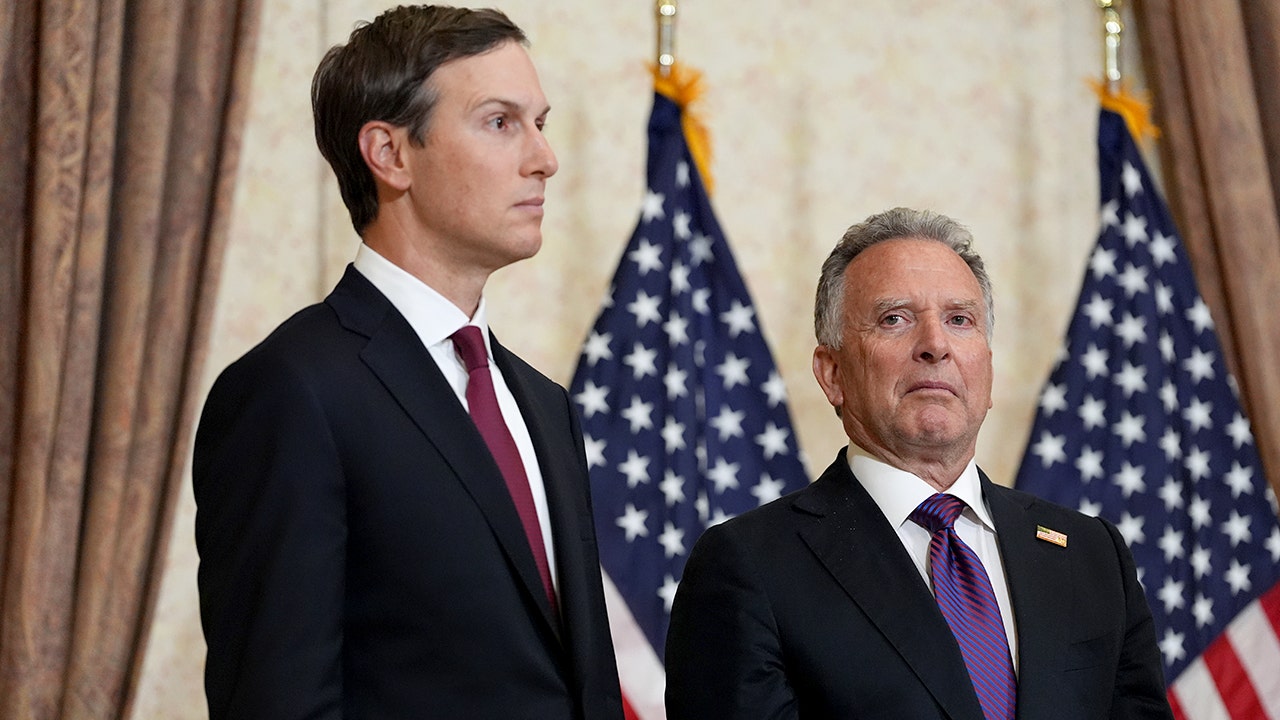
President Donald Trump revealed to Fox News on Saturday that he unilaterally canceled U.S. negotiators Steve Witkoff and Jared Kushner's planned trip to Pakistan for talks with Iran.
The president said in an exclusive interview with Fox News’ White House correspondent Aishah Hasnie that it’s not worth the U.S. delegation making the 18-hour flight to Pakistan when the U.S. holds all the cards in the conflict with Iran.
"I've told my people a little while ago they were getting ready to leave, and I said, 'Nope, you're not making an 18-hour flight to go there. We have all the cards. They can call us anytime they want, but you're not going to be making any more 18-hour flights to sit around talking about nothing’," Trump said.
"And I canceled the trip, and I said, anytime they want to phone us, we're ready, willing and able, but we're not going to waste a lot of time," Trump told Fox News.
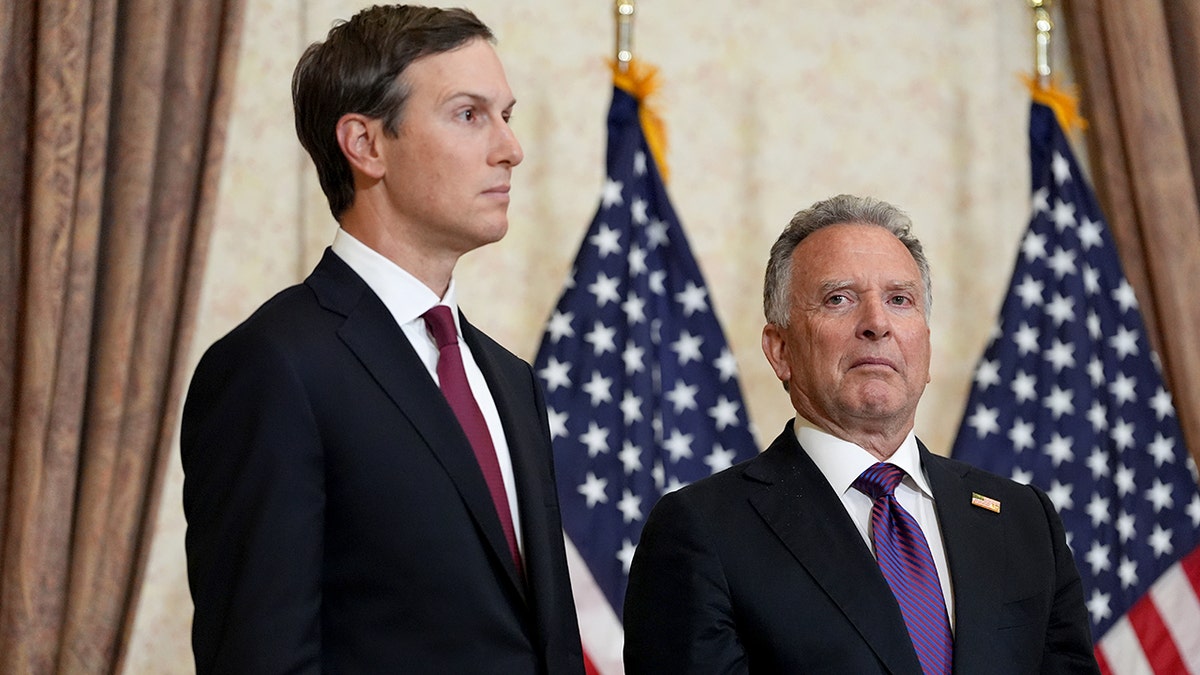
Vice President JD Vance speaks during a news conference in Islamabad, Pakistan, on April 12, 2026, after meeting with representatives from Pakistan and Iran. Jared Kushner and Steve Witkoff listen during the event. (Jacquelyn Martin/AP)
Then in a post on Truth Social, Trump said Iran is suffering from "tremendous infighting and confusion within their ‘leadership.’"
"Nobody knows who is in charge, including them," Trump wrote.
U.S. special envoy Witkoff and Kushner, who is Trump's son-in-law, were supposed to travel to Pakistan this weekend for the second round of U.S.-Iran negotiations during Operation Epic Fury.
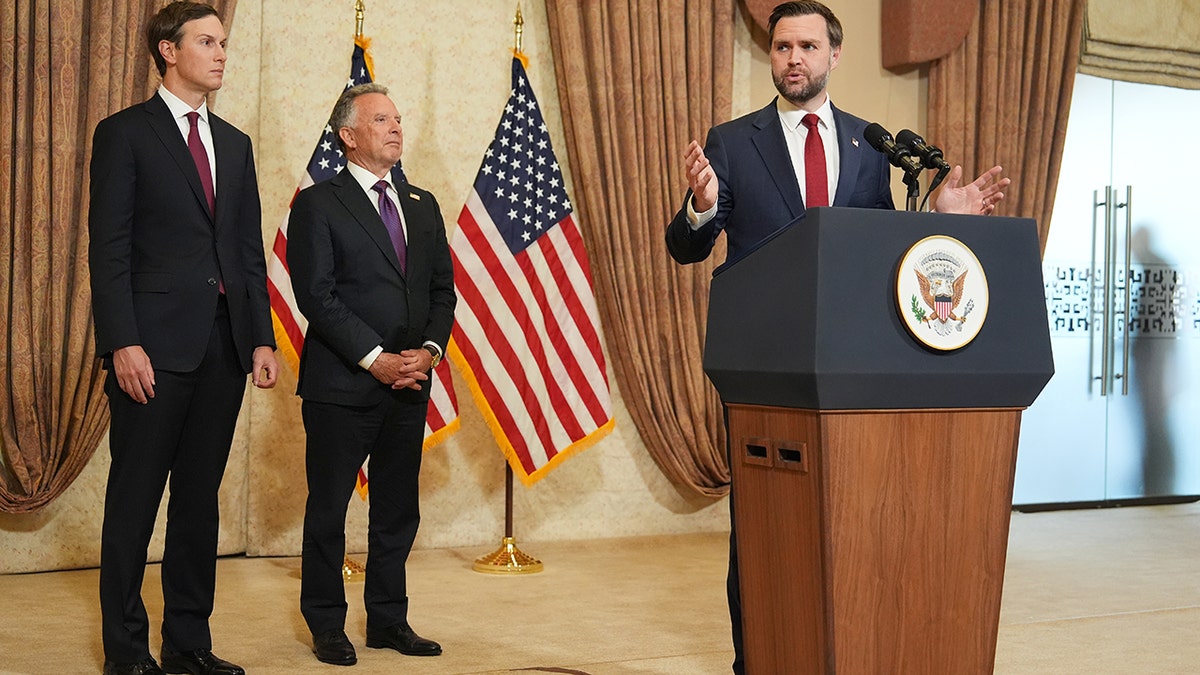
Vice President JD Vance spoke during a news conference after meeting with representatives from Pakistan and Iran in Islamabad, Pakistan, on April 12, 2026. Jared Kushner and Steve Witkoff, special envoy for peace missions, listened during the event. (Jacquelyn Martin/Pool)
Prior to the cancellation, White House press secretary Karoline Leavitt said Friday that "We've certainly seen some progress from the Iranian side in the last couple of days" regarding a potential deal to end the conflict.
Iranian Foreign Minister Abbas Araghchi was in Islamabad, Pakistan, on Saturday to meet with Pakistan's prime minister.
"Very fruitful visit to Pakistan, whose good offices and brotherly efforts to bring back peace to our region we very much value," he said on X following the trip.
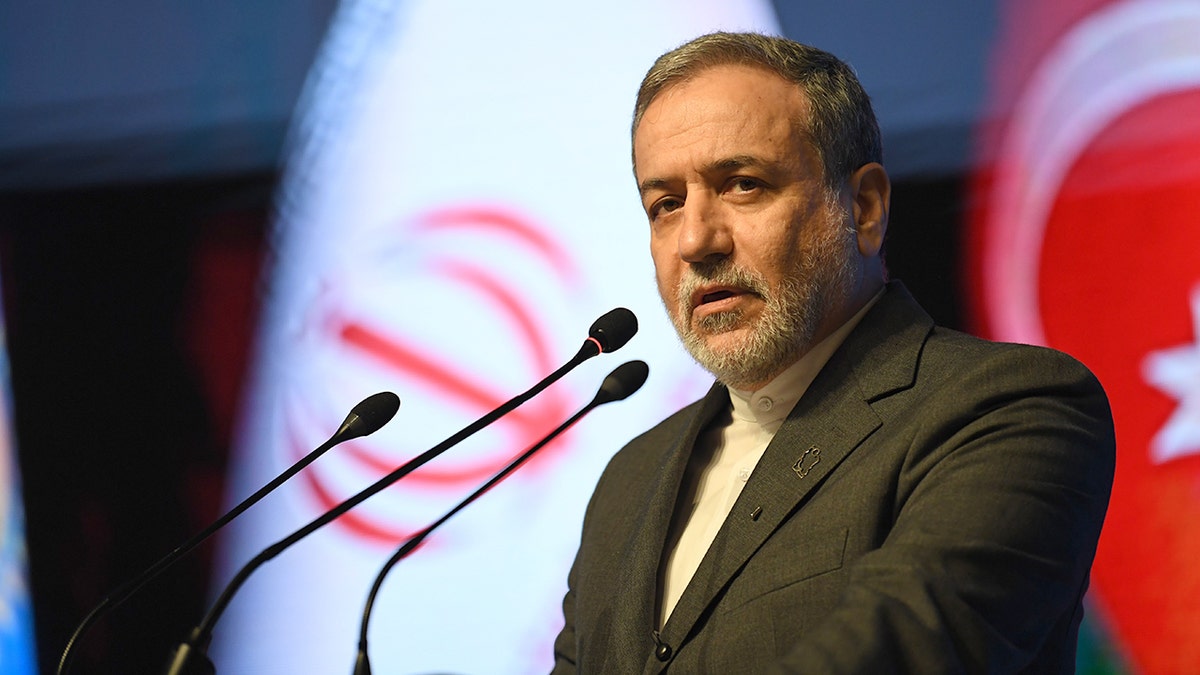
Iranian Foreign Minister Seyed Abbas Araghchi speaks during the opening ceremony of the First Caspian Governors' Forum in Rasht, Iran, on Nov. 18, 2025. (Shadati/Xinhua)
"Shared Iran's position concerning workable framework to permanently end the war on Iran. Have yet to see if the U.S. is truly serious about diplomacy," he added.
Vice President JD Vance was supposed to travel to Pakistan earlier this week for a second round of talks, but he was called back to the White House for meetings, and the trip was postponed indefinitely.
Vance, Witkoff and Kushner were in Pakistan earlier this month for the first round of talks with the Iranian, but no deal was reached after their in-person meeting.
Greg Norman is a reporter at Fox News Digital.
Get the latest updates from the 2024 campaign trail, exclusive interviews and more Fox News politics content.
Read the full story at Fox News.
Trump Cancels Witkoff and Kushner’s Trip for Iran Talks, Saying, ‘We Have All the Cards.’
Source: nyt News • Published: 4/25/2026, 11:03:43 PM

President Trump on Saturday called off a trip by two of his top negotiators to Islamabad, Pakistan, just before they were set to leave for talks about a potential deal to end the war in Iran.
“I’ve told my people a little while ago, they were getting ready to leave, and I said, ‘Nope, you’re not making an 18-hour flight to go there. We have all the cards,’” Mr. Trump said in a statement. “They can call us anytime they want, but you’re not going to be making any more 18-hour flights to sit around talking about nothing.”
Steve Witkoff, the special envoy, and Jared Kushner, the president’s son-in-law, had been scheduled to travel to Pakistan on Saturday, along with top aides to Vice President JD Vance. Officials in Pakistan have been mediating between the United States and Iran to try to end more than a month of war in the Middle East.
The cancellation of the trip is the latest sign that Iran and the United States are far from reaching a deal to end the war. A previous trip to Islamabad by Mr. Vance proved unsuccessful, and the Americans appear no closer to achieving the administration’s political goals, including convincing Iran to turn over its nuclear stockpile and curtail its future program. The two sides are also locked in a stalemate over control of the Strait of Hormuz, through which a fifth of the world’s oil supply flows.
Mr. Trump’s decision came after Iran’s foreign minister, Abbas Araghchi, who had been in Islamabad for talks with Pakistani officials, left the country and traveled to Oman. No direct meetings had been scheduled with U.S. officials.
After leaving Islamabad, Mr. Araghchi said in a social media post that he had shared with Pakistani officials Iran’s position on a “workable framework to permanently end the war on Iran.” He did not give details of the latest proposal. “Have yet to see if the U.S. is truly serious about diplomacy,” he added.
Earlier this week, Mr. Trump unilaterally extended a cease-fire between the United States and Iran that was about to expire, saying he wanted to give Tehran a chance to come up with a new proposal to end the war.
In a Truth Social post on his decision, the president repeated his contention that the Iranian government was divided and argued those disagreements were complicating talks. “There is tremendous infighting and confusion within their ‘leadership,’” he said. “Nobody knows who is in charge including them.” Several top Iranian officials put out statements on Thursday denying the country’s leaders were divided.
The United States recently transmitted a written proposal to the Iranians intended to establish points of agreement that could frame more detailed negotiations. The document covers a broad range of issues, but the core sticking points are the same ones that have bedeviled Western negotiators for more than a decade: the scope of Iran’s uranium enrichment program and the fate of its stockpile of enriched uranium.
The American military has displayed its overwhelming might during the war, successfully striking thousands of targets. But Iran’s theocratic regime, even after its top leaders were killed, has remained in power and has asserted tight control over the Strait of Hormuz, limiting shipping, driving up the price of oil and shaking the world economy.
Luke Broadwater covers the White House for The Times.
Read the full story at nyt News.
Semyon Gluzman, 79, Dies; Doctor Dared to Criticize Soviet Psychiatry
Source: nyt News • Published: 4/25/2026, 11:02:18 PM

On May 11, 1972, Soviet police arrived at the Kyiv apartment of a young psychiatrist named Semyon Gluzman.
Officially, he was charged with spreading “anti-Soviet agitation and propaganda.” But his real crime, the one officials did not want publicized, was questioning the Soviet Union’s widespread use of psychiatry as a tool of oppression — and being the first doctor to do so.
A year earlier, the dissident physicist Andrei Sakharov had asked Dr. Gluzman to evaluate Gen. Petro G. Grigorenko, who had been declared insane after he protested the Soviet Union’s deportation of Tatars to Central Asia from Crimea.
Like thousands of others who spoke out against the government, General Grigorenko (who was of Ukrainian descent and whose surname could also be transliterated as Hryhorenko) was diagnosed with “sluggish schizophrenia,” a condition invented by psychiatrists in Moscow in the 1950s. It was bunk science, but politically useful: The disorder was said to be slow-acting and undetectable by the layperson, manifesting in antisocial outbursts like criticizing the Communist regime.
General Grigorenko was confined to a mental hospital, so Dr. Gluzman had to rely on interviews with colleagues, military evaluations and a leaked copy of the official diagnosis in making his assessment.
He declared General Grigorenko sane, a judgment that was confirmed years later when the general was allowed to immigrate to the United States.
But Dr. Gluzman’s report, which Dr. Sakharov distributed through underground channels, was more than a statement about one man’s mental health. It was a concise, concrete indictment of the Soviet psychiatric system — and, by extension, of the Soviet Union itself.
“Psychiatry is a branch of medicine and not of penal law,” he wrote, a seemingly reasonable stance that earned him seven years of hard labor and three years of exile in Siberia.
Dr. Gluzman, known to friends as Slava, died on Feb. 16 at a hospital in Kyiv, Ukraine’s capital. He was 79.
His daughter, Julia Piivskaya, confirmed the death, which was not widely reported at the time.
Dr. Gluzman’s sentence, which he served at the notorious Perm 35 penal camp in the Ural Mountains, made him a cause célèbre in the world of international human rights. Dr. Sakharov pleaded his case with Western governments and medical associations.
In prison, Dr. Gluzman and another inmate, the writer Vladimir Bukovsky, collaborated on “A Manual on Psychiatry for Dissidents,” writing the manuscript on sheets of paper that were smuggled out in the lining of canvas bags they made in the camp’s factory.
The 22-page manual advised dissidents on how to avoid being declared mentally ill during an interrogation by a Soviet psychiatrist. Among other tips, it advised arguing your opinions “not by personal experience or analysis of reality but with reference to literary sources, assertions of authorities and so forth.”
The manuscript was quickly translated into English, German and other languages, and it received widespread attention in the international news media.
Dr. Gluzman refused offers of leniency in exchange for disavowing his report on General Grigorenko, and he repeatedly criticized the camp administration for its poor treatment of prisoners — criticism that earned him stretches in solitary confinement.
“If Slava felt that the king was naked, he had no problem saying it and saying it again and saying it again,” Robert van Voren, a friend and close associate, said in an interview. “Nothing could change his mind.”
Semyon Fischelovich Gluzman was born on Sept. 10, 1946, in Kyiv. His parents, Frischel Gluzman and Galina Mostovaya, were doctors.
After graduating from the Kyiv Medical Institute (now the National Medical University) in 1970, he worked in various hospitals around Ukraine. Even before his assessment of General Grigorenko, he was under suspicion for refusing to work at certain hospitals that he knew were used to hold political prisoners.
He married Irina Piivskaya in 1974. Along with their daughter, she survives him.
Dr. Gluzman returned to Kyiv from Siberia in 1982, but he was barred from practicing medicine. Instead, he spent two years working as a locksmith at a factory. Eventually authorities allowed him to resume practicing medicine, but only as a pediatrician.
After the fall of Communism and the breakup of the Soviet Union, Dr. Gluzman became a leading figure in the effort to modernize and reform the psychiatric profession.
In 1991, he established the Ukrainian Psychiatric Association and pointedly announced that it was open to anyone, including former Soviet doctors, as long as they adhered to its commitment to human rights, science and independence.
At the same time, he led efforts to confront the abuse of psychiatry during the Communist era, as director of the International Medical Rehabilitation Center for the Victims of War and Totalitarian Regimes.
He also began publishing Western psychiatry textbooks and journals in Ukrainian, an important step for a field that had been almost completely cut off from the rest of the world for decades. (He published significant general-interest books as well, including a Ukrainian edition of “The Diary of a Young Girl” by Anne Frank.)
In 2008, the World Psychiatric Association awarded Dr. Gluzman the Geneva Prize for Human Rights in Psychiatry, one of many honors he received in recent decades.
He continued to live humbly, in a small apartment on the 15th floor of a Soviet-era tower in suburban Kyiv.
In 2022, invading Russian soldiers came within about five miles of the building. His friends, including Mr. van Voren, tried to persuade Dr. Gluzman to flee. He refused.
“I called him, and he picked up,” Mr. van Voren recalled. “I hadn’t even opened my mouth when he said: ‘I know why you’re calling. If you ask me once that I need to leave this flat, I will never pick up again. This is my freedom. This is my home.’”
Clay Risen is a Times reporter on the Obituaries desk.
Read the full story at nyt News.
For complete details, visit the original sources linked above.
Comments
Post a Comment