Top Stories — Sunday, April 19, 2026
What is trending in the USA today? Here is Breaking News:
- Tinder turns to eye scans to weed out bots amid rising concerns over romance scams — Fox Business
- Tesla brings its robotaxi service to Dallas and Houston — TechCrunch
- Pope Says News Outlets Misread Some of His Remarks as Criticism of Trump — nyt News
Tinder turns to eye scans to weed out bots amid rising concerns over romance scams
Source: Fox Business • Published: 4/19/2026, 3:30:11 AM
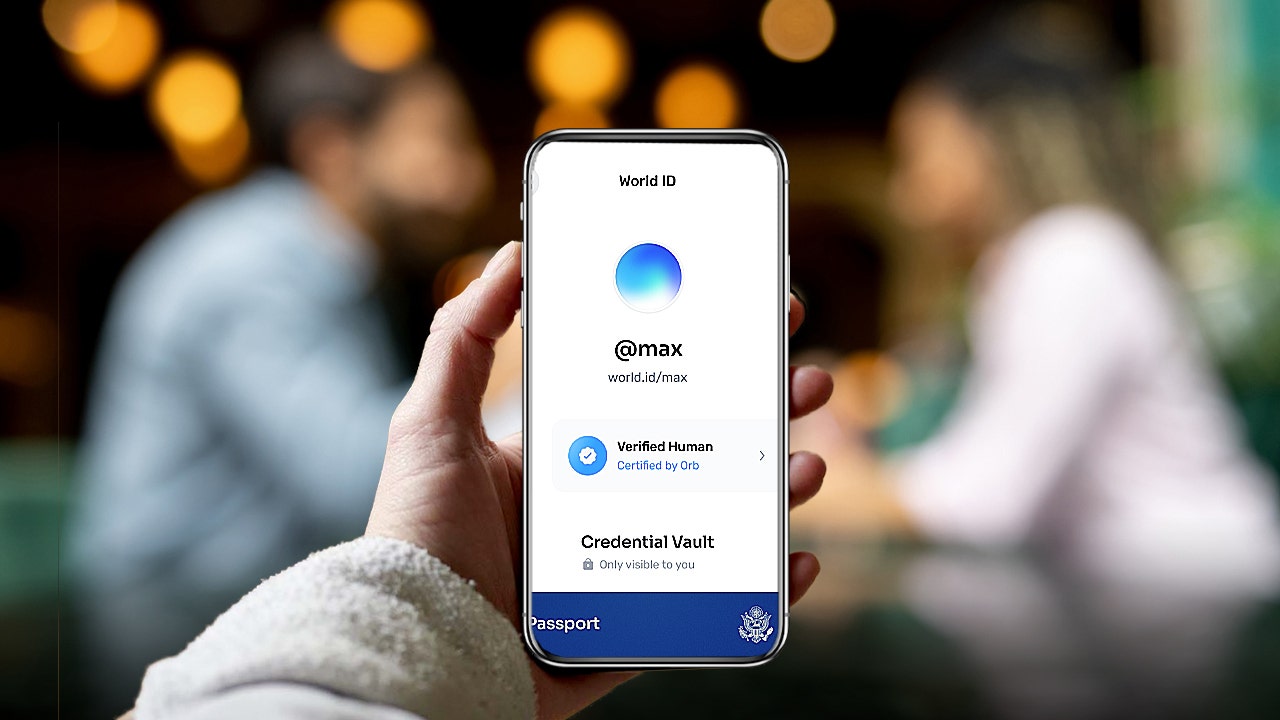
Your next date could be AI-verified. Tinder is one of several companies working with World, formerly known as Worldcoin, to let users prove they are human and not robots with the help of eye-scanning technology.
With the increased availability of AI, bad actors have begun using the technology to fuel romance scams across platforms, including dating apps. Tinder warns that romance scammers are often professionals, noting such schemes netted more than $300 million in 2020.
The company outlines common red flags, including quickly pushing conversations off the app, appearing too good to be true or engaging in "lovebombing," avoiding in-person meetings, or requesting personal or financial information.
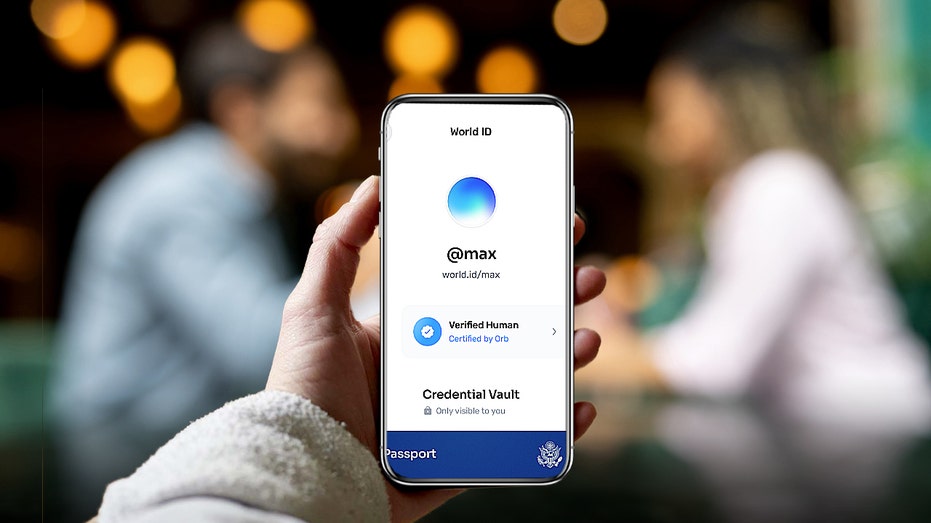
World ID verification allows users to prove that they are human.
"World is bringing proof of human into the platforms where people spend their time. From dating to live events to gaming, World ID is becoming the trust layer underpinning the experiences that matter most," the company wrote in a blog post.
In response to a request for comment, World referred Fox Business to materials on its website.
World said in a blog post that it first teamed up with Match Group, Tinder's parent company, to launch a pilot of its World ID technology in Japan. Daters in the U.S. and Japan will soon be able to use "privacy-preserving" verification to ensure they are meeting Mr. Right, not Mr. Robot.
"At Tinder, helping our community feel safe and confident in every connection has always been at the heart of what we do ... Partnering with World ID is a natural next step in that commitment, giving our users a powerful, privacy-preserving way to help know the person on the other end is real," Senior Vice President of Trust & Safety at Match Group Yoel Roth said in a statement.

Tinder is incorporating technology that will allow users to prove that they are human. (Hispanolistic via Getty Images / Getty Images)
World is part of Tools for Humanity, a start-up co-founded by OpenAI CEO Sam Altman. The company's verification technology includes a spherical device known as "the Orb," which uses temporary memory when "verifying humanness," which it does not store, according to Tools for Humanity. There is also a mobile app that allows access to World and World ID.
Users can verify themselves with an Orb device and then receive a badge to show there's a real person on the other side of the screen. World says the verification will allow users to "stand out" with their badge, leading to an "increase in higher-quality connections." Additionally, the company said that, for a limited time, users with a badge will receive five free "Boosts," an app feature that pushes their profile to other users.
Following a request for comment, Tinder directed Fox Business to World’s blog post on the partnership.
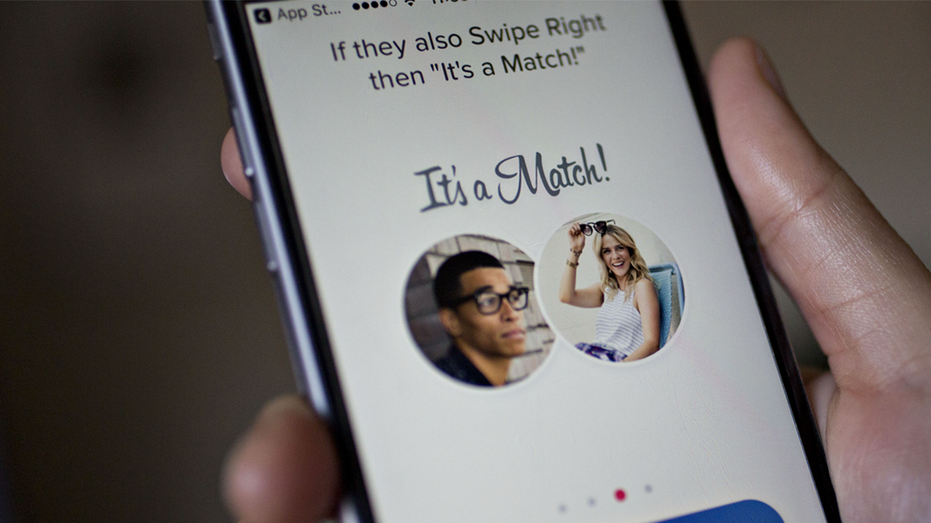
Tinder is implementing technology that will allow users to prove that they're human. (Andrew Harrer/Bloomberg via Getty Images)
Other companies that have signed on with World to use its "proof of human" technology include Zoom, Docusign, Shopify and Coinbase, among others.
In response to a request for comment, Zoom also referred Fox Business to its press release on the partnership.
Zoom announced its partnership with Tools for Humanity on Friday, saying the verification system could help reduce the risk of "impersonation-driven fraud," something that has become a concern with the rise and improvement of AI.
The partnerships signal a broader push by companies to use the same technology exploited by bad actors to try to stop scams before they begin.
Read the full story at Fox Business.
Tesla brings its robotaxi service to Dallas and Houston
Source: TechCrunch • Published: 4/19/2026, 3:07:15 AM

Tesla is expanding its robotaxi service to Dallas and Houston, according to a social media post from the company.
The post says simply that “Robotaxi is now rolling out in Dallas & Houston ������” and includes a 14-second video showing Tesla vehicles driving without human monitors or drivers in the front seat.
The company now offers robotaxi service in three cities, all of them in Texas, after launching in Austin last year and starting to offer rides without safety drivers in January 2026. In a February filing, Tesla said that its Austin robotaxis have been involved in 14 crashes since launch.
Tesla may not be running many vehicles in either of these new markets yet, with crowdsourced data on the Robotaxi Tracker website only registering a single vehicle in each city (compared to 46 active vehicles logged in Austin).
StrictlyVC kicks off the year in SF. Get in the room for unfiltered fireside chats with industry leaders, insider VC insights, and high-value connections that actually move the needle. Tickets are limited.
Pope Says News Outlets Misread Some of His Remarks as Criticism of Trump
Source: nyt News • Published: 4/19/2026, 2:37:27 AM

In a brief but sharp denunciation of how news outlets have covered his Africa trip, Pope Leo XIV told reporters on Saturday that he had no interest in continuing a debate with President Trump and that some of his remarks had been misinterpreted as criticism of the president.
On Monday, at the start of his 11-day trip to four African countries, the pope said he had “no fear” of Mr. Trump, responding to an extraordinary presidential broadside against him on social media. But since then, “there’s been a certain narrative that has not been accurate in all of its aspects,” the pope told journalists traveling on the papal plane from Cameroon to Angola on Saturday.
“Because of the political situation created when, on the first day of the trip, the president of the United States made some comments about myself,” Pope Leo said, “much of what has been written since then has been more commentary on commentary trying to interpret what has been said.”
The pope cited a speech he gave on Thursday in Bamenda, a city in a region of Cameroon where English-speaking separatists have clashed violently with the Francophone government for a decade.
In those remarks, he said “woe to those who manipulate religion and the very name of God for their own military, economic and political gain, dragging that which is sacred into darkness and filth” — remarks that many in the media, including The New York Times, interpreted as referring not just to the conflict in Cameroon but to the Trump administration.
But Leo said Saturday that speech “was prepared two weeks ago, well before the president ever commented on myself and on the message of peace that I am promoting.”
“It was looked at as if I was trying to debate again the president,” he said, “which is not in my interest at all.”
Before embarking on the trip to Africa, Leo had made remarks that, without naming names, seemed directed at the Trump administration’s policies.
Shortly after Defense Secretary Pete Hegseth called on the American people to pray “in the name of Jesus Christ” for military victory in Iran, the pope said in a homily that the Christian message had often been “distorted by a desire for domination, entirely foreign to the way of Jesus Christ.”
But it wasn’t until the president attacked Leo personally on his social media platform, Truth Social, calling him “weak on crime” and “terrible for foreign policy,” that the pope mentioned the Trump administration by name, saying he would continue to “speak loudly of the message of the Gospel.”
The pope reiterated Saturday that his mission during his visits to Algeria, Cameroon, Angola and Equatorial Guinea, where he noted there was “unequal distribution of wealth,” was “to celebrate with, to encourage and accompany all of the Catholics throughout Africa.”
During this trip, Leo has broken twice with traditional protocol to speak frankly to journalists on his plane. Typically, popes brief reporters on the return flight.
En route to Luanda, the Angolan capital, Leo took just one question, from a Cameroonian journalist who asked the pope to repeat his message in French. But he replied in English, thanking the people of Cameroon for their “wonderful welcome” and “shared enthusiasm” for their faith.
Motoko Rich is the Times bureau chief in Rome, where she covers Italy, the Vatican and Greece.
Read the full story at nyt News.
For complete details, visit the original sources linked above.
Comments
Post a Comment