Top Stories — Saturday, April 25, 2026
What is trending in the USA today? Here is Breaking News:
- Iran War Live Updates: Witkoff and Kushner to Travel to Pakistan for Talks on Iran — nyt News
- On Iran’s Border, Cooking Oil Trade Is a Snapshot of the Country’s Struggles — nyt News
- Mississippi governor says he will call special session to redraw district maps after SCOTUS ruling — Fox News
Iran War Live Updates: Witkoff and Kushner to Travel to Pakistan for Talks on Iran
Source: nyt News • Published: 4/25/2026, 1:59:27 PM

Abbas Araghchi, Iran’s foreign minister, met with Pakistan’s army chief, Field Marshal Asim Munir, in Islamabad on Saturday morning, according to Pakistani officials and the Iranian embassy in Pakistan. Araghchi arrived in Pakistan on Friday.
From the U.S. side, Steve Witkoff and Jared Kushner are traveling to the Pakistani capital today, but it is not clear if they will meet any Iranian officials. A spokesman for Iran’s foreign ministry, Esmail Baghaei, said on Friday that no U.S.-Iran meeting was planned and that Iran would convey its position through Pakistani officials.
Reporting from Washington
When President Barack Obama negotiated a nuclear deal with Iran more than a decade ago, his point man was Secretary of State John Kerry. Over 20 months of talks, Mr. Kerry met with his Iranian counterpart on at least 18 different days, often several times per day.
High-level nuclear diplomacy was a natural role for the top U.S. diplomat. Secretaries of state traditionally take the lead on the country’s biggest diplomatic tasks, from arms control treaties to Israeli-Palestinian agreements.
But as President Trump prepares to send a delegation to the latest round of U.S.-Iran talks in Pakistan this weekend, his secretary of state, Marco Rubio, will remain where he often does: at home.
Mr. Rubio did not attend the last U.S. meeting with Iran earlier this month. Nor did he join several meetings held over the past year in Geneva and Doha. Mr. Rubio has also been absent from U.S. delegations abroad working to settle the war in Ukraine and Israel’s war in Gaza. Despite a long period of crisis and war in the region, he has not visited the Middle East since a brief stop in Israel last October.
In recent months, Mr. Rubio — consumed with his second role, as Mr. Trump’s national security adviser — has not traveled much at all.
During the Biden administration, Secretary of State Antony J. Blinken made 11 foreign trips from January 2024 to late April 2024, stopping in roughly three dozen cities, according to the State Department. So far this year, Mr. Rubio has visited six foreign cities, including a stop in Milan for the 2026 Winter Olympics.
Mr. Trump has outsourced much of his diplomacy to others, including his friend Steve Witkoff, a wealthy associate from the world of Manhattan real estate, and his son-in-law, Jared Kushner. Mr. Witkoff and Mr. Kushner have spearheaded diplomacy with Israel, Ukraine and Russia, as well as Iran, whose delegation they will meet for the second time this month in Islamabad, Pakistan’s capital.
Mr. Rubio’s distance from the trenches of diplomacy reflects his dual role on Mr. Trump’s national security team. For the past year, he has served as the White House national security adviser even while leading the State Department — the first person to do so since Henry A. Kissinger in the mid-1970s.
The secretary of state runs the State Department, overseeing U.S. diplomats and embassies worldwide, as well as Washington-based policymakers. Working from the White House, the national security adviser coordinates departments and agencies, including the State Department, to develop policy advice for the president.
The twin roles reflect Mr. Rubio’s influence with Mr. Trump, and offer him a way to maintain it. For Mr. Rubio, less time abroad means more time at the side of an impulsive president prone to making critical national security decisions at any moment.
As Mr. Witkoff, Mr. Kushner and Vice President JD Vance met with Iranian officials in Pakistan earlier this month, Mr. Rubio was at Mr. Trump’s side at an Ultimate Fighting Championship event, noted Emma Ashford, an analyst of U.S. diplomacy at the nonpartisan Stimson Center in Washington. “Rubio clearly prefers to stay close to Trump,” Ms. Ashford said.
Mr. Rubio accepted the national security adviser job on an acting basis last May after Mr. Trump reassigned the job’s previous occupant, Michael Waltz. But officials say that Mr. Rubio is expected to keep it indefinitely.
That arrangement is not inherently bad, Ms. Ashford added. And she noted that previous presidents had entrusted major diplomatic tasks to people other than the secretary of state. President Joseph R. Biden Jr. delegated his C.I.A. director, William J. Burns, to handle diplomacy with Russia and cease-fire negotiations between Israel and Hamas, for instance.
But she echoed the complaints by many current and former diplomats that Mr. Rubio seems less like someone performing both jobs than a national security adviser who sometimes shows up at the State Department. “I do think it’s to the detriment of the whole department of State and to America’s ability to conduct diplomacy in general that we effectively have the secretary of state position sitting vacant,” she said.
Tommy Pigott, a State Department spokesman, contested such claims. “Anyone trying to paint Secretary Rubio’s close coordination with the White House and other agencies as a negative could not be more wrong,” he said. “We now have an N.S.C. and State Department that are totally in sync, a goal that has eluded past administrations for decades.”
Mr. Rubio divides his time between the State Department and the White House, often spending time at both in the same day. In an interview with Politico last June, Mr. Rubio said he visited the State Department “almost every day.”
While there, he often meets with visiting dignitaries before returning to the White House. Last week, Mr. Rubio presided over a meeting at the State Department between Lebanese and Israeli officials that set the stage for a cease-fire in Lebanon.
His twin jobs “really do overlap in many cases,” he said. “In many cases you end up being in the same meetings or in the same places; there’s just one less person in there, if you think about it,” Mr. Rubio added. “A lot of people would come to Washington, for example, for meetings, and they’d want to meet with the national security adviser and then meet with me as secretary of state. Now they can do both in one meeting.”
Asked about his travel schedule during a news conference last December, Mr. Rubio said he had less reason to travel abroad because “we have a lot of leaders constantly coming here” to visit Mr. Trump at the White House. Mr. Rubio also joins Mr. Trump’s foreign trips in his capacity as national security adviser.
Many national security veterans call the arrangement unwise, saying that both jobs are extremely demanding and incompatible with one another.
It was not easy even for Mr. Kissinger, who had firmly established himself over more than four years as national security adviser before convincing President Richard M. Nixon to let him take on an additional role as secretary of state in 1973. (In a reversal of Mr. Rubio’s approach, Mr. Kissinger was in constant motion, including a round of Middle East shuttle diplomacy that kept him on the road for 33 straight days.)
“In general, it’s a mistake to combine those roles,” said Matthew Waxman, who held senior roles at the National Security Council, State Department and the Pentagon during the George W. Bush administration.
“That said, it’s not necessarily a bad thing that a dual-hatted Rubio is so offscreen right now,” Mr. Waxman added. “Especially while so much attention is focused on high-wire diplomacy with Iran, someone needs to manage foreign policy around the rest of the world.”
Luke Broadwater reported from Washington, and Euan Ward from Beirut, Lebanon.
The United States and Iran on Friday were taking steps to resume peace talks, as Defense Secretary Pete Hegseth said that the U.S. blockade of Iranian ships and ports would continue for “as long as it takes” to get Tehran to agree to a deal.
Steve Witkoff, a U.S. special envoy, and Jared Kushner, President Trump’s son-in-law, planned to travel to Islamabad, Pakistan’s capital, on Saturday for negotiations, Karoline Leavitt, the White House press secretary, said on Friday.
“Steve and Jared will be heading to Pakistan tomorrow to hear the Iranians out,” Ms. Leavitt told reporters outside the White House. “We hope progress will be made, and we hope that positive developments will come from this meeting.”
Mr. Trump, Vice President JD Vance, who has been leading the talks with the Iranians, and Secretary of State Marco Rubio “will be waiting here in the United States for updates,” Ms. Leavitt added.
Iran’s foreign minister, Abbas Araghchi, arrived in Islamabad on Friday, Iranian state media reported. He was carrying a written response to a U.S. proposal for a peace deal, according to two senior Iranian officials familiar with his plans.
Earlier, the Iranian officials, who spoke on the condition of anonymity to discuss sensitive diplomacy, said Mr. Araghchi had been expected to meet with Mr. Witkoff and Mr. Kushner this weekend. But later, a spokesman for Iran’s foreign ministry, Esmail Baghaei, said in a post on X that no meeting was planned between Iran and the United States in Pakistan and that Iran would convey its position through Pakistani officials.
While Iran has publicly rejected peace talks during the U.S. naval blockade of its ports, the two Iranian officials said that Tehran has been exchanging messages through Pakistan and engaging in diplomacy to resume talks. The Trump administration has said the military cordon is aimed at crushing the Iranian economy and pressuring Tehran to make a deal.
Mr. Hegseth said on Friday that while the naval blockade would continue, the U.S. military remained poised to attack Iran again on Mr. Trump’s orders.
“Iran knows that they still have an open window to choose wisely at the negotiating table,” Mr. Hegseth told reporters at the Pentagon.
Many sticking points remain, including the reopening of the Strait of Hormuz; the fate of Iran’s highly enriched uranium; and Tehran’s demand that about $27 billion in frozen assets held abroad be released.
The United States and Iran agreed to a cease-fire more than two weeks ago. Still, tensions have remained high in and around the strait, a crucial conduit for Persian Gulf crude oil and natural gas. On Tuesday, Mr. Trump said he was extending the cease-fire indefinitely. But both Iran and the United States have continued to seize vessels they said have violated their restrictions on shipping in the waterway.
On Friday, the U.S. Treasury Department rolled out a blitz of new sanctions targeting 40 shipping firms and vessels it said were part of Iran’s “shadow fleet” of oil tankers. It also imposed sanctions on a China-based independent refinery, Hengli, which the Treasury identified as one of Iran’s largest customers for crude oil and other petroleum products.
The United States and Iran moved to resume talks as clashes between Israel and Hezbollah, the Iranian-backed militia, intensified in Lebanon on Friday, straining a separate cease-fire that was also extended by the White House.
Mr. Trump announced a three-week extension of the truce in Lebanon on Thursday, after hosting Israeli and Lebanese diplomats at the White House. Hezbollah, which is not part of the negotiations, has signaled it intends to abide by the truce if Israel does the same.
Strikes between Israel and Hezbollah have plummeted since an initial cease-fire was announced last week. But both sides have continued to exchange fire, raising fears that the truce could collapse into an all-out war.
“Cease-fire? What cease-fire while drones are still hovering above us?” said Fatima al-Masri, 49, who was in the southern Lebanese town of Qana on Friday. She was visiting the grave of her husband, an emergency worker, who had been killed in the conflict.
“What cease-fire while we are still losing our men and our loved ones?” she said, adding, “We want this war to be over.”
The current conflict that began last month has killed about 2,500 people in Lebanon, the country’s health ministry said, as well as two civilians and 15 soldiers in Israel, officials said.
The fighting began last month, when Hezbollah fired rockets into Israel in support of Iran, setting off a large-scale Israeli bombing campaign and ground invasion of southern Lebanon. Israeli forces are still deployed in a broad section of the country’s south, which Israeli officials have said they plan to occupy indefinitely.
Israel appeared to escalate its operations on Friday, issuing evacuation warnings for the southern Lebanese town of Deir Aames before launching airstrikes hours later. The town lies beyond the six-mile-deep “forward defense line” that Israel said it would control amid the cease-fire, suggesting that Israel’s strikes were widening.
The Israeli military said in a statement that Hezbollah had launched rockets from the town a day earlier toward northern Israel. Hezbollah also said it had again fired drones at Israeli troops in southern Lebanon on Friday.
Israel’s defense minister, Israel Katz, has pledged to continue demolishing border towns and villages amid the cease-fire. Hundreds of thousands of Lebanese remain displaced from the region, many with little idea if or when they can return.
During the talks at the White House on Thursday, Lebanon called for an end to those demolitions, according to a senior Lebanese official briefed on the negotiations who spoke on condition of anonymity to discuss sensitive diplomacy.
Hezbollah, for its part, expressed contempt for the state of the cease-fire on Friday, pointing to the continued Israeli military operations and reiterating its pledges to respond with force.
Mohamad Raad, Hezbollah’s leader in the Lebanese Parliament, said in a statement that the truce was “not a cease-fire at all,” and he urged the Lebanese government to withdraw from direct negotiations with Israel.
“The authorities should feel ashamed before their people,” Mr. Raad said, raising already simmering tensions between the Lebanese government and Hezbollah, a group it does not control.
Israel’s strikes this week killed Amal Khalil, a reporter for the Lebanese newspaper Al-Akhbar, and wounded another person in southern Lebanon, further rattling the tenuous truce.
The cease-fire agreement, released last week by the State Department, said that Israel would cease “offensive military operations” in Lebanon but “preserve its right to take all necessary measures in self-defense, at any time, against planned, imminent or ongoing attacks.”
Prime Minister Benjamin Netanyahu of Israel accused Hezbollah in a recorded video statement on Friday of moving to “sabotage” peace efforts between Israel and Lebanon, signaling the military had no intention to cease attacks against the group.
“We have maintained full freedom of action against any threat, including emerging threats,” Mr. Netanyahu said. “We attacked yesterday, we attacked today. We are determined to restore security to the residents of the north.”
Reporting was contributed by Helene Cooper, Alan Rappeport, Pranav Baskar, Sarah Chaayto, John Ismay, Michael Levenson and Abdi Latif Dahir.
Defense Secretary Pete Hegseth said Friday morning that American forces would maintain a blockade of the Strait of Hormuz “for as long as it takes.”
The day before, a senior Iranian official declared on social media that its fighters had been hiding in sea caves in the strait to “devastate the aggressors.”
Both the United States and Iran have sought to exert control over the Strait of Hormuz since they agreed to a cease-fire. Iran says only ships that have permission from the country’s Islamic Revolutionary Guards Corps will be allowed to pass. The United States Navy says it is intercepting all ships coming from or traveling to Iranian ports.
In short, it is impossible to know who controls this vital shipping route at the mouth of the Persian Gulf. What’s certain is that the fate of the strait has become a critical issue not only for a resolution to the Iran-U.S. conflict but for the world economy.
Here is what we know about what’s happening in the narrow waterway.
Iranian forces said they seized two cargo ships near the strait on Wednesday, while the U.S. military said Friday that it had stopped and turned around 34 vessels since it started blockading Iran’s ports.
Shipping companies and their insurers fear that Iran has mined the main channels and may attack commercial vessels. That has deterred most of the hundreds of ships bottled up in the Persian Gulf from trying to leave.
Still, Iran has been letting some ships, its own vessels included, pass through the strait, using a route that runs close to Iran’s coastline and can involve docking at Iranian ports. At least 150 ships have passed through the strait since the cease-fire was first announced on April 7, according to data from Kpler, a global ship-tracking firm.
Daily traffic in the strait is still well below prewar levels, though. In normal times, about a fifth of the world’s oil supply and a significant share of its natural gas went through the strait on ships. Tensions in the waterway have jolted global energy markets, with oil trading around $100 a barrel again.
Kpler’s data showed that between Wednesday and Thursday, 17 vessels crossed the waterway.
Even though much of the regular Iranian Navy was destroyed by Israeli and American attacks early in the conflict, the Islamic Revolutionary Guards Corps still deploys small, speedy boats to disrupt shipping. Known as the “mosquito fleet,” it is designed to harass shipping, often through missiles and drones.
The Iranians also said they had laid sea mines in the part of the strait where before the war there were two well-established passages for ships to pass, one for ships entering the Persian Gulf and one for those leaving. That has forced ships into a passage closer to Iran that is easier for its forces to control.
Tehran has recently imposed rules for passing through the waterway, including securing permits for preapproved routes. Iranian officials also have introduced legislation in their Parliament to charge tolls to ships wishing to go through the strait.
President Trump has said the U.S. Navy will maintain a blockade until Iran and the United States agree to a durable peace deal. Iran has made lifting the blockade a condition for resuming talks.
With plenty of air support and a flotilla of warships prowling the Gulf of Oman and Arabian Sea southeast of the strait, the U.S. Navy has been tracking commercial vessels leaving Iranian ports and confronting those that make it through, forcing them to turn back or face being boarded.
Mr. Hegseth said on Friday that 34 ships had been intercepted and turned around. One cargo ship, the Iranian-flagged Touska, tried to evade the U.S. blockade on Sunday and was disabled by Navy gunfire and taken into U.S. custody in the Arabian Sea, along with its crew. Iran denounced the seizure as piracy.
Even though the U.S. military has said no Iranian ships have gotten through its net, Lloyd’s List’s analysts say at least seven with links to Iran have managed to pass through the Strait of Hormuz and the wider blockade since April 13.
Some ships have managed to evade the blockade by typing in a false origin or destination and pretending to be piloting another ship altogether. Vessels can also temporarily turn off their transponders, seeming to disappear in one place and reappear in another.
John Ismay, Helene Cooper, Peter Eavis, Jenny Gross contributed reporting.
International flights resumed from Tehran’s Imam Khomeini International Airport on Saturday, said Mehr News, a semiofficial Iranian agency. The destinations included Istanbul, the Omani capital Muscat and the Saudi city of Medina, the agency said. It was the latest step in the resumption of commercial aviation in Iran, which recently reopened its airspace after closing it at the start of the war.
The United States rolled out a blitz of sanctions on Friday, targeting 40 shipping firms and vessels that it identified as being part of Iran’s so-called shadow fleet of oil tankers, as the Trump administration broadened its efforts to cripple the Iranian economy.
The Trump administration also imposed sanctions on an independent Chinese refinery, Hengli Petrochemical Refinery, which is one of Iran’s largest customers for crude oil and other petroleum products.
“Treasury will continue to constrict the network of vessels, intermediaries and buyers Iran relies on to move its oil to global markets,” Treasury Secretary Scott Bessent said in a statement released by the department. “Any person or vessel facilitating these flows — through covert trade and finance — risks exposure to U.S. sanctions.”
The United States has dramatically changed its approach to sanctions on Iran in recent weeks. After granting a monthlong exemption to sanctions that allowedi the sale of some Iranian oil in March, the Trump administration imposed more aggressive sanctions, in addition to mounting its own blockade of the Strait of Hormuz in parallel to Iran’s. The reversal was intended to choke off the oil revenue that Iran uses to power its economy.
Iran relies heavily on its shadow fleet of tankers to evade Western sanctions in transporting oil to Asia.
Much of the Iranian oil that is sold to China is purchased by its independent “teapot” refineries. Hengli is China’s second largest such refinery, and it has purchased billions of dollars’ worth of Iranian crude from the Revolutionary Guards Corp, which wields pervasive military, political and economic clout throughout Iran.
Reporting from Beirut and Qana, Lebanon.
Clashes between Israel and Hezbollah intensified on Friday despite a newly extended cease-fire announced just the day before. The fighting cast doubt on the truce as Lebanon and Israel prepare for higher-level peace negotiations.
President Trump announced the three-week extension of the cease-fire on Thursday after hosting Israeli and Lebanese diplomats at the White House. Hezbollah, the Iranian-backed group Israel is targeting, is not part of the U.S.-mediated talks, but it has signaled it intends to abide by the cease-fire if Israel does the same.
The conflict has killed roughly 2,500 people in Lebanon. Two civilians were also killed in Israel, along with 15 soldiers.
Israel and Hezbollah’s strikes have fallen significantly since the original cease-fire was announced last week, although both sides have repeatedly exchanged fire — raising fears that the truce could collapse again into an all-out war.
“Cease-fire? What cease-fire while drones are still hovering above us? What cease-fire while we are still losing our men and our loved ones?” said Fatima al-Masri, 49, who was in the southern Lebanese town of Qana on Friday visiting the grave of her husband, an emergency worker killed in the conflict.
“We want this war to be over,” she said.
The latest conflict began last month when Hezbollah fired rockets into Israel in support of Iran, triggering a large-scale Israel bombing campaign and ground invasion of southern Lebanon. Israeli forces are still deployed in a broad section of the country’s south, which Israeli officials have said they plan to occupy indefinitely.
Israel appeared to escalate its operations on Friday, issuing evacuation warning for the southern Lebanese town of Deir Aames before launching airstrikes hours later. The town lies beyond the six-mile-deep “forward defense line” that Israel said it would control amid the cease-fire.
The Israeli military said in a statement that Hezbollah had launched rockets from the town on Thursday toward northern Israel. Hezbollah also said it had again fired drones at Israeli troops in southern Lebanon on Friday.
Israel’s defense minister, Israel Katz, has pledged to continue demolitions of border towns and villages amid the cease-fire. Hundreds of thousands of Lebanese are displaced from the region.
During the latest round of talks in Washington on Thursday, Lebanon had called for an end to those demolitions, according to a senior Lebanese official briefed on the negotiations, who spoke on condition of anonymity to discuss sensitive diplomacy.
Hezbollah, for its part, expressed contempt for the state of the cease-fire on Friday, pointing to the continuation of Israeli military operations and reiterating its pledges to respond with force.
Mohamad Raad, the leader of Hezbollah’s parliamentary bloc, said in a statement that the truce agreement was “not a cease-fire at all” and called on the Lebanese government to cancel direct negotiations with Israel.
“The authorities should feel ashamed before their people,” said Mr. Raad, raising already simmering tensions between the Lebanese government and Hezbollah, which it does not control.
Israel’s strikes earlier this week also killed a journalist and wounded another in southern Lebanon.
The cease-fire agreement, released last week by the State Department, stipulated that Israel will cease “offensive military operations” in Lebanon but “preserve its right to take all necessary measures in self-defense, at any time, against planned, imminent, or ongoing attacks.”
Prime Minister Benjamin Netanyahu of Israel accused Hezbollah of moving to “sabotage” peace efforts between Israel and Lebanon, signaling no intent to cease attacks against the group in a recorded video statement, which was released Friday.
“We have maintained full freedom of action against any threat, including emerging threats,” he said. “We attacked yesterday, we attacked today. We are determined to restore security to the residents of the north.”
Read the full story at nyt News.
On Iran’s Border, Cooking Oil Trade Is a Snapshot of the Country’s Struggles
Source: nyt News • Published: 4/25/2026, 1:56:53 PM

On Turkey’s bustling border crossing with Iran, in a shed filled with boxes of cooking oil, a shopkeeper read aloud to his colleagues the latest news on his phone: Peace talks between the United States and Iran were postponed.
For these merchants, the twists and turns of the war, and economic crisis in Iran, have brought an unexpected boon to their business. As the prices of basic goods have spiraled in Iran, they can sell olive, sunflower and corn oils for a modest profit to Iranians at the border, who will either sell the oil inside their country or use it themselves.
Dozens of people were seen carrying multiple four- and five-liter bottles of oil as they walked from Turkey into Iran over the course of a single morning and afternoon. In interviews, shopkeepers said demand for cooking oil had spiked in recent days.
“We just started doing this recently,” said Maryam, an Iranian woman who purchased four bottles of cooking oil on Wednesday with her husband, intending to sell them back home. “Cooking oil is better” than the cigarettes the couple usually buy and sell across the border, she said, because it brings greater profit.
Maryam said she could buy a five-liter bottle in Turkey for a little over $10 and sell it inside Iran for cheaper than the going rate in shops there, making a small profit of around $2. She declined to give her full name, like most Iranians interviewed at the border, for fear of reprisal from the Iranian government.
Other Iranians interviewed did not want to be identified at all. The oil vendors in Turkey also spoke on the condition of anonymity, saying they wanted the trade to remain discreet so that Turkish authorities would not put an end to it.
The Kapikoy land crossing, near the city of Van, in eastern Turkey, has provided one of the few durable links between Iranians and the outside world during the war. The country’s airspace has been closed for much of the past two months, though it reopened in recent days, and citizens have remained in the dark because of a continuing internet shutdown imposed by the government.
The sharp increase in the trade of cooking oil is a potent indication of a spiraling inflation crisis that has put pressure on Iranian households for years, and which appears to have become especially severe in recent months. The inflation rate in Iran projected by the International Monetary Fund for this year is nearly 70 percent, which would be the highest rate calculated by the I.M.F. for the country since at least 1980.
Iranians at the border crossing this past week complained about higher costs for food in the country, where the minimum wage is the equivalent of around $108 per month. Iran is also facing mass layoffs as a result of the disruptions of war and the internet shutdown.
The higher prices are a challenge for a government that has contended with several rounds of protests prompted by economic discontent in recent years, and which now must rebuild an economy whose major industrial centers have been destroyed in airstrikes.
The authorities suppressed the latest round of protests with a deadly crackdown in January. Since then, the government has executed protesters and intimidated Iranians into staying in their homes.
The price of cooking oil surged in Iran in January after the government removed subsidies on the imports of certain essential goods, a policy intended to cut state expenditures amid sanctions targeting Iran’s oil sales.
The Iranian president, Masoud Pezeshkian, said the subsidy program had been exploited by some sectors, without reducing prices. And in the aftermath of the policy change, Iranians said in interviews that they were having trouble finding cooking oil in stores.
In a bid to ameliorate those price increases, the government gave Iranians a direct monthly cash payment, which amounted to 10 million Iranian rials, or around $7. Experts said that was unlikely to alleviate the pressure felt by most Iranians.
Milad, 37, from Khoy, who purchased cooking oil with his wife to take back to Iran, acknowledged that the subsidy reform had resulted in higher prices, but said it had been effective in limiting corrupt “mafias” who had taken advantage of the situation to make profit.
“Since prices have gone up, we’re buying this oil to take back with us,” he said.
Any relief provided by the cross-border trade is minimal relative to the pressure Iranians are facing.
A Tehran resident, Bibijan, 71, said she had recently bought three small chickens for about 22 million rials — around $14 at current rates. She said she used to be able to purchase five or six chickens for around five million rials.
One married couple who work as garment makers said that, even before the war, they had been out of work for at least half of the year. If Iranians continued to face such dim prospects, they said they expected many would begin stealing food to be able to feed their families.
Kiana Hayeri contributed reporting.
Yeganeh Torbati is the Iran correspondent for The Times.
Read the full story at nyt News.
Mississippi governor says he will call special session to redraw district maps after SCOTUS ruling
Source: Fox News • Published: 4/25/2026, 1:35:31 PM
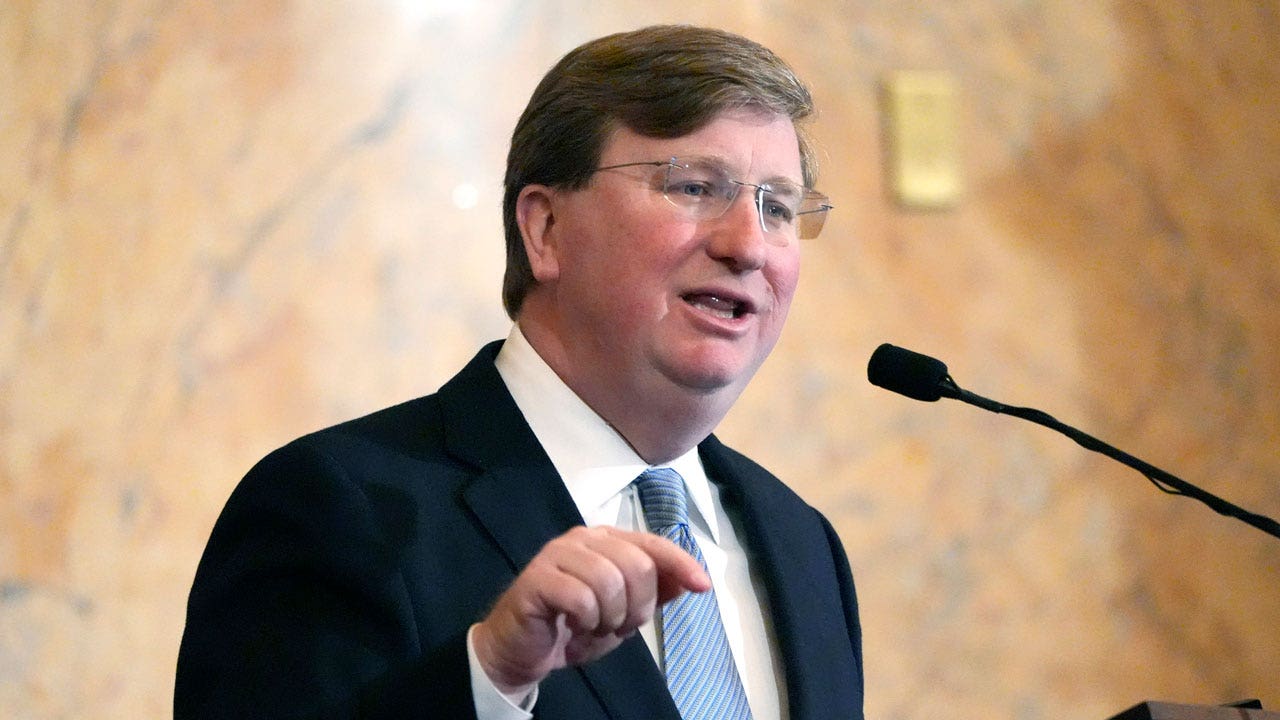
Mississippi Gov. Tate Reeves on Friday said he will call a special legislative session to redraw district lines after the U.S. Supreme Court issues a ruling in a key redistricting case.
Reeves said the session would take place 21 days after the court rules in Louisiana v. Callais, a case that could reshape how states apply the Voting Rights Act.
The case centers on Louisiana’s 2024 congressional map, which added a second majority-Black district and is being challenged as an unconstitutional racial gerrymander.
The outcome could influence redistricting battles nationwide, particularly in Republican-led states, ahead of this year’s midterms.
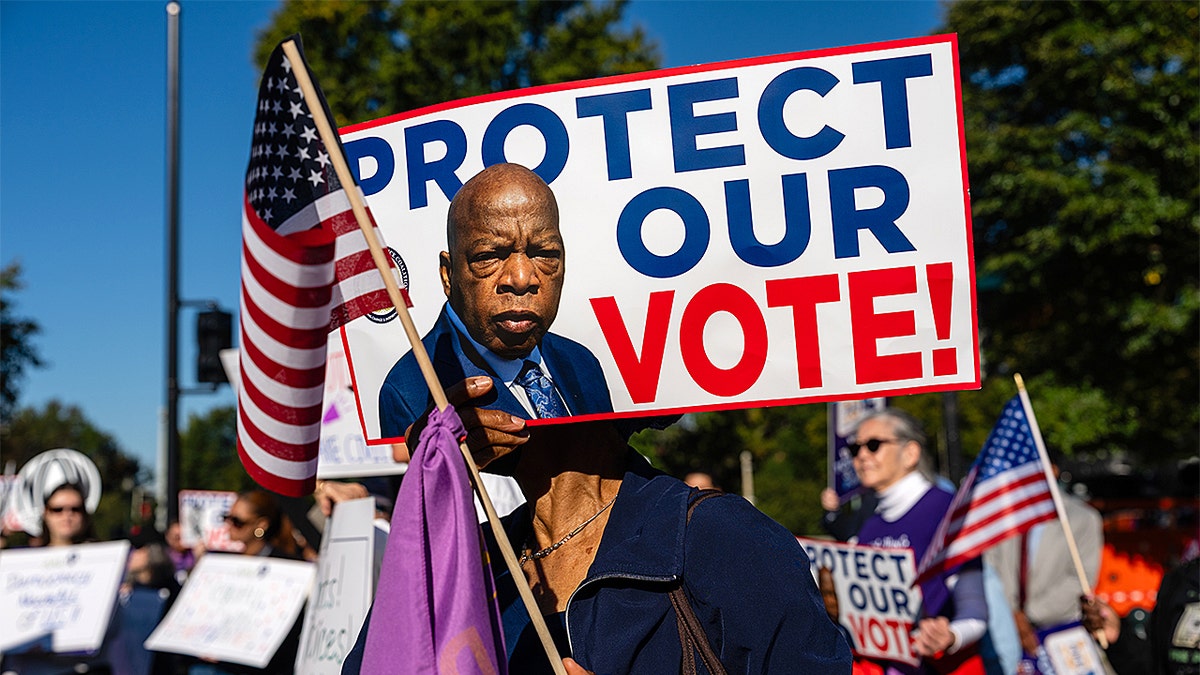
Demonstrators hold signs outside the U.S. Supreme Court in Washington, D.C., on Oct. 15, 2025, as the court considers restricting the creation of majority-Black and majority-Hispanic voting districts. (Eric Lee/Bloomberg)
Reeves said the ruling could also affect a separate Mississippi case requiring the state to redraw its Supreme Court district lines.
That lawsuit, filed by groups including the Southern Poverty Law Center and the American Civil Liberties Union, argues the current map dilutes the voting strength of Black voters in violation of federal law, according to WLBT.
The state appealed the decision to the U.S. Fifth Circuit Court of Appeals, which paused the ruling pending the outcome of Callais.
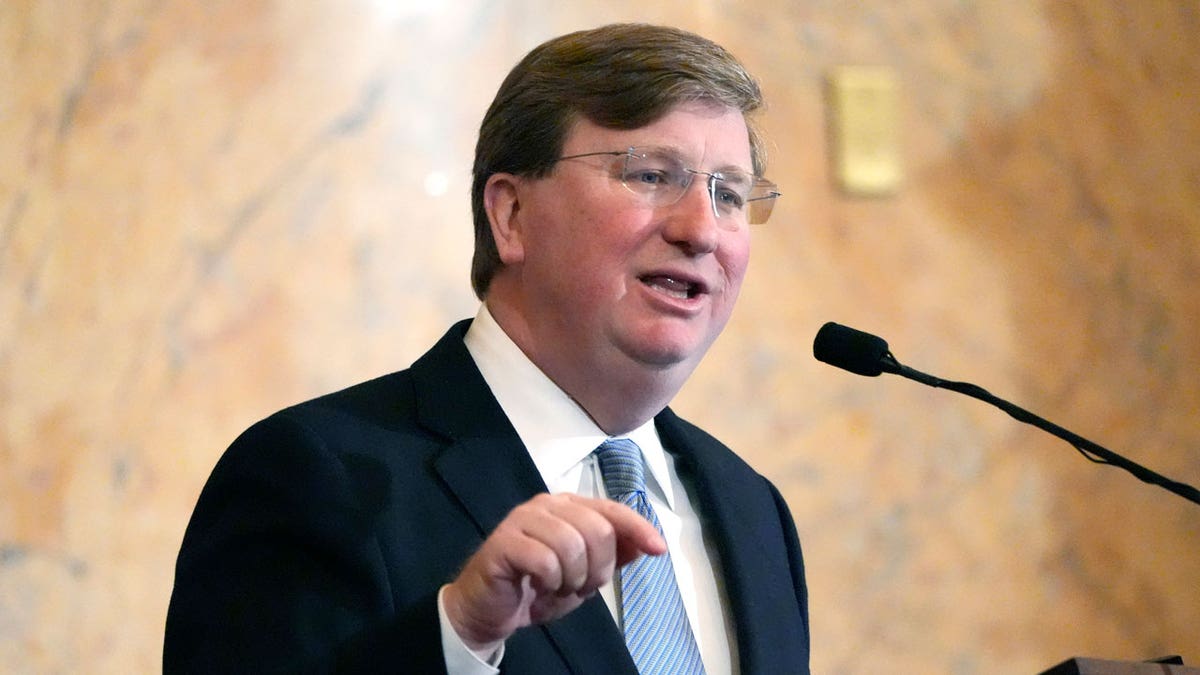
Mississippi Gov. Tate Reeves said he will call a special legislative session to redraw district lines following a pending Supreme Court ruling. (Rogelio V. Solis/AP)
"It is my belief, and federal law requires, that the Mississippi Legislature be given the first opportunity to draw these maps," Reeves said on X. "And the fact is, they haven’t had a fair opportunity to do that because of the pending Callais decision."
He added that he is using his authority to allow lawmakers to redraw maps once the Supreme Court provides clarity.
"For those reasons, I am using my constitutional authority to allow the Mississippi Legislature to use their constitutionally recognized right to draw these maps once the new rules of the game are known following Callais," Reeves said.
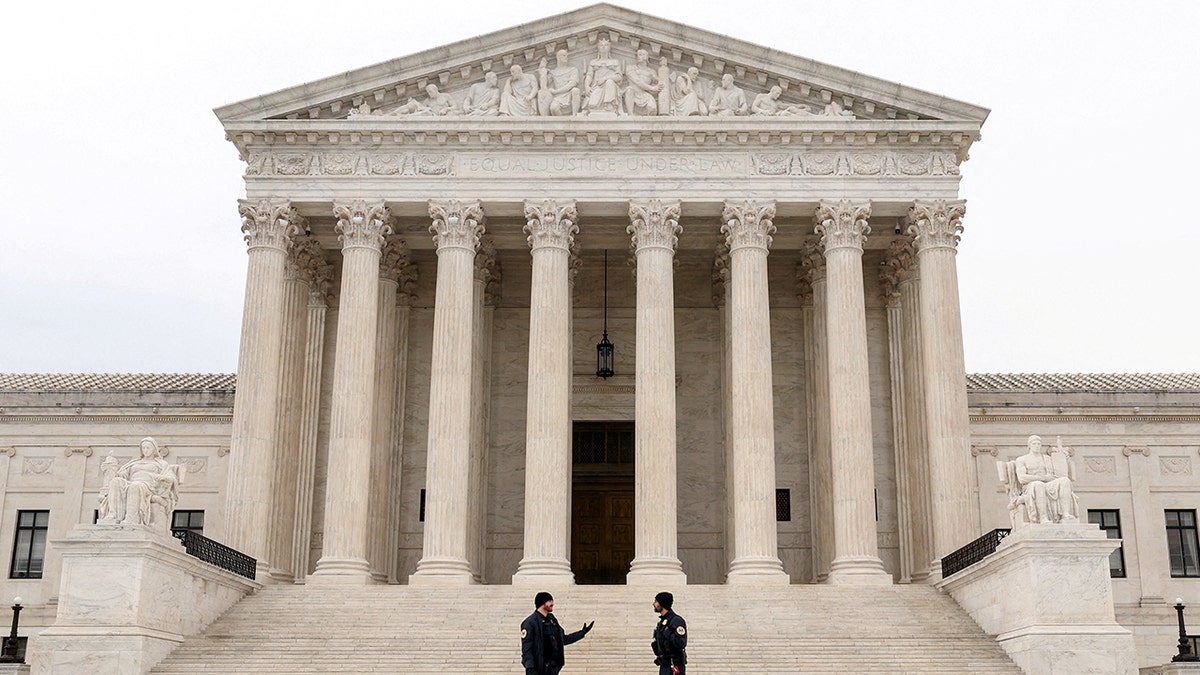
Mississippi Gov. Tate Reeves is preparing to have lawmakers redraw electoral maps after a Supreme Court ruling on redistricting. (Kevin Lamarque/Reuters)
Reeves said the decision could "forever change the way we draw electoral maps."
In October, the Supreme Court’s conservative majority appeared open to weakening a key Voting Rights Act provision that bars states from diluting minority voting power. Critics have warned such a ruling could further erode protections for minority voters.
The Supreme Court is expected to issue a decision by the summer.
Fox News Digital's Breanne Deppisch contributed to this report.
Michael Sinkewicz is a writer for Fox News Digital. Story tips can be sent to michael.sinkewicz@fox.com
Get the latest updates from the 2024 campaign trail, exclusive interviews and more Fox News politics content.
Read the full story at Fox News.
For complete details, visit the original sources linked above.
Comments
Post a Comment