Top Stories; Inside India newsletter: Tariffs and Iran war threaten India's $100 billion garments export goal
Top Stories — Thursday, April 9, 2026
What is trending in the USA today? Here is Breaking News:
- Inside India newsletter: Tariffs and Iran war threaten India's $100 billion garments export goal — CNBC
- 'Poorly run, piece of ice': Trump targets Greenland again as Iran war deepens NATO rift — CNBC
- Energy Secretary Chris Wright warns California's energy crisis under Newsom could threaten national security — Fox Business
Inside India newsletter: Tariffs and Iran war threaten India's $100 billion garments export goal
Source: CNBC • Published: 4/9/2026, 7:57:31 AM

Hello, this is Priyanka Salve, writing to you from Singapore.
Welcome to the latest edition of "Inside India" — your one-stop destination for stories and developments from the world's fastest growing large economy.
Just as India's textile industry was beginning to stabilize after U.S. tariffs, it received another blow. Industry leaders tell me the Iran war has raised costs, hit demand and sent workers fleeing, crushing hopes of a sustained recovery.
Any thoughts on today's newsletter? Share them with the team.
Indian textile exporters could be forgiven for thinking that U.S. President Donald Trump has them in his crosshairs.
In August last year, Washington slapped a 50% tariff on Indian goods, making exports uncompetitive. Relief came months later, when rates were slashed in February, but it lasted barely a few weeks: Trump's subsequent war on Iran plunged India's textile industry into fresh turmoil.
Ready-made garment companies were among the worst-hit by the U.S. tariffs, losing orders or being forced to offer discounts to retain customers, experts said, adding that the Iran war has driven up raw material and packaging costs.
The war, which began on Feb. 28 after the U.S. and Israel struck Iran, has disrupted the movement of goods through the Strait of Hormuz, driving up energy and freight costs and straining supply chains.
This has led to some unusual challenges for the textile industry, India's second‑largest employer which supports more than 45 million jobs.
Industry leaders said some migrant workers employed by the textile companies were struggling to secure liquified petroleum gas, the primary cooking fuel. This has prompted some to return to their home towns.
"It was a tough year, and just when things were starting to come together in February, this war started," Ashwin Chandran, chairman of the Confederation of Indian Textile Industry, told CNBC.
Between April 2025 and February this year, India exported cotton and man‑made yarns, fabrics, and ready-made garments worth $29.5 billion, down from $29.8 billion a year earlier, according to data from the Indian commerce ministry. While the decline may appear modest, the direction of travel is worrying for a country that aims to export $100 billion worth of textiles annually by 2030.
"We were expecting FY27 [financial year ending March 2027] to be much better, but now, with the Iran war, the beginning hasn't been encouraging," said Madhu Sudhan Bhageria, chairman at synthetic and polyester filament yarns manufacturer Filatex India.
He explained that polyester prices — which depend on petroleum — have risen more than 40% since the start of the war, making it difficult to pass on costs to customers.
"Demand has fallen as people don't want to buy at high prices," Bhageria said, adding that fears of a sudden end to the war have left companies wary of being stuck with expensive inventories if prices fall sharply.
If companies fail to pass on higher costs, experts warned, production cuts will follow.
In a temporary relief, the U.S. and Iran agreed to a ceasefire on Wednesday, with Tehran saying safe passage for ships would be "possible" for the next two weeks in coordination with the country's armed forces.
Even so, companies such as Filatex have already cut production by 25% and are waiting for demand to return.
India is the world's sixth‑largest textile exporter, and after signing trade agreements with the U.K. last year, and the EU and U.S. earlier this year, the industry was expecting a sharp recovery. So far, however, it doesn't seems to be the case.
"We have been targeting growth of around 12% to 15% CAGR [compound annual growth rate]," said Pallab Banerjee, managing director of Pearl Global Industries, which supplies garments to JCPenney, Macy's, and Walmart. But for the financial year ending March 2026, growth is averaging lower at around 9%, he said.
Experts say ready-made garment companies are managing to pass on some costs to their customers in the U.S., but there remains concern that demand will slow if oil prices in the U.S rise further.
While the easing of Trump's tariffs in February came as a relief, Banerjee warned that a prolonged war could dampen U.S. consumer demand, as was the case with the outbreak of the Ukraine war in 2022.
That conflict led to slowing store sales, rising inventories, and significant challenges for U.S. retailers, he said, adding: "No one wants a repeat of that."
For now, the fragile ceasefire has cooled oil prices to below $100 per barrel. But they remain well above pre‑conflict levels, keeping pressure firmly on costs and demand. Without lasting peace, India's textile exporters face another year of survival rather than growth.
Indian companies explore tie-ups with China in electric-vehicle charging and energy storage
For the first time in more than five years, a delegation of Indian businesses visited China between March 29 and April 4, meeting with firms from Shanghai, Zhejiang and Wuxi.
Macquarie says India could emerge as an 'AI powerhouse' and names top stocks to watch
The global brokerage said the narrative of India as an AI bystander could shift as it becomes an "AI powerhouse that leverages its unique data sets and massive infrastructure build-out to underwrite a new era of growth."
India turns to Iran for energy supplies after a 7-year hiatus
India has begun buying oil and gas from Tehran after a 7‑year hiatus as it grapples with supply disruptions and elevated energy prices triggered by the U.S.-Israel war on Iran.
April 9: Om Power Transmission IPO opens
April 13: Inflation data for March
'Poorly run, piece of ice': Trump targets Greenland again as Iran war deepens NATO rift
Source: CNBC • Published: 4/9/2026, 7:55:53 AM

U.S. President Donald Trump appears to have set his eyes on Greenland again while venting frustration at NATO, as the diplomatic fallout from Iran war exposes rifts in Washington's ties with the security alliance.
In a Truth Social post Wednesday evening stateside, Trump said that "NATO WASN'T THERE WHEN WE NEEDED THEM, AND THEY WON'T BE THERE IF WE NEED THEM AGAIN. REMEMBER GREENLAND, THAT BIG, POORLY RUN, PIECE OF ICE!!!"
The latest broadside comes after Trump announced a 2-week ceasefire after more than a month of fighting with Iran. Trump has repeatedly criticized NATO members for not joining the war effort in Iran, saying his call for action was "a great test," while threatening to pull out of the alliance.
Trump has taken aim at NATO and Greenland in recent days. "It all began with, if you want to know the truth, Greenland," Trump told reporters at a White House press conference Monday. "We want Greenland. They don't want to give it to us. And I said, 'bye, bye.'"
U.S. relations with European allies have frayed after Trump threatened tariffs on European countries and signaled military action to acquire Greenland, a Danish autonomous territory. In January, Trump said he and NATO Secretary General Mark Rutte had reached "the framework of a future deal with respect to Greenland."
The Iran war has brought fresh tensions in the diplomatic ties, as several NATO members have resisted supporting the U.S.-Israeli military campaign against Iran, denying American military aircraft use of their airspace and declining to contribute naval forces to efforts aimed at reopening the Strait of Hormuz to energy shipping.
Trump's comments Wednesday followed a meeting with Rutte at the White House earlier in the day, with spokeswoman Karoline Leavitt reportedly saying that NATO had "turned their backs on the American people."
Rutte acknowledged the friction, in an interview with CNN following the meeting, saying that "He is clearly disappointed with many NATO allies, and I can see his point."
Last week, Trump called NATO a "paper tiger" and said he was "absolutely" considering to withdraw from the 32-member alliance, arguing that European members have relied on U.S. security guarantees while offering inadequate support when Washington needed them most.
"Trump can't attack the alliance forever without making it hollow," said Michael Feller, chief strategist at Geopolitical Strategy, as Iran was "testing unity" by offering Spain and Turkey waivers to get their oil via the Strait of Hormuz.
Alongside Trump's remarks, the Pentagon timed leaks on new military activities in Greenland, Feller, said referring to a New York Times report earlier this month on the Pentagon looking for military expansion in Greenland. The U.S. was in talks with Denmark for access to three additional bases in Greenland, in what would be the first U.S. expansion there in decades, according to the report.
"This doesn't augur invasion, but is likely designed to intimidate," Feller said.
Meanwhile, less than 24 hours into the truce with Iran, the country's parliamentary speaker Mohammad Bagher Ghalibaf said that Washington had violated the terms of the ceasefire deal.
Israel reportedly launched its heaviest strikes yet on Lebanon, killing hundreds of people and drawing a threat from Iran, saying that it would be "unreasonable" to proceed with peace talks with the U.S., underscoring the fragility of the ceasefire agreement.
Energy Secretary Chris Wright warns California's energy crisis under Newsom could threaten national security
Source: Fox Business • Published: 4/9/2026, 7:43:41 AM
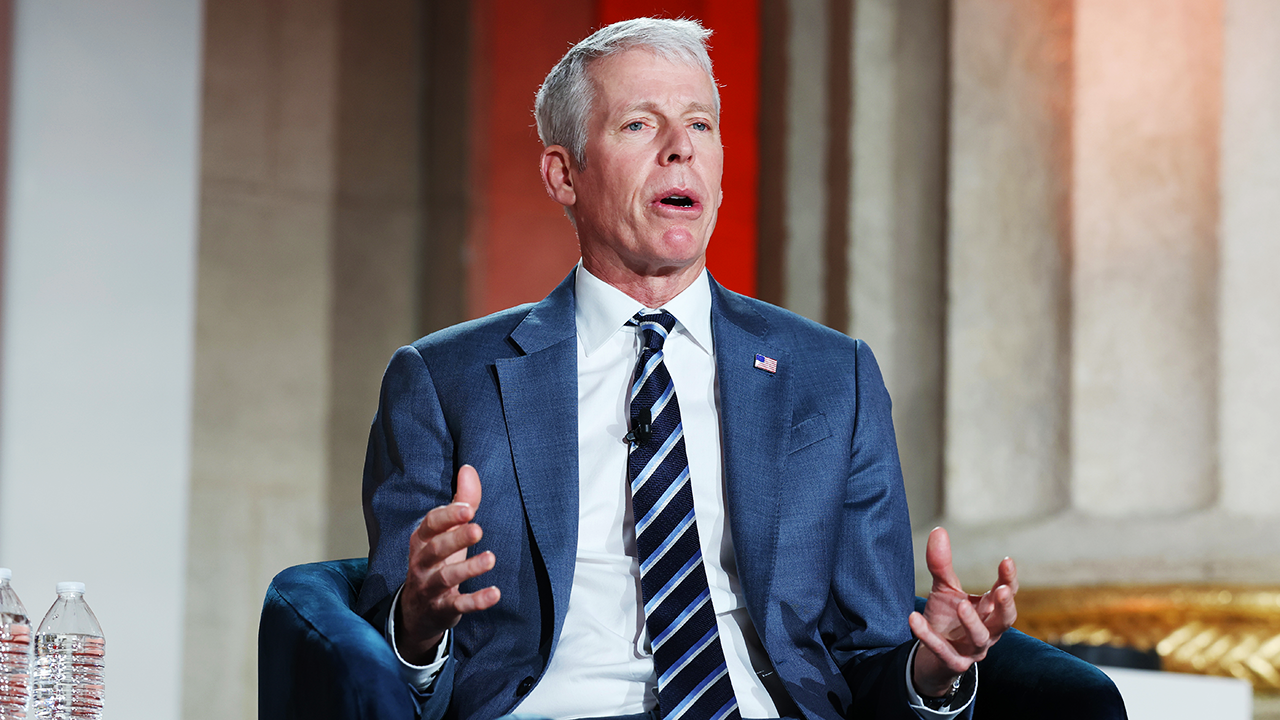
Energy Secretary Chris Wright warned that California's insufficient energy production could pose a national security risk as President Donald Trump moves to reduce the state's dependence on foreign oil.
Wright criticized California politicians, including Gov. Gavin Newsom, for making California an energy-starved island by outsourcing oil and gas imports from places like Iraq and Brazil, even though resources could be developed in the state.
"President Trump is rightfully concerned about energy security for the military operations here in the state of California," he told FOX Business' Kelly Saberi. "This is also a launch pad where we should be supplying our assets across the Pacific Ocean… But by strangling California, he [Newsom] is not only harming California's, he is harming United States national security."
The energy secretary said that high energy prices in the Golden State are a "political choice" and accused leadership of undermining what was once an energy-dominant state.
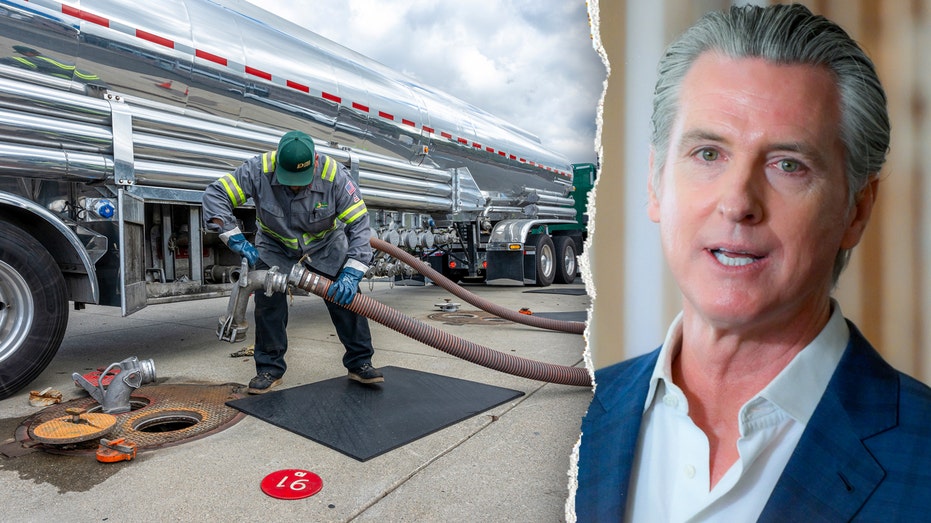
Chevron's president wrote a strongly-worded letter addressed to California Gov. Gavin Newsom over proposed energy regulations. (David Paul Morris/Bloomberg via Getty Images; Tayfun Coskun/Anadolu via Getty Images / Getty Images)
"When I started working in California, in the oil and gas industry 30 years ago, California was one of the top three producers of oil in the United States," he explained. "It's got a long history as a major oil and gas producer."
"It's just recent political decisions that have somehow decided to strangle this industry."
California boasts the highest gas prices in the country, with one gallon of regular gas sitting at $5.93 as of Wednesday, according to AAA — a price exacerbated by geopolitical tensions.
Wright said there is "no reason" for California’s surging energy prices and regulations given the state’s vast natural resources.
"Why should California citizens pay more than 50% higher gasoline prices? Why should they pay almost twice as high electricity prices?" he asked.
Wright said that the administration is open to working with California leadership to revive the state's energy production.
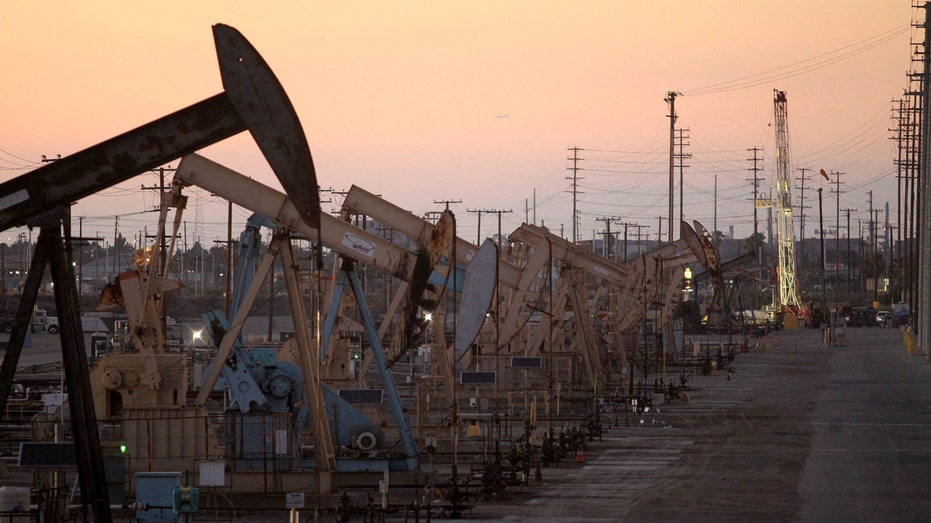
Oil rig pumpjacks extract crude from Wilmington Oil Field near Long Beach, California, on July 30, 2013. (REUTERS/David McNew/File Photo / Reuters)
"The Trump administration wants to work with Gavin Newsom or anyone else in California that recognizes these threats to national security, to the national economy, and most importantly all to the lives of Californian citizens," he said.
However, Newsom's office expressed disinterest in Wright’s plans, saying in part in a statement to FOX Business: "We wish America's taxpayer-funded fossil fuel lobbyist Chris Wright well in his quest to drag America back to the Stone Age."
"We hope he doesn't suffer the same fate his shilling for big oil is forcing on Americans — asthma, toxic exposure, black lung, and other devastating costs," the statement continued.
Read the full story at Fox Business.
For complete details, visit the original sources linked above.
Comments
Post a Comment