Top Stories — Monday, April 6, 2026
What is trending in the USA today? Here is Breaking News:
- How WME Sports agents are reshaping golf's business landscape at Augusta National — Fox Business
- AI may replace your financial advisor, MIT professor says — but there's one big hurdle — CNBC
- Iranian Intelligence Chief Killed in Overnight Attack — nyt News
How WME Sports agents are reshaping golf's business landscape at Augusta National
Source: Fox Business • Published: 4/6/2026, 5:51:14 PM

The week every golf fan looks forward to is upon us, as the Masters Tournament begins at the iconic Augusta National Golf Club with practice rounds beginning on Monday.
It’s not only the first major tournament of the PGA Tour schedule every year, but from a business perspective, the Masters acts as a massive hub for new deals, networking and much more for the golf industry.
In short, think of the Masters as the Super Bowl of golf.

The main leaderboard is seen following the final round of the Augusta National Women's Amateur at Augusta National Golf Club, Saturday, April 4, 2026. (Kieran Cleeves/Augusta National / Getty Images)
But the traditional business behind golf, especially the marketing side of the industry, has completely changed the sport. It requires a new playbook, as the nine-figure tour and player sponsorships just to get visibility on brands has become a thing of the past.
WME Sports, which represents some of the best athletes, coaches, broadcasters, executives and more across all sports, has been leading the charge on that altered playbook, and this week is critical in doing so with golf above all else in the industry.
WME Sports golf agents Sean Guerrero and Jordan Lewites gave an inside look at Masters week within the industry during an interview with FOX Business, where they shared insight and their own excitement for what this week means for them and their clients.
"Masters week within the golf industry is interesting," Guerrero, who has been in the golf business for well over a decade, explained. "Obviously, it’s the most magical week of the year, and all of us getting into the golf industry have had so many different memories along our journey. As you enter the golf industry, you find it’s a unique opportunity where all of the decision makers are in one concentrated area, and everybody’s obsessed with golf. They want to grow how they show up in the sport in new, creative ways.
"While in the industry, we’re excited for the glitz and glam of the Masters, we’re also excited that we all get to gather together to meet, catch up, and really network across the industry to provide new ways, at least from our perspective, to create how these companies show up in the sport we love."
Lewites, who works with PGA Tour star Jordan Spieth, golf influencer Paige Spiranac and many more, echoed Guerrero’s sentiment, as he believes the Masters allows access to every sector of the industry.
"We’re so lucky in the golf industry, especially us that work around the PGA Tour and LPGA Tour and any professional golf tours, there’s one event per week that is the focus. Specifically, there’s four weeks a year – I’ll even throw The Players in there. There’s five times a year where it becomes an industry conference for us," he said. "… We can see everyone from the brand side, the media side, the talent side, and the event side of the business. The governing bodies, everybody’s there. And the Masters is our kick-off to start having latter half of ’26 and ’27 discussions for new deal flow, pipeline and see what folks have planned. It’s everybody’s big launch. Domestically, half the country is going to start playing golf for weather changing. So, it’s the biggest week for the golf industry and kinda kicks off the year."
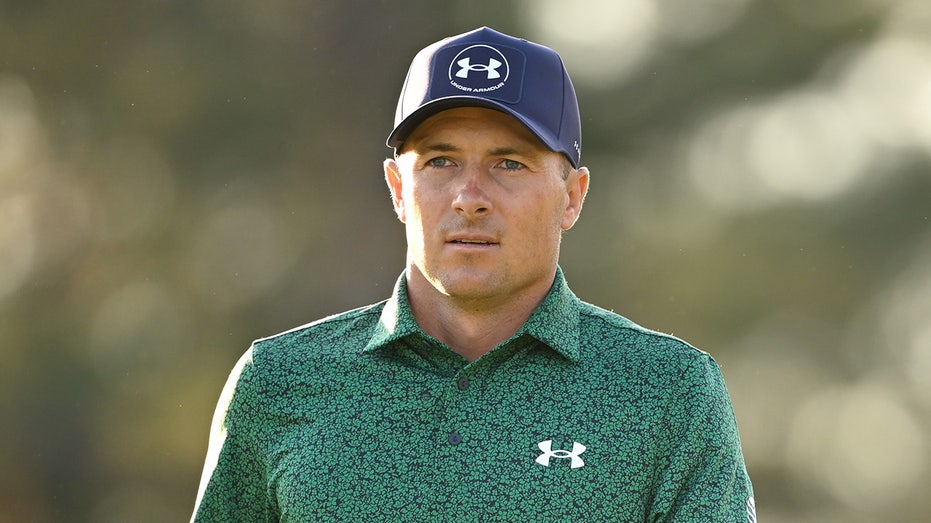
Jordan Spieth walks on the 17th green during the second round of the Masters Tournament at Augusta National Golf Club on April 11, 2025, in Augusta, Georgia. (Ben Jared/PGA TOUR / Getty Images)
The Masters is built on tradition, and it’s why so many, from the casual fan to the golf superfan, tune in to watch every April. But golf has seen a tremendous shift in how brands can get involved in the sport, and agents like Guerrero and Lewites are helping those brands make an impact they didn’t think was possible in the past.
While meetings "under the tree" by the clubhouse still occur, as Lewites mentioned considering the technology ban at Augusta National, brand activations, dinners, conferences and much more occur in town all week long. Whether it’s stepping into a brand’s hospitality house to check out new gear and interact with their visionaries, or meeting PGA Tour legends during a dinner after watching some golf, or even playing at courses around the area, this is where agencies like WME Sports thrive in building connections and bridging gaps for their clients to enter the golf space.
"I think it’s like 500-plus corporate houses that we have through (WME’s sister company) On Location, and a lot of our golf consulting clients use On Location as well for their corporate housing meetings. Whereas we used to do it ourselves, we have an amazing sister company to do that with. It’s become very structured and very detailed-oriented," Lewites detailed.
"There are hosted dinners every single night that we are providing talent to on most cases. Cameron McCormick, Jordan’s coach, Sean Foley is booked every single night at the Masters, doing speaking engagements sometimes as intimate as six people.
"We’re seeing a lot of inbound finally across the board from companies that realize the Masters is truly the ultimate hospitality opportunity."
A prime example of the type of opportunities WME Sports is creating for their clients is what Guerrero did with a great Masters tradition – John Daly’s "home" for the week.
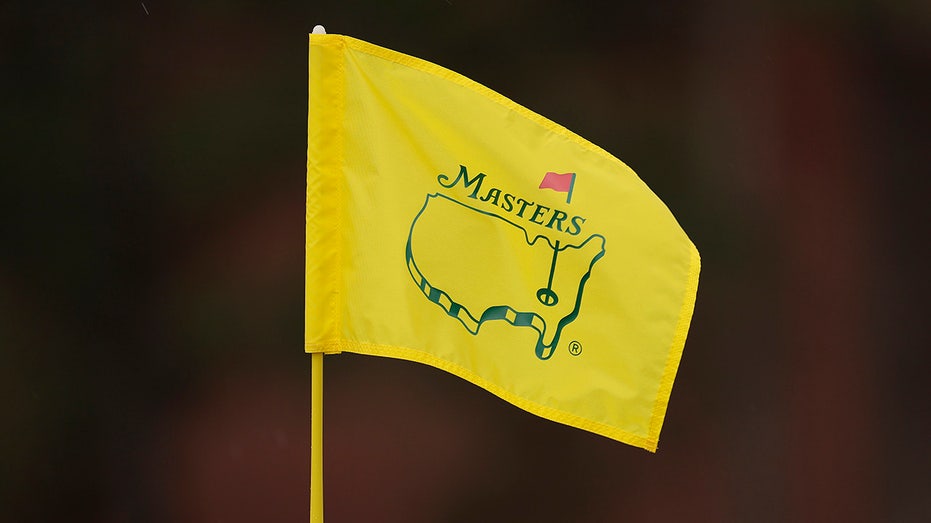
A detailed view of a pin flag on the ninth green during a practice round prior to the 2025 Masters Tournament at Augusta National Golf Club on April 7, 2025, in Augusta, Georgia. (Harry How/Getty Images / Getty Images)
While he hasn’t played in the Masters in years, Daly, a fan-favorite in the golf world, would stay in an RV, specifically at a Hooters restaurant in town, where he would interact with fans with autograph signings and picture taking. But his usual set-up was scrapped, as that Hooters location was torn down before this year’s tournament.
Enter Guerrero, who helped Daly’s team get connected with Topgolf, the high-tech driving range and lounge company, who wanted some more eyes and attention on their Augusta location.
"They re-homed him on Thursday and Friday out there. Keeping that tradition alive," Guerrero said. "We can be a resource for these brands in so many different ways."
Guerrero called "Creative and change" the optimal words to describe what is happening in the golf space today. Whether it’s data and technology companies like CapTech helping the governing bodies in golf with their statistics and analytics, or smaller, cult-favorite brands like Swag Golf find that corporate avenue, WME Sports uses events like the Masters to get the ball rolling, or keep it rolling, in the right direction to make impacts they might not have thought possible.
In fact, Swag Golf created a partnership with Bryson DeChambeau, the two-time U.S. Open champion who has also embraced the creator space in golf, which is something WME Sports has helped pioneer, especially with its work alongside Good Good Golf.
"We started working with Swag when they were doing a couple million bucks in revenue," Lewites said. "We knew they were on pace to do $50 million in shared revenue, and we’d help build their entire licensing program, so all of their head covers that you see that are everything from WWE, MLB, NBA, NFL – they have partnerships with all of them. They have an amazing partnership with DICK’S. They’re in every DICK’s and Golf Galaxy location with their hometown heroes collection, and their collegiate licensing program we put together for them. Again, here’s a small golf company now that showed how brands can activate and how that’s changed."

A general view of the 11th hole green during the third round of the Augusta National Women's Amateur at Augusta National Golf Club on April 4, 2026, in Augusta, Georgia. (Hector Vivas/Getty Images / Getty Images)
Guerrero added: "Golf is unlike any other sport. If you’re a fan of golf, you play it and you consume it’s products. I’m a big baseball guy, I’m a big football guy. I’m not playing baseball on the weekends. It’s such a unique lifestyle sport, where if you’re a fan of it, you consume it’s products and you have a consumer for life. Yeah, you can start at three and play until 93.
"So, all of these brands on the outside of golf wanting to join the industry and see the value of it – I truly root for everybody across the space. Whether we work with them or not, we all grow together."
Golf truly is a lifestyle compared to other sports. Not only do golfers play the game throughout the year, they’re also consuming the products they see their favorite athletes using each day on the course.
The Masters also accentuates that point, which is why WME Sports and the rest of the industry is excited to get down to Augusta and continue its impact on this ever-evolving game at one of its signature events.
"Everybody’s thinking about golf, and after the Masters hits, everybody’s got the bug," Guerrero said. "A lot of these companies place a premium on either showing up at or around the Masters, or launching products or new services or new whatever it is along that same timeline."
Read the full story at Fox Business.
AI may replace your financial advisor, MIT professor says — but there's one big hurdle
Source: CNBC • Published: 4/6/2026, 5:45:01 PM

The financial capability of artificial intelligence platforms is improving to the extent that it will likely be able to replace human financial advisors in the future, according to finance experts.
However, AI has a major drawback relative to human advisors: a lack of fiduciary duty, they said. And a resolution to that legal gray area doesn't seem near at hand, they said.
A fiduciary duty is a legal obligation that many financial advisors — and professionals in other fields, such as lawyers and doctors — owe their clients. It essentially means they will put their clients' best interest ahead of their own.
"The problem that we have to solve is not whether AI has enough expertise," said Andrew Lo, a finance professor and director of the Laboratory for Financial Engineering at the MIT Sloan School of Management. "The answer right now is, clearly, AI has the [financial] expertise."
"What they don't have is that fiduciary duty," Lo said. "They don't have the ability to suffer consequences if they make a mistake to the same degree that a human advisor does."
An advisor who violates their fiduciary responsibility can be subject to fairly serious consequences, including regulatory penalties, civil liabilities and criminal charges, Lo said.
The notion of putting a client's interest ahead of yours "has no teeth" without responsibility or legal liability, he said.
Many people seem to be turning to large language models — examples of which include OpenAI's ChatGPT, Anthropic's Claude and Google's Gemini — for financial advice.
Two-thirds of Americans, or 66%, who have used generative AI say they have used it for financial advice, according to an Intuit Credit Karma poll published in September. The share swells to 82% for millennials and Generation Z.
About 85% of respondents who have used GenAI for financial advice acted on the recommendations provided, according to the survey, which polled 1,019 adults.
"People are looking to these services for all sorts of advice, and they're getting it, and it seems to be a big open regulatory question," said Sebastian Benthall, a senior research fellow at New York University School of Law's Information Law Institute.
"Who's really responsible, and can people really be relying on a product to do this if it's not being backed up by a corporation with a fiduciary duty?" Benthall said. "It's really unresolved."
That said, there are some good use cases for AI in financial planning, Lo said.
AI is "really good" at providing resources online for various financial concepts that typical people don't understand, Lo said. For example, if someone were to seek answers to basic questions about Medicare, AI can generally provide a reliable overview, he said.
While AI's output is sophisticated in many financial respects, consumers generally shouldn't blindly trust answers to questions about their own household finances, Lo said.
"When it comes to very, very specific calculations of your own personal situation, that's where you have to be very, very careful," he said. "One of the things about LLMs that I find particularly concerning is that no matter what you ask it, it'll always come back with an answer that sounds authoritative, even if it's not."
In this sense, double and triple checking an AI's answers is "really necessary," he said.
Perhaps surprisingly, AI isn't strong at doing financial calculations, Lo said — so any numbers-based financial planning questions involving your taxes, for example, are generally best avoided.
James Burnham, a legal and government affairs official at Elon Musk's xAI, said in a social media post in March that the company's AI platform, Grok, "is not tax advice so always confirm yourself too."
Of course, many human financial advisors provide advice to clients, and it is then up to the client to decide whether to implement it.
"I think that's the way that I would look at LLMs: They can be very, very useful in providing different options and in describing how those options might work, but you should always remember that the advice that they can give you could be wrong," Lo said.
"But I would argue that that's true with human financial advisors as well," he said.
Not all human financial advisors are fiduciaries, either.
The landscape of financial advice is a minefield of different legal relationships. Those legal duties can differ depending on factors such as whether the person a consumer is talking to is a stockbroker, registered investment advisor, insurance agent or other intermediary.
For example, a U.S. Labor Department rule issued during the Biden administration sought to bestow a fiduciary duty on intermediaries that recommended rolling money from a 401(k) plan over to an individual retirement account, a move that can involve hundreds of thousands of dollars.
However, that rule recently died after the Trump administration stopped defending it in court — meaning many financial intermediaries aren't beholden to a fiduciary duty regarding rollover advice. As a result, legal experts recommend consumers approach such rollover recommendations with caution, due to the potential for conflicts of interest.
Benthall, of New York University, proposed a similar legal predicament regarding AI advice: Since AI giants right now are largely U.S.-based, if an AI were to suggest that investors put their retirement savings into U.S. stocks, that advice could be viewed as self-dealing, or a financial conflict of interest.
That said, companies that provide AI services don't appear to receive compensation for their advice to retail investors, and therefore aren't fiduciaries, said Jiaying Jiang, an associate law professor at the University of Florida Levin College of Law who is researching AI and fiduciary duty.
However, financial advisors who owe a fiduciary duty to clients could violate that duty by using AI, Jiang said.
For example, if an advisor uses AI to give a certain recommendation to a client, but that recommendation isn't in the client's best interest, it is the advisor — and not the company backing the AI platform — that would be liable, Jiang said.
Ultimately, Lo said he thinks government policy needs to change to provide fiduciary protections for consumers who get financial advice from AI.
Until then, "we're not going to get to the point where we can fully delegate these [financial] decisions," Lo said.
"But I do believe that that will eventually happen," he said.
Iranian Intelligence Chief Killed in Overnight Attack
Source: nyt News • Published: 4/6/2026, 5:42:39 PM

The intelligence chief of the Islamic Revolutionary Guards Corps was killed overnight on Monday, the latest blow to senior Iranian leadership since the United States and Israel began the war against Iran in late February.
The intelligence chief, Major General Seyed Majid Khademi, was killed in an Israeli airstrike in Tehran, Israel’s defense minister said on Monday. Iran’s state broadcaster had earlier reported that Mr. Khademi had been “killed in the criminal terrorist attack by the American-Zionist enemy.”
Israel has killed a number of Iran’s most senior officials, including Ayatollah Ali Khamenei, the former supreme leader, and Ali Larijani, a top national security official who had effectively been running Iran.
Israel Katz, the Israeli defense minister, described Mr. Khademi as one of the top three leaders of the Revolutionary Guards. He vowed that Israel would continue to target senior Iranian officials, saying in a statement that it would “hunt them down, one by one.”
Mr. Khademi was one of several Iranian officials who occupied their post for only a few months, as Israel has ramped up its killing of top Iranian generals, senior officials and nuclear scientists. He was appointed in June after his predecessor and his deputy were killed in an airstrike during a 12-day war with Israel.
Aaron Boxerman contributed reporting from Jerusalem.
Amelia Nierenberg is a Times reporter covering international news from London.
Read the full story at nyt News.
For complete details, visit the original sources linked above.
Comments
Post a Comment