Top Stories — Wednesday, April 22, 2026
What is trending in the USA today? Here is Breaking News:
- Here’s the latest. — nyt News
- Minnesota allows ‘happy hour’ in nursing homes under new law easing alcohol restrictions — Fox News
Here’s the latest.
Source: nyt News • Published: 4/22/2026, 1:17:33 PM

Beirut11:38 a.m. April 22
The status of U.S.-Iranian negotiations to end the war in the Middle East was unclear on Wednesday morning, hours after President Trump said that he was extending a fragile cease-fire.
There was no immediate public response from top Iranian officials to Mr. Trump’s announcement.
U.K. Maritime Trade Operations, a shipping monitor run by the British Navy, reported early Wednesday that a boat belonging to Iran’s Islamic Revolutionary Guards Corps had attacked a container ship near the Strait of Hormuz.
President Trump made the announcement late on Tuesday, hours before the two-week cease-fire was set to expire. Vice President JD Vance’s planned trip to Pakistan for a second round of peace talks was put on hold earlier in the day because Tehran had not responded to American positions, a U.S. official said.
In a social media post, Mr. Trump said he had acted on a request from Pakistan, which is trying to mediate an end to the war. He said the cease-fire would remain in place until Iran’s “leaders and representatives can come up with a unified proposal.”
Mr. Trump’s announcement was a marked departure from his comments earlier in the day, when he told CNBC that if Iran did not agree to U.S. demands, “I expect to be bombing.”
Even as he extended the cease-fire, Mr. Trump said the U.S. blockade on ships heading to and from Iranian ports would continue. Iran has demanded that U.S. forces allow its vessels free passage, and on Tuesday Iran’s foreign minister, Abbas Araghchi, called the blockade “an act of war.”
On Wednesday, Prime Minister Keir Starmer of Britain and President Emmanuel Macron of France were expected to host a two-day conference in London of more than 30 countries to discuss detailed military plans to reopen the Strait of Hormuz, a strategic waterway for oil and gas shipments. At a prior summit, leaders agreed to establish a multinational defensive mission to escort commercial vessels through the strait, according to a statement by Mr. Starmer’s office.
Here’s what else we are covering:
Energy: Oil prices approached $100 a barrel and stocks faded on Tuesday as uncertainty clouded the possibility of peace talks.
Lebanon: Even though a separate 10-day cease-fire between Israel and Lebanon has mostly held since it went into effect last week, Israel on Tuesday accused Hezbollah, the Iran-backed militant group, of firing rockets toward Israeli troops in southern Lebanon. Hezbollah later confirmed firing on Israel, saying it had done so in response to cease-fire violations.
Prime Minister Keir Starmer of Britain and President Emmanuel Macron of France will host military planners from more than 30 countries in London on Wednesday at a conference aimed at reopening the Strait of Hormuz.
“The sessions will advance military plans to reopen the Strait, as soon as conditions permit, following a sustainable ceasefire agreement,” the ministry said in a statement.
At a previous summit of 51 countries, hosted by Starmer and Macron in Paris last week, leaders called for the strait’s “unconditional, unrestricted and immediate” reopening and agreed to establish a multinational defensive mission to escort commercial vessels.
A container ship was attacked by a gunboat from Iran’s Revolutionary Guards Corps off the coast of Oman, according to the U.K. Maritime Trade Operations, an organization administered by the British Royal Navy. The crew was safe, it said, though the ship’s bridge sustained heavy damage. No radio warning was issued before the vessel was fired upon, according to the organization.
Secretary General António Guterres of the United Nations on Tuesday welcomed the extension of the cease-fire between Iran and the United States.
“This is an important step toward de-escalation and creating critical space for diplomacy and confidence-building between Iran and the United States,” said Guterres in a statement. “We encourage all parties to build on this momentum, refrain from actions that could undermine the cease-fire, and engage constructively in negotiations to reach a sustainable and lasting resolution.”
Prime Minister Shehbaz Sharif of Pakistan, who has assiduously courted the White House and sought to mediate peace talks between the United States and Iran, thanked President Trump for “graciously accepting our request to extend the ceasefire to allow ongoing diplomatic efforts to take their course.”
In the first response from Iran to the cease-fire extension announcement, an adviser to Mohammad Bagher Ghalibaf, the influential the speaker of the Iranian Parliament, dismissed it. “The extension of the cease-fire by Donald Trump has no meaning. The losing side cannot set the terms,” Mahdi Mohammadi wrote in a social media post. He equated the U.S. naval blockade with bombing.
It was a starkly different tone from the American president, who just this morning had threatened a military attack if Iran did not agree to U.S. demands. “I expect to be bombing,” Trump said on CNBC this morning. “The military is raring to go.”
President Trump announced he was indefinitely extending the cease-fire between the United States and Iran, which was set to expire within hours. The president said he had received a request from Pakistan, which is attempting to mediate an end to the war, to hold off any attacks.
“I have therefore directed our Military to continue the Blockade and, in all other respects, remain ready and able, and will therefore extend the Ceasefire until such time as their proposal is submitted, and discussions are concluded, one way or the other,” Trump wrote on Truth Social.
Reporting from Qlaileh and Mansori in southern Lebanon.
Mass funerals for Hezbollah fighters and civilians took place across southern Lebanon on Tuesday, as people used a pause in fighting between Hezbollah and Israel to return to their villages and bury relatives at their local cemeteries.
In Qlaileh, a village about nine miles from the Lebanese-Israeli border, hundreds of families gathered for the funeral of 16 Hezbollah fighters and four civilians on Tuesday afternoon.
As mourners carried their coffins through the village square and to the cemetery, many women carrying Hezbollah flags threw themselves on top of the coffins and burst into tears. At least some of the fighters had been temporarily buried in makeshift cemeteries until the truce made a return to their village possible.
The 10-day U.S.-brokered cease-fire between Israel and Hezbollah, the Iran-backed Lebanese militant group, began last Friday and offered a much-needed reprieve for Lebanon after weeks of war. Roughly 2,300 people have been killed in Lebanon in the fighting, according to Lebanese officials, who warn that the death toll could rise.
Hezbollah said it held funerals on Tuesday for more than 40 of its fighters.
Elsewhere in the south, local leaders prepared for more funerals. In Mansori, a village in southern Lebanon near the coast, civil defense workers dug fresh graves at the village cemetery on Tuesday. Nearly every building along the village’s main road had been reduced to rubble, including the village mosque. Rebar and chunks of concrete were strewn across much of the graveyard nearby.
Nearly all of the 4,000 residents of Mansori fled when the war broke out, the community leader, Qassem Dayli, said. Even with the temporary truce, very few have returned to take stock of their homes or collect any valuables left behind.
“We don’t trust the situation will remain calm,” he said. “It is still dangerous here.”
Hwaida Saad contributed reporting.
In a statement on Truth Social, Mr. Trump attributed his decision to divisions among Iranians about how to proceed and a request from Pakistan, which is attempting to mediate an end to the war. Earlier on Tuesday, Vice President JD Vance postponed his planned trip to Islamabad, where he was expected to lead negotiations with the Iranians.
“Based on the fact that the Government of Iran is seriously fractured, not unexpectedly so and, upon the request of Field Marshal Asim Munir, and Prime Minister Shehbaz Sharif, of Pakistan, we have been asked to hold our Attack on the Country of Iran until such time as their leaders and representatives can come up with a unified proposal,” Mr. Trump wrote.
“I have therefore directed our Military to continue the Blockade and, in all other respects, remain ready and able, and will therefore extend the Ceasefire until such time as their proposal is submitted, and discussions are concluded, one way or the other.”
The tone of Mr. Trump’s message was starkly different from earlier in the day, when he had threatened a military attack if Iran did not agree to U.S. demands. “I expect to be bombing,” Mr. Trump said on CNBC on Tuesday morning. “The military is raring to go.”
The back-and-forth is part of a by-now familiar pattern by Mr. Trump of threatening and then pulling back, leaving the fate of the negotiations — and the war — in flux. It also marks yet another hurdle in the Trump administration’s push to secure an agreement that would curb Iran’s nuclear program, and it comes as the Pentagon has been reviewing military options should Mr. Trump conclude that Tehran is not negotiating in good faith.
Still, a U.S. official with direct knowledge of the situation said a return to bombing was not imminent even as the Pentagon continued to game out options. The United States remains well-positioned to launch another wave of strikes, having kept its substantial military presence in the Middle East.
The official also cautioned that Mr. Vance’s trip to Pakistan could be back on at a moment’s notice with the president’s approval. U.S. officials also are looking for a clear sign that Iran’s negotiators have been fully empowered to reach an agreement.
The United States recently transmitted a written proposal to the Iranians intended to establish base-line points of agreement that could frame more detailed negotiations. The document covers a broad range of issues, but the core sticking points are the same ones that have bedeviled Western negotiators for more than a decade: the scope of Iran’s uranium enrichment program and the fate of its stockpile of enriched uranium.
It’s unclear what exactly the United States has proposed or what the president would be willing to accept. On enrichment, the American position could range from demanding that Iran abandon enrichment entirely to allowing a limited civilian program under strict oversight by the International Atomic Energy Agency, paired with the closure of Iran’s underground nuclear facilities.
One of the ideas discussed during negotiations last year was a multinational consortium working with Iran to enrich uranium for civilian uses; potential locations included an island in the Persian Gulf. Regarding the stockpile, negotiators are weighing options including whether Iran should surrender its enriched uranium directly to the United States or transfer it to a third country.
Also on the table is what the United States might offer in return. Iran has hundreds of billions of dollars in assets frozen under American sanctions as part of Mr. Trump’s maximum-pressure campaign, and administration officials are debating whether releasing some of those funds could be part of a final deal. Officials have also discussed whether the United States and gulf partners such as Saudi Arabia and the United Arab Emirates might offer broader economic integration to Iran.
Mr. Trump has been adamant in private conversations that his deal must be better than the one struck by President Barack Obama in 2015. Knowing that, Iran hawks close to the president have repeatedly invoked Mr. Obama’s deal as a tactic to keep him from agreeing to what they view as dangerous concessions.
Any American position on enrichment will have to contend with Iran’s longstanding argument, rooted in its accession to the Nuclear Nonproliferation Treaty, that the pact guarantees signatories the right to enrich uranium for peaceful purposes.
The negotiations have been run by a tight circle inside the administration. Mr. Vance, along with Jared Kushner and the envoy Steve Witkoff, have served as the principal American interlocutors, with Mr. Vance and Mr. Kushner, the president’s son-in-law, doing most of the talking. On the Pakistani side, Field Marshal Syed Asim Munir has emerged as the critical channel to the Iranians.
Back in Washington, Situation Room meetings on Iran have typically included Mr. Trump; the White House chief of staff, Susie Wiles; Secretary of State Marco Rubio; the director of national intelligence, John Ratcliffe; and Mr. Vance. Defense Secretary Pete Hegseth and Gen. Dan Caine, the chairman of the Joint Chiefs of Staff, also participate.
Treasury Secretary Scott Bessent has become increasingly involved as the economic dimensions of a potential deal have come into sharper focus, as has the energy secretary, Chris Wright, though Mr. Trump has vented frustrations with Mr. Wright in recent days after the energy secretary told CNN that gas prices might not drop below $3 until next year. Mr. Trump told The Hill that Mr. Wright was “totally wrong.”
The pause in talks caps a turbulent few days of public messaging from Mr. Trump, whose statements have at times appeared at odds with the state of the negotiations.
In a telephone interview with CBS News on Friday, Mr. Trump declared that Iran had “agreed to everything” and described a joint operation to remove Iranian nuclear material. “Our people, together with the Iranians, are going to work together to go get it. And then we’ll take it to the United States,” he said. Iranian officials quickly disputed the characterization.
Then on Sunday, Mr. Trump wrote on Truth Social that Iran had violated the cease-fire by firing on commercial vessels in the Strait of Hormuz, including a French ship and a British freighter. That same day, U.S. military forces seized an Iranian-flagged ship, the Touska, that Mr. Trump said tried to evade its blockade on the country’s ports.
The president said his representatives would arrive in Islamabad the following evening for negotiations, and he warned that if Iran rejected what he called “a very fair and reasonable DEAL,” the United States would “knock out every single Power Plant, and every single Bridge, in Iran.”
“NO MORE MR. NICE GUY!” he wrote.
Reporting from Washington
President Trump said on Tuesday that the United States was considering offering financial support to the United Arab Emirates, an oil-rich ally that has been contending with economic fallout from the war in Iran.
The war has damaged oil and gas infrastructure throughout the Middle East, dealing a blow to economies that rely on the Strait of Hormuz to transport crude around the world. The Emirates is an unlikely recipient of economic support, and the fact that it has inquired about assistance demonstrates the cascading effects of the conflict.
“It’s been a good ally of ours, and you know, these are unusual times,” Mr. Trump said on CNBC on Tuesday.
Mr. Trump added that the Emirates had been hit hard by Iranian retaliation and that it had pledged to make substantial investments in the United States. He noted that the country’s wealth made the need for support surprising.
“I’m surprised, because they are really rich,” Mr. Trump said.
Emirati officials met with Treasury Secretary Scott Bessent in Washington last week on the sidelines of the spring meetings of the International Monetary Fund and the World Bank. The Treasury Department said that in their conversations, officials “emphasized that the United States seeks to deter future attacks and ensure that energy markets are not further impacted by Iran.”
Kevin Hassett, the director of the National Economic Council, said on Monday that he expected the Treasury Department to “make every effort” to help the Emirates out. He also suggested, however, that the financial support would probably not be necessary.
“We very much appreciate President Trump’s recognition of the U.A.E. as one of America’s most important economic and trade partners,” the Emirates’ ambassador to the United States said in a post on X.
Last year, the Treasury Department deployed a $20 billion currency swap through its Exchange Stabilization Fund to provide support for Argentina’s struggling economy as it tried to bolster the political prospects of Argentina’s president, Javier Milei. Mr. Bessent has broad discretion over the use of the fund, which can be deployed to buy another nation’s currency in exchange for dollars.
The Exchange Stabilization Fund had a net balance of about $44 billion as of February. It is not clear how big a lifeline the Emirates might need — or even whether it needs one at all.
Some economists have suggested that the request appeared to be a political signal, intended to solicit a demonstration of support from the country’s chief ally, and that it was not a financial necessity. The Emirati currency is pegged to the dollar, and the country’s central bank still has ample reserves, despite the disruption to oil exports that the war has caused.
The Emirati foreign ministry did not immediately respond to a request for comment.
Vivian Nereim contributed reporting from Riyadh, Saudi Arabia.
Read the full story at nyt News.
Minnesota allows ‘happy hour’ in nursing homes under new law easing alcohol restrictions
Source: Fox News • Published: 4/22/2026, 12:15:07 PM

Minnesota Gov. Tim Walz signed a bill Tuesday allowing nursing home residents to drink alcohol, clearing the way for "happy hour" in senior living facilities.
Previously, Minnesota law barred facilities from organizing events that included alcohol without a liquor license. The new "Grandparents’ Happy Hour" law allows nursing homes and assisted living facilities to serve alcohol without one.
The measure also updates the state’s liquor laws, allowing some cities to issue licenses and easing rules for certain businesses, including nursing homes and University of Minnesota facilities.
Walz announced the bill in a post on X, encouraging seniors to enjoy a drink.

A senior couple enjoys a glass of red wine at home as Minnesota considers a bill to allow assisted living facilities to serve alcohol without a liquor license. (iStock)
"Living in a nursing home shouldn’t mean giving up everyday freedoms," Walz wrote in a post on X. "I just signed a bill allowing seniors living in nursing homes to consume alcohol - so that everyone can enjoy happy hour!"
The law requires staff serving alcohol to be at least 18 years old, and facilities are responsible for ensuring residents do not overindulge.
The bill drew attention during the legislative session, largely due to Anita LeBrun, an 88-year-old resident of an assisted living facility whose support went viral.
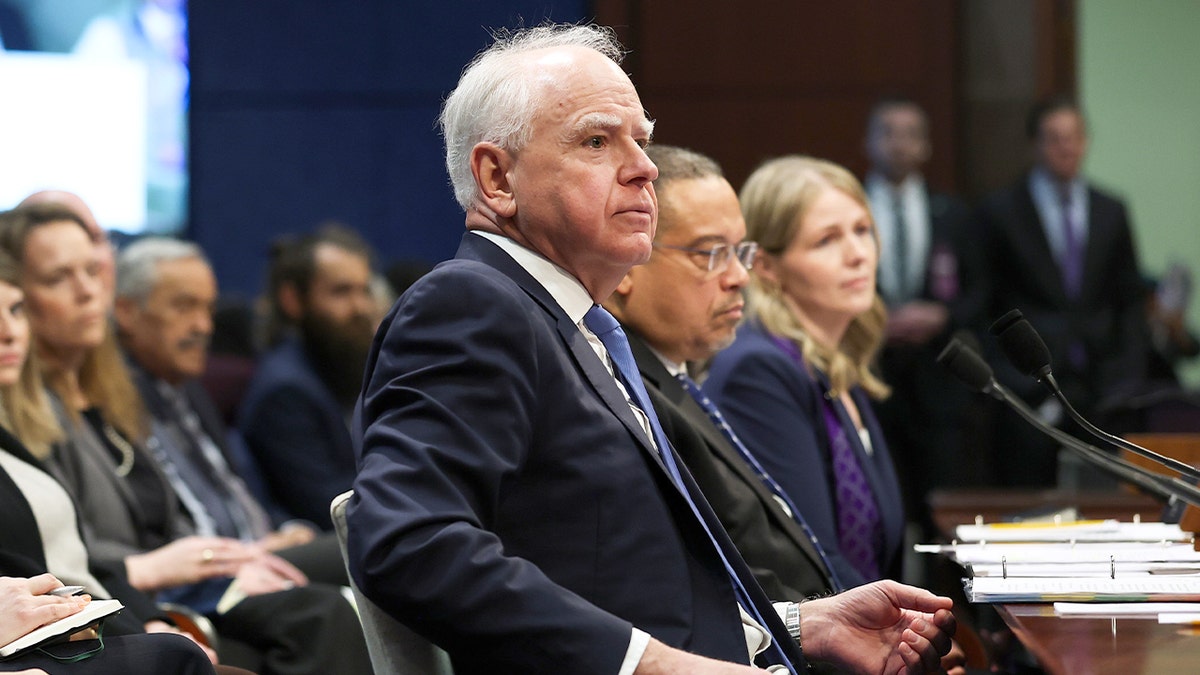
Minnesota Gov. Tim Walz signed a bill allowing nursing homes to serve alcohol to residents, paving the way for "happy hour" in senior living facilities. (Anna Moneymaker/Getty Images)
"My friends and I love happy hour, just like many of you do, I am sure," LeBrun said before the House Commerce, Finance and Policy Committee last month.
"Over a shared drink, we get to reminisce about parts of our lives, military service, raising a family, the loss of a friend, and celebrating the golden phase of our lives too," she said.
LeBrun also told a state Senate committee that living in an assisted facility "doesn’t mean that we should have fewer freedoms than anyone else."

A new Minnesota bill could allow assisted living facilities to serve alcohol to residents without a liquor license, aiming to improve seniors' quality of life and social connection. (iStock)
She later appeared on "Fox & Friends," describing social gatherings with snacks and music where residents previously had to bring their own alcohol due to restrictions.
While policies vary, senior living communities in many states allow residents to drink or host informal social hours.
Minnesota’s rules stood out because they limited how facilities could organize and serve alcohol in communal settings.
"Living in a nursing home or assisted living facility should not mean giving up everyday freedoms," Walz said in a statement. "This bipartisan bill increases independence and safety under clear regulations, while ensuring residents are treated with the respect and dignity they deserve—including the ability to get together for happy hour."

A new Minnesota law allows nursing homes to serve alcohol to residents, easing long-standing restrictions. (iStock)
As the bill was considered, industry advocates said it would preserve small routines that support quality of life.
"Ultimately, the ‘free the happy hour’ bill is about restoring a fundamental expectation — that moving into a senior living community does not mean giving up one’s autonomy," LeadingAge Minnesota, an industry group that represents senior living providers, said in a statement last month.
Fox News Digital's Deirdre Bardolf contributed to this report.
Michael Sinkewicz is a writer for Fox News Digital. Story tips can be sent to michael.sinkewicz@fox.com
Get the latest updates from the 2024 campaign trail, exclusive interviews and more Fox News politics content.
Read the full story at Fox News.
For complete details, visit the original sources linked above.
Comments
Post a Comment