Top Stories — Monday, April 6, 2026
What is trending in the USA today? Here is Breaking News:
- Here’s the latest. — nyt News
- Ayanna Pressley ripped for calling evictions an 'act of violence' — Fox News
- JPMorgan CEO Jamie Dimon in annual letter cites risks in geopolitics, AI and private markets — CNBC
Here’s the latest.
Source: nyt News • Published: 4/6/2026, 4:00:43 PM

Tel Aviv1:38 p.m. April 6
Pinned
Iran said on Monday that it would retaliate forcefully if President Trump carries out his threat to strike Iranian power plants and bridges unless Tehran ends its chokehold on the Strait of Hormuz.
Both countries appeared to stand on the precipice of what could become a new phase in the month-old war, as they escalated threats and Iran and Israel launched new attacks. An Israeli strike overnight on Monday killed Majid Khademi, the intelligence chief for the Islamic Revolutionary Guards Corps, in the latest killing of a senior Iranian leader.
Mr. Trump has repeatedly threatened to bombard critical Iranian infrastructure unless Iranian forces end their de facto blockade on the Strait of Hormuz, which is a conduit for a significant portion of the world’s oil and gas. Iran, in turn, has refused to back down, firing repeated volleys of ballistic missiles at its neighbors and ensnarling global shipping.
“If attacks on civilian targets are repeated, the subsequent phases of our offensive and retaliatory operations will be carried out much more crushingly and extensively,” Ebrahim Zolfaghari, an Iranian military spokesman, said on Monday.
Strikes on power plants could impact millions of civilians across Iran and many legal experts argue it could be considered a war crime under international law. Such attacks could also add to worries about the global economy, which has already been rattled by soaring energy prices since the war began in late February. Oil prices rose slightly during Asia’s business day on Monday before falling on media reports of progress in indirect talks between Iran and the United States.
The impasse has left Mr. Trump contemplating extreme options for the next steps, including a ground invasion of islands in the Persian Gulf. Mediators in Pakistan, Egypt and Turkey have sought to clinch a deal to end the crisis to little avail. While Mr. Trump has postponed threatened attacks before, analysts say repeatedly doing so without tangible progress toward a deal would risk eroding his credibility.
Mr. Trump, seemingly emboldened by the U.S. rescue of an American airman in Iran over the weekend, told Fox News on Sunday that he believed he could reach a deal with Iran by Monday. But he also said he was “considering blowing everything up” and taking control of the country’s oil if Iran did not cooperate.
In an expletive-laden social media post, Mr. Trump told Iranian leaders to “open the Fuckin’ Strait, you crazy bastards” or else the attacks on infrastructure would commence. He later wrote “Tuesday, 8:00 P.M. Eastern Time!” appearing to suggest a deadline for the strikes.
Here’s what else we’re covering:
Iranian strikes: Israeli paramedics retrieved the bodies of at least three people killed in an Iranian missile strike in Haifa, according to the Israeli authorities. Kuwait and the United Arab Emirates reported attempted missile and drone strikes on Monday.
Warning from oil nations: Eight members of the consortium of influential oil producing nations known as OPEC Plus on Sunday expressed concern about the toll the war was taking on global oil supplies and energy infrastructure in the region. “Restoring damaged energy assets to full capacity is both costly and takes a long time,” the group said in a statement warning of a slow recovery after the war. Read more ›
Death tolls: The Human Rights Activists News Agency said at least 1,606 civilians, including 244 children, had been killed in Iran as of Friday. Lebanon’s health ministry on Thursday said at least 1,345 Lebanese had been killed since the latest fighting between Israel and Hezbollah began. In attacks blamed on Iran, at least 50 people have been killed in Gulf nations. In Israel, at least 20 people had been killed as of Monday. The American death toll stands at 13 service members, with hundreds of others wounded.
Israel intensified strikes on Lebanon on Monday, pounding the southern suburbs of the capital, Beirut, and the south of the country. The Israeli military issued an evacuation warning for residents to leave seven suburbs of Beirut and parts of the southern city of Tyre.
Lebanon faced some of the heaviest bombardment in Israel’s offensive on Sunday, according to residents, with warplanes hovering over the capital and the south as many Lebanese Christians gathered to celebrate Easter. The strikes on Sunday killed 39 people, according to the government.
Iran warned that it would retaliate against any attack on its critical energy infrastructure, in an apparent response to President Trump’s threat to target power plants and bridges unless Iran fully reopened the Strait of Hormuz. “If attacks on civilian targets are repeated, the subsequent phases of our offensive and retaliatory operations will be carried out much more crushingly and extensively, and the enemy’s losses and damages from persisting with this approach will be multiplied,” Ebrahim Zolfaghari, the spokesman for Iran’s armed forces, state media reported.
Iran’s deputy minister of health, Masoud Habibi, said that more than 360 medical, healthcare, educational, and research centers have been targeted in U.S.-Israeli airstrikes. He told Iran’s news agency, IRNA, that 24 medics have been killed and 116 have been injured, and 44 ambulances have been taken out of service.
Kazem Gharibabadi, Iran’s deputy foreign minister, has said that if President Trump follows through on his threat to attack critical infrastructure, including power plants and bridges, it would violate international law. “The President of the United States, as the highest official of his country, has publicly threatened to commit war crimes,” he wrote on social media. “It is recommended that, before the name of the U.S. President is recorded in history as a major war criminal, he cease these threats—whose consequences will not be limited to Iran alone.”
Many international, independent legal experts have said that if Trump strikes key energy infrastructure, it could constitute a war crime under international law.
Israel Katz, the Israeli defense minister, said Israel had killed Major General Seyed Majid Khademi, the head of intelligence for the Islamic Revolutionary Guards Corps, in a strike on Tehran overnight on Monday. In a statement, Katz described Khademi as one of the three top leaders of the I.R.G.C. Katz vowed that Israel would kill more Iranian leaders, saying that Israel was “continuing to hunt them down, one by one.”
The authorities in Kuwait said on Monday that six people were injured after projectiles and shrapnel fell in a residential area in the north of the country following an Iranian attack.
Iranian state media has announced the death of the head of intelligence for Iran’s powerful Islamic Revolutionary Guard Corps, Major General Seyed Majid Khademi. According to Iran’s state broadcaster, he was “killed in the criminal terrorist attack by the American–Zionist enemy” at dawn on Monday.
Oil prices rose slightly and stocks in Asia were mixed on Monday despite continued attacks in the Middle East and threats by President Trump to escalate U.S. attacks on Iran. Trading was limited because markets were closed for holidays in parts of Asia and all of Europe.
Mr. Trump taunted Iranian leaders on Sunday after the U.S. rescue of an American airman whose jet had been shot down. The president demanded that Iran open the Strait of Hormuz, a vital passageway for oil shipments in the Middle East.
The conflict, now in its sixth week, has caused energy shocks that could drive up the cost of living around the world and deprive vulnerable regions of staples like electricity, clean water and cooking fuel.
The price of Brent crude, the global benchmark for oil, was about $109 a barrel on Monday, up 0.1 percent. That was around a 60 percent increase in price since before the war began.
West Texas Intermediate crude, the U.S. benchmark, traded for around $111 a barrel on Monday, down slightly, but a rise of about 66 percent in the same period. The W.T.I. price is usually not above Brent — the gap is partly the result of differences in each oil type’s futures contracts, which are the main way for trading oil.
Since fighting began, investors and analysts have been focused on the Strait of Hormuz, the narrow waterway between Iran and Oman that is a vital trading route for oil and natural gas and that normally carries as much as one-fifth of the world’s oil supply. Shipping traffic exiting the Persian Gulf through the strait has been effectively halted since the war began.
A French-owned container ship transited the Strait of Hormuz on Thursday, according to data from Marine Traffic, making it among the few known Western-owned ships to have traversed the waterway since the start of the war.
Continued attacks on energy infrastructure, by both Israel and Iran, have raised concerns about longer-lasting damage to the world’s oil and gas supply. Attacks on power and energy facilities continued in Iran and throughout the Gulf region on Sunday.
Stocks rose in Japan and South Korea, with the Nikkei 225 in Japan up 0.6 percent. Other indexes in Asia were lower, and markets in Hong Kong, mainland China and Taiwan were closed. Stocks in Asia had mostly declined on Friday.
S&P 500 futures were mostly unchanged, providing little indication of how stocks will move when trading resumes in the United States on Monday. Through Thursday, the S&P 500 was down nearly 6 percent since it hit a peak in late January. It came dangerously close to what is known as a correction — a drop of 10 percent from a recent high — before stocks recovered.
Gas prices rose again on Monday, jumping to a national average of $4.12 a gallon, according to the AAA motor club. The increase has raised the cost for drivers by 38 percent since the war began.
Gas prices don’t move in lock step with crude, usually trailing increases or drops by a few days.
Diesel prices have increased even more quickly and stood at $5.62 on Monday, up 49 percent since the start of the war.
Here is a county-level look at where drivers are facing the highest costs.
Israel’s military said at about 6 a.m. local time that it had completed a wave of strikes on Tehran, without providing specifics.
The authorities in the United Arab Emirates said early Monday that a Ghanaian national suffered moderate injuries from falling debris in Musaffah, an industrial area in Abu Dhabi, after an air defence interception. In Fujairah, a building belonging to Du, a telecom company, was targeted by a drone reportedly launched from Iran, Emirati state media reported.
Israel’s emergency service, Magen David Adom, reported injuries in several cities after missile strikes in the past hour. One woman suffered a serious chest injury from shrapnel in Petah Tikva, east of Tel Aviv. Two adults and two 5-year-old girls sustained mild injuries in Haifa, while a man suffered light injuries in Tel Aviv. At around the same time, the Israeli military said it was intercepting missiles launched from Iran, but did not say which areas the strikes were targeting.
Prime Minister Sanae Takaichi of Japan, who is facing public pressure to stave off an energy crisis, told Parliament that she would seek talks with the Iranian government, perhaps as soon as Wednesday. “The important thing is to ensure the safety of navigation for all vessels, including Japanese ships, in the Strait of Hormuz,” she said Monday. Japan imports about 95 percent of its oil from the Middle East. A recent poll by Kyodo News found that 90 percent of Japanese say they are worried about the war’s impact on daily life.
The United Arab Emirates and Kuwait said early Monday that they were responding to missile and drone threats. The Kuwaiti Army said that explosions were the result of air defense systems intercepting attacks. Neither country specified the source of the threats.
Israel’s military said early Monday that its defense systems were intercepting missiles launched from Iran. It did not say which areas of Israel the missiles were targeting.
Multiple reports in Iranian state media said Israel struck Iran’s elite Sharif University of Technology, a magnet for Iran’s brightest minds and a recruiting ground for top American universities. Iranian media posted photographs of destruction inside the campus, with debris and rubble covering the ground and the street outside. The attack on Sharif followed a wave of Israeli strikes on Iranian universities over the past week in Tehran and Isfahan.
The structure providing gas to the university was also attacked, Tehran’s municipality told state media. Gas was cut off for the neighborhood surrounding the campus, and streets in the Azadi area in central Tehran were blocked, according to the reports. Hassan Badavam, a resident of the area, said in a text message that he woke up from the enormous sound of the explosion and ran outside, as did many of his neighbors.
President Trump on Sunday issued a renewed ultimatum to Iran, threatening once again to bomb its critical energy infrastructure if it did not open the Strait of Hormuz, a major transit route for a fifth of the world’s oil and gas.
“Tuesday will be Power Plant Day, and Bridge Day, all wrapped up in one, in Iran. There will be nothing like it!!!” Mr. Trump wrote on social media. “Open the Fuckin’ Strait, you crazy bastards, or you’ll be living in Hell — JUST WATCH.”
“Tuesday, 8:00 P.M. Eastern Time!” he later added.
It was far from the first time in the past two weeks that Mr. Trump has threatened Iran’s power plants, which tens of millions of Iranians rely on to power schools, hospitals, residences and other basic aspects of civilian life. Deliberate attacks on such civilian infrastructure are typically a violation of international humanitarian law, and in many cases can be considered war crimes.
Here is a timeline of the previous deadlines Mr. Trump has issued to Iran over the Strait of Hormuz:
March 21: In a post on social media, Mr. Trump declared that if Iran did not “FULLY OPEN” the strait within 48 hours, the United States would “obliterate their various POWER PLANTS, STARTING WITH THE BIGGEST ONE FIRST!”
Ali Mousavi, Iran’s permanent representative to the International Maritime Organization, said that the strait was “open to everyone” except his country’s enemies. Other Iranian officials warned that attacks on energy infrastructure would be a direct attack on the Iranian people and that Iran would retaliate in kind.
March 23: Two days after he issued the first threat, Mr. Trump said that the United States had had “productive” conversations with Iran and that he had ordered the Pentagon to postpone any strikes on Iranian power plants and energy infrastructure for five days. Iranian officials publicly denied that any talks were underway.
March 26: As stocks on Wall Street tanked, Mr. Trump again postponed his deadline by 10 days, this time to April 6 at 8 p.m. Eastern time, saying that he was “pausing the period of Energy Plant destruction” at the Iranian government’s request.
March 30: Mr. Trump claimed that “great progress” had been made in negotiations to end the war. At the same time, he threatened that if a deal was not reached and the Strait of Hormuz were not “immediately” opened, the United States would destroy all of Iran’s power plants and oil wells, as well as Kharg Island, Iran’s main hub for oil exports, and “possibly all” desalination plants.
April 1: Mr. Trump said that Iran had asked for a cease-fire, a claim that Iran’s foreign ministry spokesperson called “false and baseless,” according to IRIB, the Iranian state news agency.
Mr. Trump wrote on social media that the United States would consider a cease-fire only when the strait was “open, free and clear.” He added: “Until then, we are blasting Iran into oblivion or, as they say, back to the Stone Ages!!!”
April 4: Two days before his postponed deadline for Iran to open the strait, Mr. Trump said that “time is running out — 48 hours before all Hell will reign down on them.” His post came after he made several conflicting statements about the strait in the preceding days, alternately attacking allies for not fighting to reopen it themselves and saying it would reopen naturally.
Reporting from Washington
The two crew members ejected from their fighter jet just seconds after it was hit by Iranian fire. The F-15E Strike Eagle, the first fighter jet lost to enemy fire in the war, crashed violently to the ground.
The Air Force officers were deep in hostile territory on Friday morning, alone and armed only with pistols. The plane’s pilot was in “constant communication” with his unit and rescued about six hours later by a force that included attack planes and helicopters that came under heavy fire, military officials said.
But the aircraft’s weapons systems officer was missing. In the chaos of the ejection — a violent, lifesaving maneuver — he had become separated from the pilot, setting off a vast search that became the primary focus for the U.S. military troops and C.I.A. officers across the entire theater for two days.
This account of the weapons officer’s fight for survival and rescue is based on interviews with about a dozen current and former military and administration officials, who spoke on the condition of anonymity to discuss the sensitive operation.
Surveillance planes and drones combed the area near where the plane had crashed but could not find the weapons officer or any signs that he was alive, a military official briefed on the rescue said.
The military described him as “status unknown,” the official said.
On the ground in Iran, the downed officer’s mission boiled down to two words: evasion and survival. Surrounded by potential enemies, he hiked up a 7,000-foot ridgeline and wedged himself into a crevice where he hoped he would be safe until American forces found him, U.S. military officials said.
U.S. Central Command was preparing a statement that the plane had gone down and the pilot had been rescued.
But just as they were about to release the statement — about 14 hours after the fighter jet was hit — U.S. officials got a lock on the weapons officer’s location via a beacon he was carrying. Air Force fighter pilots and weapons officers are equipped with beacons and secure communications devices for coordinating with their rescuers. But they are trained not to signal their location constantly and to restrict use of the beacon, which can be spotted by the enemy, military officials said.
Central Command officials immediately scrapped the statement they were preparing to release. Defense Secretary Pete Hegseth called President Trump and told him that as long as there was a chance that they could find the weapons officer, they needed to keep information about the pilot’s rescue secret.
Iran had launched several search parties, one of which had assembled at the base of the mountain where the weapons officer was hiding. For the Iranians, the downed Air Force colonel was a powerful asset they could use as leverage in high-stakes negotiations with the United States.
For the U.S. military, which lives by the mantra of “no man left behind,” finding the downed officer was a moral imperative.
Battered by the force from his ejection, the weapons officer waited. He knew that both U.S. and Iranian forces were racing to find him.
A military official described the weapons officer’s signaling as intermittent. The first task for the military was making sure that the person signaling was the weapons officer and not someone in Iran who had found his equipment.
At its campus in Langley, Va., the C.I.A. was developing a deception plan to buy the U.S. military and the airman some time. They spread word in Iran that the airman had been found and was being moved out of the country in a ground convoy. The hope was that the Iranians would shift their search from the place where the airman was thought to be and focus instead on the roads out of the region.
The C.I.A. operation appeared to cause confusion among the Iranian forces hunting for the airman, according to a senior administration official.
The Iranians, however, intensified their search, calling on the public via the state’s primary broadcaster to capture the “enemy’s pilot or pilots” and turn them over alive to security forces for a reward.
On Saturday morning, Mr. Trump was escalating his threats against Iran, vowing to blow up the country’s electrical infrastructure unless its leaders opened the Strait of Hormuz to all traffic. “Time is running out — 48 hours before all Hell will reign down on them,” Mr. Trump wrote on social media.
At that moment, U.S. military officials were in the final stages of preparing a vast and complex rescue mission that involved about 100 Special Operations forces, led by elements of SEAL Team 6, with Delta Force commandos and Army Rangers on standby if needed. A far larger conventional force made up of helicopters, surveillance planes, fighters and aerial tankers was readied to provide support.
A U.S. military official said it took hours to get the weapons officer’s location and determine that it was him. Military officials were assisted by the C.I.A., which used a special piece of technology unique to the agency to locate the airman hiding in the mountain crevice and confirm his identity. U.S. and Israeli officials gathered intelligence to determine if the airman was alone, surrounded by Iranians or had been captured.
Once they determined the airman was alone, senior military officials waited until dark to launch a rescue mission. Special Operations helicopters, loaded with commandos, raced to the remote mountain site where he was waiting.
A senior U.S. official described the rescue mission as one of the most challenging and complex in the history of U.S. Special Operations. The commandos had to contend with the mountainous terrain, the Iranian forces that they assumed would rush to attack them and the injured airman’s health, which remained uncertain.
As the commandos landed on the objective, U.S. and Israeli warplanes dropped bombs whose bright orange blasts lit up the silhouettes of the surrounding mountains. From his hiding place, the weapons officer alerted his rescuers to the areas they should target for strikes, where he could see Iranians advancing, one senior military official said. The commandos fired their weapons ferociously to keep any Iranians in the area from advancing toward them.
But they did not engage in a firefight with enemy forces. U.S. officials described the territory where the airman was hiding as strongly opposed to the Iranian regime and said it was unclear how close Iranian forces ever got to the site.
He was rushed to a helicopter that whisked him off to a sandy, austere airstrip inside Iran that Special Operations forces had previously developed for possible rescues or other contingencies.
The plan was to immediately load the airman and the rescue force onto two C-130 aircraft that were supposed to carry them out of danger to an airfield in Kuwait. But, in a final twist, the nose gear of at least one, and possibly both, of those planes got stuck in the sandy dirt at the airstrip, military officials said.
Hours passed. Efforts to free the stuck wheels failed, so the commandos called in three replacement aircraft.
Officials in the Pentagon and at Central Command waited anxiously. The success of a dangerous mission, which had seemed nearly complete, was suddenly once again uncertain.
Eventually the commandos and the injured weapons system operator were reloaded onto three newly arrived replacement aircraft. After the rescue team left, American warplanes bombed the two disabled planes and four MH-6 Special Operations helicopters rather than let them fall into Iranian hands.
As the sun was rising, the three planes launched in succession from the remote airstrip. The plane carrying the rescued airman went first followed by the others.
When word reached the White House that the aircraft had cleared Iranian airspace, Mr. Trump announced the mission’s success.
“WE GOT HIM!,” Mr. Trump exclaimed in a social media post a few minutes after midnight in Washington. “This brave Warrior was behind enemy lines in the treacherous mountains of Iran, being hunted down by our enemies, who were getting closer and closer by the hour.”
The rescued officer had “sustained injuries,” Mr. Trump wrote, but would be “just fine.”
All of the commandos were safe and accounted for. There were no U.S. casualties.
The moment of celebration seemed to pass quickly for Mr. Trump, who on Easter Sunday morning returned to the reality of an unpopular war for which he seemed to have no clear exit strategy. The airman was safe, but the Strait of Hormuz was still in Iranian control, imperiling as much as 20 percent of the world’s oil supply and the global economy.
Mr. Trump had tried bullying America’s allies in Europe and Asia to come to his aid, but his entreaties were ignored.
So he threatened Iran’s leaders in an angry and profane social media message.
“Tuesday will be Power Plant Day, and Bridge Day, all wrapped up in one, in Iran. There will be nothing like it!!!,” Mr. Trump wrote. “Open the Fuckin’ Strait, you crazy bastards, or you’ll be living in Hell — JUST WATCH! Praise be to Allah. President DONALD J. TRUMP.”
Ronen Bergman and Adam Rasgon contributed reporting.
Eight members of the consortium of influential oil producing nations known as OPEC Plus expressed concern on Sunday about the toll the war with Iran was taking on global oil supplies and energy infrastructure in the region.
The group, including Saudi Arabia, Iraq and Kuwait, also said that it would raise its oil production quotas by 206,000 barrels a day next month, a largely symbolic move because Iran’s virtual blockade of the Strait of Hormuz has obstructed their shipping of oil to world markets.
“The committee stressed that any actions undermining energy supply security, whether through attacks on infrastructure or disruption of international maritime routes, increase market volatility,” the group said in its announcement. It added that “restoring damaged energy assets to full capacity is both costly and takes a long time.”
President Trump on Sunday threatened Iran with further devastation unless it took steps to open the Strait of Hormuz, a critical shipping lane that has become a linchpin of the war. In an expletive-laden post on Sunday, Mr. Trump ordered Iran to open the strait, “or you’ll be living in hell,” saying that Tuesday would be “power plant day, and bridge day, all wrapped in one.”
Several of the biggest oil-producing members of OPEC Plus have slashed oil production in the face of the severe shipping constraints.
By mid-March, Persian Gulf countries had taken an estimated 10 million barrels of daily oil production offline, or about 10 percent of global supplies, the International Energy Agency said. It forecast that the cuts would deepen as the conflict wore on.
As of Thursday, international oil prices had climbed roughly 50 percent, to $109 a barrel, since the United States and Israel started the war on Feb. 28.
The eight members of OPEC Plus member countries involved in Sunday’s decision were: Saudi Arabia, Russia, Iraq, the United Arab Emirates, Kuwait, Kazakhstan, Algeria and Oman.
Read the full story at nyt News.
Ayanna Pressley ripped for calling evictions an 'act of violence'
Source: Fox News • Published: 4/6/2026, 4:00:04 PM

A House Democrat is facing backlash for comparing evictions to violence, despite appearing to benefit from rental income tied to her husband’s growing real estate portfolio.
"Eviction is an act of violence," Rep. Ayanna Pressley, D-Mass., said in a video posted to social media Thursday. "And we have to do everything to prevent it."
"It degrades the health of communities. There is great stigma associated with it," she continued. "Housing is a human right."
Pressley, a progressive lawmaker and member of "the Squad," has long advocated for rent cancellation legislation and pushed for an eviction moratorium during the COVID-19 pandemic. She introduced legislation Wednesday that would prevent evictions from being factored into credit reporting and fund legal assistance for those at risk of eviction.

Ayanna Pressley at the Featured Session "Repro Revolution: A Conversation with Rep. Ayanna Pressley" during the SXSW Conference & Festivals held at the Austin Convention Center on March 9, 2025, in Austin, Texas. (Amy E. Price/SXSW Conference & Festivals)
Her sales pitch is falling flat with supporters of free markets and conservatives.
"Great. When can I move into your house for free?" journalist Brad Polumbo wrote in response to Pressley’s statement.
"The only violence in this statement is what Ayanna Pressley is doing to the meaning of words and the English language," conservative commentator Steve Guest added.
A spokesperson for Pressley emphasized the congresswoman's perspective on evictions in a statement to Fox News Digital.
"Evictions are destabilizing life events with devastating consequences for the physical, financial, and mental wellbeing of those being evicted, who are disproportionately women and families with young children," the spokesperson said.
Pressley, a four-term lawmaker, has previously faced charges of hypocrisy for pushing rent-relief policies while appearing to profit from her husband's status as a landlord.

Reps. Cori Bush, D-Mo., Ayanna Pressley, D-Mass, and Rep. Alexandria Ocasio-Cortez, D-N.Y., attend a news conference on Capitol Hill Sept. 21, 2021, in Washington, D.C. (Drew Angerer/Getty Images)
According to Pressley’s 2024 financial disclosure, Pressley and her husband reported up to $8 million in combined assets derived from four Massachusetts rental properties.
Pressley’s spouse earned up to $350,000 in rental income and a property sale, according to the congresswoman’s 2024 financial disclosure form.
The rentals include a house on Martha’s Vineyard worth more than $1 million. The couple sold a one-bedroom condo in Fort Lauderdale in 2024 valued at under $500,000.
The Massachusetts Democrat also raised eyebrows in February for comparing Immigration and Customs Enforcement (ICE) agents to members of the Ku Klux Klan.
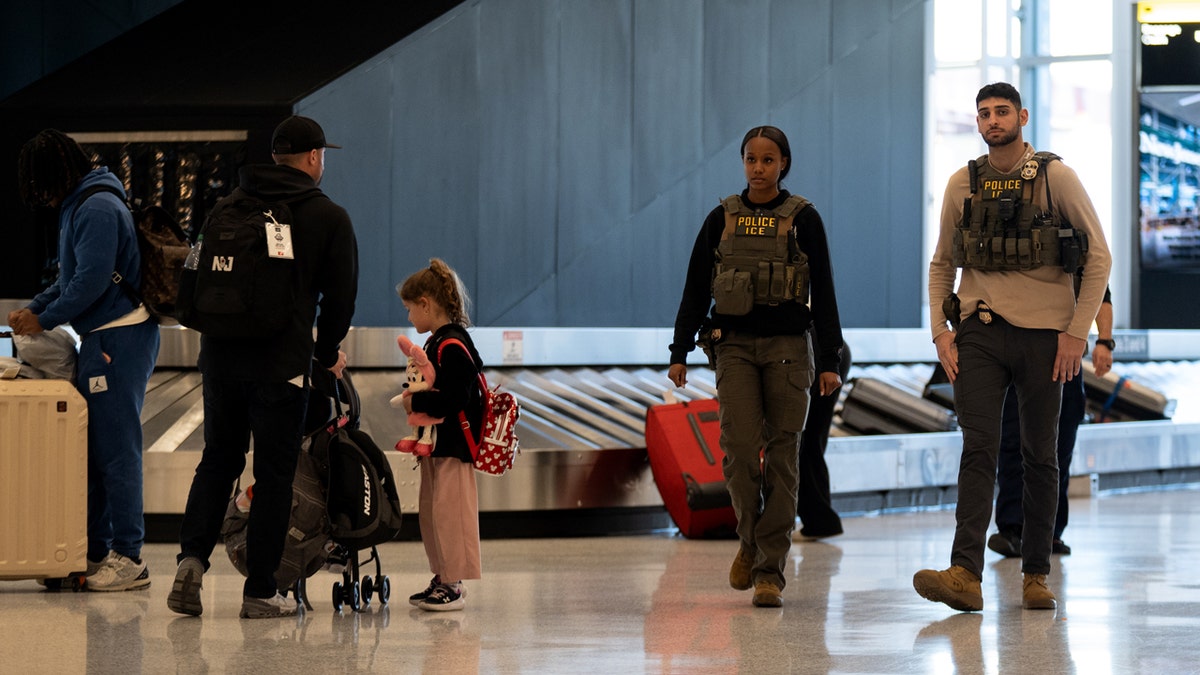
Immigration and Customs Enforcement agents patrol Terminal A at Newark Liberty International Airport on Tuesday, March 24, in New Jersey. (Lokman Vural Elibol/Anadolu via Getty Images)
"In the same way that the KKK cannot be reformed, another — you know, masked militia group — I do not believe that ICE can be reformed and that this has anything to do with training and protocols," Pressley said in an interview.
Get the latest updates from the 2024 campaign trail, exclusive interviews and more Fox News politics content.
Read the full story at Fox News.
JPMorgan CEO Jamie Dimon in annual letter cites risks in geopolitics, AI and private markets
Source: CNBC • Published: 4/6/2026, 3:57:21 PM

JPMorgan Chase CEO Jamie Dimon is calling for a broad recommitment to American ideals as his bank navigates geopolitical uncertainty, a teetering economy and the revolutionary impact of artificial intelligence.
Dimon in his annual letter to shareholders, published Monday, noted the country's 250th anniversary as "the perfect time to rededicate ourselves to the values that made this great nation of ours — freedom, liberty and opportunity."
"The challenges we all face are significant. The list is long but at the top are the terrible ongoing war and violence in Ukraine, the current war in Iran and the broader hostilities in the Middle East, terrorist activity and growing geopolitical tensions, importantly with China," Dimon said. "Even in troubled times, we have confidence that America do what it has always done — look to the values that have defined our singular nation and sustained our leadership of the free world."
Dimon, the longtime leader of the world's largest bank by market cap, is among the most outspoken of U.S. corporate leaders. His annual letter offers not only a matter of record for his firm's performance, but also sweeping perspectives on the global state of affairs.
In Monday's letter, Dimon noted headwinds including global conflicts, persistent inflation, private market upheaval and what he called "poor bank regulations."
Dimon said that while regulations like those put in place after the 2008 financial crisis "accomplished some good things ... they also created a fragmented, slow-moving system with expensive, overlapping and excessive rules and regulations — some of which made the financial system weaker and reduced productive lending."
He specifically cited negative consequences of capital and liquidity requirements, the current construction of the Federal Reserve's stress test and a "badly handled" process at the Federal Deposit Insurance Corporation.
Dimon also said JPMorgan's reaction to revised proposals for Basel 3 Endgame and a global systemically important bank (GSIB) surcharge — issued by U.S. regulators last month — were "mixed."
"While it was good to see that the recent proposals for the Basel 3 Endgame (B3E) and GSIB attempted to reduce the increase in required capital from the 2023 proposals, there are still some aspects that are frankly nonsensical," Dimon said.
The CEO said the aggregate proposed surcharges of about 5%, the bank would need to hold "as much as 50% more capital across the vast majority of loans to U.S. consumers and businesses when compared with a large non-GSIB bank for the same set of loans."
"Frankly, it's not right, and it's un-American," he said.
Dimon identified geopolitical tensions as the primary risk facing his bank, namely the wars in Ukraine and Iran and their impacts on commodities and global markets — deeming war "the realm of uncertainty."
"The outcome of current geopolitical events may very well be the defining factor in how the future global economic order unfolds," he said. "Then again, it may not."
He also cited a "realignment of economic relations in the world" brought on by U.S. trade policy. U.S. President Donald Trump has made tariffs a signature policy of his second term in office, introducing higher duties on dozens of trade partners and import categories.
"The trade battles are clearly not over, and it should be expected that many nations are analyzing how and with whom they should create trade arrangements," Dimon said. "While some of this is necessary for national security and resiliency, which are paramount, it is hard to figure out what the long-term effects will be."
"By and large, private credit does not tend to have great transparency or rigorous valuation 'marks' of their loans — this increases the chance that people will sell if they think the environment will get worse — even if actual realized losses barely change," Dimon said.
The executive added that actual losses are already higher than they should be relative to the environment.
"However this plays out, it should be expected that at some point insurance regulators will insist on more rigorous ratings or markdowns, which will likely lead to demands for more capital," he said.
Dimon reiterated Monday that the pace of AI adoption is unlike any technology that came before it. He said while its implementation will be "transformational," it remains to be seen how the AI revolution will unfold.
"Overall, the investment in AI is not a speculative bubble; rather, it will deliver significant benefits. However, at this time, we cannot predict the ultimate winners and losers in AI- related industries," Dimon said.
"We will not put our heads in the sand. We will deploy AI, as we deploy all technology, to do a better job for our customers (and employees)," he wrote.
JPMorgan has been at the forefront of Wall Street firms introducing AI at every level of its business. Last year, JPMorgan Chief Analytics Officer Derek Waldron gave CNBC an early demonstration into how it's using agentic AI to speed up work and improve results for customers and shareholders.
In February, Dimon said AI was reshaping JPMorgan's workforce and that the bank had "huge redeployment plans" for employees.
"We have focused on some of the 'known and predictable' and some of the 'known unknown' events," he said. "But huge technological shifts like AI always have second- and third-order effects as well that can deeply impact society. ... We should be monitoring for this kind of transformation, too."
— CNBC's Leslie Picker and Ritika Shah contributed to this report.
For complete details, visit the original sources linked above.
Comments
Post a Comment