Top Stories — Friday, April 17, 2026
What is trending in the USA today? Here is Breaking News:
- Forced into a corner by the U.S., Netanyahu agrees to a cease-fire in Lebanon. — nyt News
- The cease-fire goes into effect after Israel and Hezbollah exchange fire. — nyt News
- Shouting match erupts between RFK Jr and Dem lawmaker over his comments about Black children — Fox News
Forced into a corner by the U.S., Netanyahu agrees to a cease-fire in Lebanon.
Source: nyt News • Published: 4/17/2026, 3:56:50 AM

Israel/Beirut1:38 a.m. April 17
Pinned
A 10-day cease-fire went into effect at midnight on Friday morning in Lebanon. The truce pauses fighting between Israeli forces and the militant group Hezbollah, removing a major obstacle to peace talks between the United States and Iran.
Israeli and Lebanese officials had confirmed they would implement the truce, which was first announced by President Trump after a diplomatic push by the U.S. government earlier in the day. Hezbollah acknowledged the cease-fire in a pair of statements on Thursday, but did not directly address whether it would accept the truce, saying its actions would be “based on how developments unfold.”
Israel and Hezbollah had continued to trade strikes in the hours before the cease-fire was set to take effect, according to statements from each military.
The U.S. State Department, outlining the truce in a memo on Thursday, said that Israel would retain its right “to take all necessary measures in self-defense,” but would not carry out “offensive operations” against Lebanese targets by land, air or sea. The Lebanese government, with international support, is expected to take “meaningful steps” to prevent Hezbollah from carrying out attacks against Israeli targets.
The Lebanese government does not have direct control over Hezbollah, an armed group considered more powerful than the state’s military. Still, Hezbollah has abided by some previous deals negotiated by the Lebanese government.
The fighting between Israel and Hezbollah, Iran’s most powerful proxy, has threatened to upend the two-week cease-fire between the United States and Iran, which is set to expire next week. Iran has insisted the cease-fire must cover attacks on its ally Hezbollah, too.
Mr. Trump told reporters at the White House that the next in-person negotiations with Iran might occur this weekend. Mr. Trump said he would consider extending the pause in fighting if the United States is close to a deal with Iran. He has repeatedly suggested a deal is near.
It was not clear whether Lebanese displaced from the country’s south would be able to return home; Israel has signaled recently that it was planning to occupy large parts of the area even after the current conflict.
More than 2,100 people have been killed in Lebanon during the current round of fighting, Lebanese authorities say, and over one million residents displaced. At least 13 Israeli soldiers have also been killed, along with two civilians, according to the Israeli authorities.
Here’s what else we are covering:
U.S. threats: Defense Secretary Pete Hegseth on Thursday renewed U.S. threats to attack Iran’s power plants and other energy sites if its leaders did not agree to a peace deal.
Help from automakers: The Pentagon has met with executives of Ford Motor and General Motors to gauge whether the auto industry could help the military replenish some supplies. Read more ›
Iran talks: On Thursday, Pakistan said that it expected to host a second round of negotiations between the United States and Iran but declined to give a date, as senior Pakistani mediators visited Tehran in an effort to shore up the U.S.-Iran cease-fire.
Timeline: Here’s a brief history of Israel-Lebanon relations.
In a statement released at midnight in Lebanon, the official start time of the cease-fire, the Israeli military said it had struck 380 Hezbollah targets in Lebanon over the prior 24 hours, including launchers and headquarter sites. It said it was “on high alert in defense” and would operate according to the directives of the Israeli government.
Celebratory gunfire pierced the night sky above the Lebanese capital, Beirut, as the cease-fire went into effect.
A 10-day cease-fire between Israel and Lebanon went into effect as Friday began in the Middle East, a truce that could lift a major obstacle to America’s peace effort with Iran and pause a devastating wave of fighting between Israel and Hezbollah, the Iran-backed militant group in Lebanon.
Israeli and Lebanese officials had confirmed they would implement the truce, which was brokered by the U.S. government and announced by President Trump on Thursday after a flurry of diplomatic activity. Hezbollah acknowledged the cease-fire in a pair of statements on Thursday, but did not directly address whether it would accept the truce, saying its actions would be “based on how developments unfold.”
Israel and Hezbollah continued to trade strikes in the hours before the cease-fire was set to take effect, according to statements from each side.
The U.S. State Department, outlining the truce in a memo on Thursday, said that Israel would retain its right “to take all necessary measures in self-defense” but would not carry out “offensive operations” against Lebanese targets by land, air or sea. The Lebanese government, with international support, is expected to take “meaningful steps” to prevent Hezbollah from carrying out attacks against Israeli targets, the memo said.
The conflict between Israel and Hezbollah has imperiled a two-week cease-fire between the United States and Israel on one side and Iran on the other, a pause set to expire next week. Iran has insisted that the truce be extended to Lebanon and by extension, Hezbollah, its most powerful proxy in the Middle East. The United States and Israel had rejected that proposal.
The truce came after a rare round of direct peace talks between Lebanese and Israeli officials held in Washington on Tuesday, a significant shift for two nations with no formal relations. But the Israelis have only been negotiating a cease-fire with the Lebanese government, not with Hezbollah, which is considered more powerful than the country’s own military.
Still, Hezbollah has abided by some deals negotiated by the Lebanese government in the past.
Many questions remained about how the cease-fire would play out.
Prime Minister Benjamin Netanyahu of Israel said on Thursday that Israeli troops would remain stationed in Lebanon between the coast and the Syrian border. Hezbollah, however, said in a statement from its media office that a cease-fire must not allow Israeli forces “any freedom of movement” and would need to be “comprehensive across all Lebanese territory.”
It was also not clear whether more than a million Lebanese who have been displaced, largely in the country’s south, would be able to return home. The Lebanese Army warned residents of the country’s south on Thursday to hold off on returning to their villages and towns until the truce came into force.
The State Department said in its statement that both Israel and Lebanon had agreed that only Lebanon’s official security forces were authorized to bear arms in southern Lebanon, echoing a longstanding Israeli and U.S. demand for the complete disarmament of Hezbollah. The initial cease-fire period could be extended by the mutual consent of Lebanon and Israel, the statement said, provided that “Lebanon effectively demonstrates its ability to assert its sovereignty.”
Mr. Trump said on Thursday that negotiations between Lebanon and Israel would continue, and that he would invite Mr. Netanyahu and President Joseph Aoun of Lebanon to the White House for direct talks. There was no confirmation from either government that they had accepted Mr. Trump’s invitation, even as the State Department said that both nations had requested that the U.S. government lead further peace efforts.
Israel launched a sweeping military campaign in Lebanon in early March, days after the United States and Israel began an air campaign against Iran. Hezbollah had fired rockets at northern Israel in solidarity with Iran, its patron. Israel’s offensive has expanded into a ground invasion of the country’s south, an area that Israeli officials have signaled plans to occupy.
Since the fighting began, Hezbollah and Israel have fired near-daily bombardments across the border. More than 2,100 people have been killed in Lebanon since the latest round of hostilities erupted, according to the Lebanese authorities. At least 13 Israeli soldiers have also been killed, along with two civilians, according to the Israeli authorities.
The clock has struck midnight in Lebanon and Israel, meaning the cease-fire should now go into effect.
The spokesman of Iran’s Foreign Ministry, Esmail Baghaei, welcomed the Lebanon cease-fire, according Iranian state media, saying it was part of the Iran-U.S. agreement brokered by Pakistan. He credited Pakistan’s efforts over the past 24 hours for the 10-day pause, and called for Israel’s full withdrawal from southern Lebanon.
The cease-fire, first announced by President Trump on Thursday, reflects Mr. Trump’s desire to wind down the war in Lebanon, where renewed fighting has threatened to undermine a fragile cease-fire in Iran.
That has put Mr. Netanyahu in an awkward position. Even as he faces pressure from Washington, his own goal to gut Hezbollah is far from fulfilled, and he was swiftly assailed by his allies and critics.
Avigdor Liberman, a right-wing opposition party leader, called the cease-fire a “betrayal of the residents” of northern Israel, many of whom have fled their homes on the border.
Yair Lapid, the centrist parliamentary opposition leader, said the cease-fire announcement was “not the first time this government’s promises have been shattered by reality.”
Even inside Netanyahu’s conservative Likud party, lawmakers offered veiled criticism of the decision. Some questioned whether the Lebanese government could negotiate on behalf of Hezbollah, which it does not control. Hezbollah, a proxy of Iran which began firing rockets over the border after the U.S. and Israel attacked Iran last month, had for many years constituted a more powerful fighting force than the Lebanese national military.
Hours after Mr. Trump’s cease-fire announcement, Mr. Netanyahu said Israeli troops would remain inside Lebanon during the cease-fire, as part of what he described as an “expanded security zone,” stretching between Lebanon’s Mediterranean coast and its border with Syria, south of the Litani River.
“This is where we are located,” Mr. Netanyahu said in a three-minute video. “We are not leaving.”
The latest war in Lebanon, which began in early March, has killed nearly 2,200 people. In Israel, 13 soldiers and two civilians have also been killed, according to the Israeli authorities.
Moshe Davidovich, the head of a cluster of Israeli villages along the border with Lebanon, responded with a searing critique on social media. “Agreements are signed by suits in Washington, but the price is paid in blood, destroyed homes, and wrecked communities here.”
Mr. Davidovich’s constituents are among tens of thousands of Israelis who were displaced last year during a previous conflict with Hezbollah, the Iran-backed militant group, and had since returned to their homes, only to again come under almost daily rocket fire.
Ahead of a session of the United Nations General Assembly on Thursday, the Israeli ambassador, Danny Danon, railed against what he called “outrageous remarks” by António Guterres, the U.N. secretary general, accusing Hezbollah and Israel of helping one another destabilize Lebanon. At a news conference on Tuesday, Guterres said that Hezbollah and Israel used one another as a reason to continue their military aggression, leaving Lebanon to suffer the collateral damage.
Danon accused Guterres of blurring the truth “at a historic moment when the region is taking steps toward direct dialogue between Israel and Lebanon.”
Israel’s ambassador to the United Nations, Danny Danon, addressing reporters in New York, did not answer directly when asked how Israel would balance its troop presence in southern Lebanon during the announced cease-fire with Hezbollah’s opposition to that presence. “We will have to follow very carefully what is happening on the ground, and if we feel threatened, we will react,” Danon said.
Danon said it was “too early” to determine whether the Israeli prime minister, Benjamin Netanyahu, and Lebanon’s president, Joseph Aoun, would meet with President Trump, who said on Thursday that he would invite the two leaders to the White House. “I cannot speak for the Lebanese government,” Danon said. “We know that they are under pressure and threats from Iran,” he said. But as for Netanyahu, he said, “Whenever the president will call us, we will come.”
Reporting from Washington
The exchange of bombs and missiles in the Middle East between Iran and its foes has been paused for more than a week now. Iran’s hackers, however, have remained active on the digital battlefield.
Iran has continued its cyberspace operations since the cease-fire with the United States began on April 8, according to Western cybersecurity experts and former U.S. intelligence officials. In doing so, Tehran is trying to keep up pressure on the United States and Israel but also positioning itself to mount a bigger retaliation if peace talks do not resume.
Since the war began in late February, Iran has combined real-world attacks, disinformation and a mix of low-level and more advanced cyberattacks to create confusion in Israel. In the United States, it temporarily caused a global, companywide shutdown at a major medical-equipment supplier, Stryker, scoring a major success that surprised some security analysts.
A group affiliated with Iranian intelligence also took responsibility for the release of emails and photographs stolen from a personal account of Kash Patel, the F.B.I. director.
Now in the cease-fire, Iran is tactically shifting from overt demonstrations meant to undermine support for the U.S.-Israel campaign toward quieter efforts to prepare for what might come next. This new phase of cyberspace operations includes a greater focus on espionage.
Iran has continued to target individuals in the United States and Israel who are either government officials or linked to the government. Its hackers have also stepped up its efforts to penetrate critical infrastructure, attempting to get access to water and power systems in the Middle East and the United States as part of an effort to prepare for future operations that would cause societal pain, experts said.
Iran’s cyberoperations have generally been less effective or sophisticated than those from China or Russia, which have for years launched large-scale espionage campaigns against the United States and penetrated some of America’s most sensitive infrastructure.
But Iran’s dispersed network of hackers has long used cyberattacks to project power across the Middle East and to challenge — or at least annoy — the United States. And Iran’s hackers are considered less predictable than their Chinese and Russian counterparts, especially when their government feels threatened.
“This is a time, more than ever, we should worry about Iran,” said Evan Peña, a co-founder of the cybersecurity firm Armadin. “In cyberwarfare there isn’t really a cease-fire.”
Mr. Peña said that if the cease-fire or negotiations collapsed, Iran would want to be in a strong position to retaliate, potentially by attacking critical infrastructure in the United States. Tehran has done so in the past but generally with limited impact. More than a decade ago, Iranian hackers targeted a small dam in upstate New York, but by happenstance the dam’s sluice-gate controls had been taken offline for maintenance, much to the relief of U.S. investigators at the time.
Iran, Mr. Peña said, is going to be more aggressive and devote more resources to trying to get access to American companies as the war rages on.
“I am not saying they have gotten in, but I do believe they are trying to get in,” he said. “The motive is, hold your position in the network. Should you find a way in, if something doesn’t go the way Iran wants it to go, then they are going to make a disruption.”
Josh Zweig, the chief executive of Zip Security, which secures small and midsize enterprises, said Iran was specifically looking for less well-defended targets, like municipal-run water and energy facilities.
He also said small firms that make investment decisions for wealthy individuals and families have been targeted.
With both kinds of attacks, the goal is to gain leverage, Mr. Zweig said.
“They’re going after individuals in and around the government — not through official channels but through their personal networks: service providers, contractors, the kinds of organizations that handle sensitive day-to-day information,” Mr. Zweig said.
Some security experts have said they have observed an overall drop in Iranian cyberoperations in the United States since the cease-fire took hold. Iran-linked hacking groups have been less active in claiming credit for attacks, suggesting a desire to more quietly embed undetected within networks for potential future leverage.
And some cybersecurity experts said the overall number of attempted cyberattacks has fallen, at least in the United States.
Much of the activity against the United States has taken the shape of rudimentary denial of service attacks, which attempt to knock websites offline by spamming them with junk traffic, said Cynthia Kaiser, a senior vice president at the cybersecurity firm Halcyon and a former senior cyber official at the F.B.I.
But in Israel, Handala, a hacking group affiliated with the Iranian government that claimed credit for both the Stryker attack and the breach of Mr. Patel’s emails, has continued its campaign, according to Ms. Kaiser and other experts.
The group masquerades as an independent hacktivist collective but is controlled by the Ministry of Intelligence and Security, Iran’s chief spy agency, according to U.S. officials.
It has hacked and leaked accounts tied to the former head of the Israel Defense Forces, Herzi Halevi, and released documents about intelligence analysts who work for an Israeli intelligence agency.
The group also recently claimed responsibility for hacking government entities in Dubai, in the United Arab Emirates.
“They are basically doxxing a few dozen individuals — the fact they are doing it, they are basically saying they will continue with the cyberwar,” said Gil Messing, the chief of staff at Check Point, an Israeli-American cybersecurity firm. “They want to make sure that everyone is aware that they are continuing and will continue to target Israel.”
Mr. Messing said Iran stepped up hacking activity against Israel after their war last year and is likely to continue that pattern now. Check Point, he said, had observed a 10 percent increase in cyberoperations linked to Iran across the Gulf region since the cease-fire took hold, and a 15 percent increase against Israel.
“After the cease-fire agreement, they are escalating their cyber efforts,” Mr. Messing said. “Often we see that digital-based attacks are more prominent when the physical front is more silent.”
Farah Stockman reported from New York, Neal Boudette from Detroit and John Ismay from Washington.
The Pentagon has met with senior executives of Ford Motor and General Motors to gauge whether the auto industry could help the military acquire vehicles, munitions or other hardware more quickly and at lower costs, according to three people familiar with the talks.
The conversations are in the very early stages, and relate to the possible production of components by the companies, not entire weapons systems. No specific projects are currently being negotiated, the people said.
The discussions with automakers underscore Trump administration efforts to revamp military procurement as the war in Iran and U.S. support for Ukraine in its war with Russia deplete supplies. The idea is reminiscent of World War II, when G.M., Ford and other automakers supplied the military.
“The Department of War is committed to rapidly expanding the defense industrial base by leveraging all available commercial solutions and technologies to ensure our war fighters maintain a decisive advantage,” a Pentagon official said in a statement in response to questions about the meetings with automakers. “The department is aggressively pursuing and integrating the best of American innovation, wherever it resides, to deliver production at scale and drive resiliency across supply chains.”
The Wall Street Journal reported earlier on the talks between the Pentagon and the automakers.
The Trump administration has complained for months that traditional defense contractors take too long to manufacture weapons systems and charge too much for them. In January, President Trump signed an executive order that aimed to punish defense contractors that failed to expand their manufacturing capacity. And in November, the defense secretary, Pete Hegseth, rolled out a strategy for military procurement that included buying more widely available off-the-shelf components to avoid the high costs and delays associated with the specialized systems that the military typically uses.
The defense industrial base “is stagnant, building the world’s best and most exquisite weapon systems at low volume while relying on obsolescent parts, outdated manufacturing processes and stale innovation,” the strategy read. “In contrast, the commercial industry outpaces the D.I.B. in advancing cutting-edge technology.”
The issue has become more urgent because the war in Iran has depleted U.S. stockpiles of commonly used munitions, such as Patriot missile interceptors. By some estimates, it could take five years or more to replenish the munitions that have been used in the last 40 days.
“We are on borrowed time,” said John Ferrari, a retired Army major general who is now a nonresident fellow at the American Enterprise Institute, a research group in Washington. “The Russians, the Chinese, the Iranians, everybody knows that we don’t have enough munitions.”
The Pentagon has turned to auto suppliers because U.S. officials remember how Ford and G.M. revamped production lines during the Covid-19 pandemic to make personal protective equipment and ventilators.
During World War II, the U.S. government asked car companies based in and around Detroit to produce weapons, an industrial mobilization that became famous for building what President Franklin D. Roosevelt called the “arsenal of democracy.” The Willow Run factory that Ford built near Ypsilanti, Mich., churned out thousands of planes, producing about one B-24 Liberator bomber an hour at its peak. But that was possible only because military officials designed the planes to be built using machinery Ford already owned, General Ferrari said.
A big question today is whether the Pentagon will be able adjust its specifications and requirements to fit the machinery that carmakers use.
“Otherwise, it is not going to work,” General Ferrari said. “The commercial factories are not going to go out and buy new machines, and if they did, that would take years.”
While they gave up making bombers long ago, some automakers continue to work with the military. G.M., for example, has a defense unit that makes vehicles for the Army.
Foster Ferguson, vice president of industrial business at Stratasys, a company that manufactures 3-D printers used by Ford and G.M., said machines that mass-produce parts for the auto industry could make components for military systems.
The U.S. military has been exploring the use of 3-D printers to make replacement parts for older systems, he said, but the devices could also be used to mass-produce other components. Last month, Stratasys was selected to participate in a military pilot program to accelerate the qualification and deployment of 3-D-printed parts.
“The Pentagon is bringing a sense of urgency to the modernization and scaling of defense manufacturing,” said Mr. Ferguson, who served as an officer in the Marine Corps specializing in supply chain and maintenance operations. “The automotive industry can make a significant contribution due to their expertise in economies of scale, cost-down engineering and experience in consistently producing high-volume, quality parts that meet strict production requirements.”
But many weapon systems require components that cannot be 3-D printed or need rare-earth metals mined or processed in China.
The Israeli military, about one hour before the cease-fire is meant to go into official effect, said it was striking launchers from which Hezbollah launched rockets toward northern Israel.
In the last hours before the cease-fire in Lebanon was scheduled to begin, Israeli forces continued to strike Lebanon’s south, according to Lebanese state media. Air raids were reported in the Bint Jbeil district, which Israel had been attacking heavily in recent days, and several other towns.
In an official statement, Hezbollah, the Iranian-backed Lebanese militant group, acknowledged the cease-fire’s announcement, but did not directly address whether it would accept it. The group cautioned residents of Lebanon’s south to not head toward areas targeted by Israeli strikes during the war, saying that Israel had a “history of violating pledges and agreements.”
The announcement of a cease-fire in Lebanon followed a flurry of phone calls among key officials, according to the White House. President Trump spoke with Prime Minister Benjamin Netanyahu of Israel on Wednesday evening, and Secretary of State Marco Rubio later called Lebanon’s president, Joseph Aoun, to secure his support for the agreement. On Thursday, Trump spoke twice with Netanyahu and once with Aoun to finalize the deal. The State Department worked simultaneously with the governments of Lebanon and Israel to formulate a memorandum of understanding for the cease-fire.
Rocket fire and drone launches toward northern Israel seemed to have intensified in the past hour, less than three hours before the cease-fire between Lebanon and Israel was set to take effect, and the Israeli military said it was preparing for more launches from Lebanon.
At least five air-raid sirens went off in wide parts of northern Israel over the past hour. One person suffered a serious injury, according to Magen David Adom, Israel’s emergency service.
Earlier in the day, some local officials warned Israelis of a possible uptick in launches ahead of the cease-fire.
The Lebanese Army has issued a warning to residents to hold off on returning to villages and towns in the country’s south until the cease-fire comes into force, and instructed people not to enter areas there where Israeli troops were stationed. Israel invaded much of southern Lebanon during the recent fighting with Hezbollah, and its attacks there and in Beirut have displaced more than one million people. The Israeli prime minister, Benjamin Netanyahu, said on Thursday that Israeli troops would remain in southern Lebanon during the truce, making it unclear how many of the area’s displaced residents would be able to return home.
Trump said that Iran had “agreed to give us back the nuclear dust.” It was unclear precisely what he was referring to, but he has used that phrase to describe the stockpile of near-bomb-grade uranium that Iran has created over recent years, which the International Atomic Energy Agency has said amounts to about 440 kilograms, or about 970 pounds. That stockpile has been a key sticking point in the negotiations. The United States wants Iran to transfer the material outside the country, but Iran has not publicly agreed to do so. It is also unclear what the fate would be of tons of additional uranium enriched to lower levels that are also in Iran’s stockpile.
In its statement, the State Department also said that Israel and Lebanon had requested that the United States “facilitate further direct negotiations between the two countries” aimed at resolving “all remaining issues,” including the demarcation of borders and a long-term peace deal. There was no immediate confirmation of that request from either Lebanon or Israel’s government.
The initial cease-fire period could be extended by the mutual consent of Lebanon and Israel, the statement said, provided that “Lebanon effectively demonstrates its ability to assert its sovereignty.” Lebanon’s government has long struggled to curb Hezbollah, which is considered more powerful than the country’s own military.
In a statement, the U.S. State Department said the announced cease-fire between Israel and Lebanon was intended to enable “good-faith negotiations toward a permanent security and peace agreement.” During its 10-day duration, the State Department said, Israel will preserve its right to “self-defense” against planned attacks but will not carry out any “offensive operations” against Lebanese targets by land, air or sea.
The Lebanese government, with international support, is expected to take “meaningful steps” to prevent Hezbollah, an Iranian-backed Lebanese armed group, from carrying out attacks against Israeli targets, the statement said. It added that both Israel and Lebanon’s government had agreed that the only forces authorized to bear arms in Lebanon were official security forces, echoing a longstanding Israeli demand for the complete disarmament of Hezbollah.
Trump says he would potentially travel to Pakistan if an Iran deal “is signed in Islamabad.” The president has repeatedly praised Pakistan and its leaders for their mediation work with Iran. The Pakistani government has been courting Trump since last year, including nominating him for a Nobel Peace Prize.
Trump, who earlier said extending the cease-fire with Iran might not be necessary, just said he would consider an extension if the United States was close to a truce with Iran. In his comments today, he repeatedly expressed optimism that the sides were close to striking an agreement.
Speaking outside the White House hours after announcing the cease-fire between Israel and Lebanon, Trump said he would consider visiting Lebanon “at the right time.”
Trump, speaking to reporters outside the White House, deflected questions about whether he would extend the cease-fire with Iran, saying that it might not be necessary and expressing optimism about striking a deal.
“They’re willing to do things today that they weren’t willing to do two months ago,” he said, without providing any details.
Trump said the next in-person negotiations with Iran might occur over the weekend, but warned that if no deal emerged, “Fighting will resume.”
Netanyahu has drawn a flood of Israeli criticism over the cease-fire, including from within his own conservative Likud party. Hanoch Mildwidsky, a Likud lawmaker, wrote on social media: “I thought we’d already freed ourselves from the fiction of the “State of Lebanon.” Apparently not.”
Prime Minister Benjamin Netanyahu of Israel said he had agreed to a 10-day cease-fire in Lebanon to try to advance a peace accord with Lebanon. He said Israeli troops would remain in Lebanon in what he described as an “expanded security zone” between Lebanon’s coast and its border with Syria.
“This is where we are located, we are not leaving,” he said in a three-minute video statement.
Hezbollah, the Iran-backed militant group, still retains rockets in its arsenal, he said. “We will have to deal with that, too, as part of the progress toward a security agreement and a peace accord.”
Even before any Israeli official shared details of the cease-fire with the public, an outpouring of reactions to the announcement — and to the fact that it was delivered by the leader of a foreign country — indicated that it was likely to be unpopular among Israelis.
“Agreements are signed by suits in Washington, but the price is paid in blood, destroyed homes, and wrecked communities here,” Moshe Davidovich, the head of a cluster of villages along the border with Lebanon, wrote on social media. His constituents are among tens of thousands of Israelis who were displaced during a previous conflict with Hezbollah, the Iran-backed militant group, and had since returned, only to again come under daily rocket fire.
Reporting from Washington
Defense Secretary Pete Hegseth on Thursday renewed his threat to attack Iran’s electrical infrastructure if the cease-fire between Washington and Tehran failed.
“Our forces are maximally postured to restart combat operations should this new Iranian regime choose poorly and not agree to a deal,” Mr. Hegseth said during a briefing to reporters at the Pentagon. “We are locked and loaded on your critical dual-use infrastructure, on your remaining power generation and on your energy industry.”
“We’d rather not have to do it,” he added, “but we’re ready to go at the command of our president and at the push of a button.”
Under international law, intentionally targeting a country’s energy infrastructure could constitute a war crime.
Standing next to Mr. Hegseth, Gen. Dan Caine, the chairman of the Joint Chiefs of Staff, said that U.S. forces were “postured and ready to resume major combat operations at literally a moment’s notice.”
The two officials then discussed the U.S. naval blockade of ships traveling to and from ports in Iran. President Trump announced the blockade on Sunday, after peace talks with Iranian leaders ended without a breakthrough.
Under international law, a naval blockade is an act of war.
Mr. Hegseth said that the blockade would last “for as long as it takes” and that “if Iran chooses poorly” by not agreeing to a deal with the United States, “then they will have a blockade — and bombs dropping on infrastructure, power and energy.”
The defense secretary also called out journalists who are reporting on the war, comparing them to the Pharisees who criticized Jesus of Nazareth for performing miracles.
“The Pharisees scrutinized every good act in order to find a violation,” Mr. Hegseth said, “only looking for the negative.”
He then referred to the rescue of two downed F-15 aircrew members in Iran over Easter weekend as “miracles.”
In a description of the naval operation in the Gulf of Oman, General Caine said Navy warships would enforce the blockade “inside Iran’s territorial seas” as well as in international waters. Furthermore, he said, naval forces under U.S. Indo-Pacific Command would “actively pursue any Iranian flagged vessel or any vessel attempting to provide material support to Iran.”
“This includes dark fleet vessels carrying Iranian oil,” the general added.
Displaying a map of the Gulf of Oman, General Caine offered the first visual clues as to where the operation was taking place, showing about a dozen Navy destroyers on station more than 400 miles southeast of the Strait of Hormuz — outside a “blockade line” running from Oman to Iran’s border with Pakistan.
The general explained that multiple warplanes, helicopters and intelligence aircraft were operating in the skies above the destroyers to assist in the blockade.
He then recited the warning that destroyer crews give to any vessels trying to run through the U.S. blockade: “Do not attempt to breach the blockade. Vessels will be boarded for interdiction and seizure transiting to or from Iranian ports. Turn around or prepare to be boarded. If you do not comply with this blockade, we will use force.”
General Caine said that warning had been issued to more than a dozen vessels, all of which he said then turned around. U.S. destroyers could potentially fire warning shots at any ships that did not comply, he said.
Adm. Brad Cooper, the leader of Central Command, joined the briefing to discuss two trips he had made to the Middle East from his headquarters in Tampa, Fla. He said that U.S. forces in the Middle East, which Central Command controls, were “rearming” and “retooling” during the cease-fire.
Reporting from Washington
The White House declined to estimate the cost of the war with Iran at a congressional hearing on Thursday, prompting some Senate Democrats to criticize the Trump administration for its lack of transparency.
In a second appearance on Capitol Hill this week, Russell T. Vought, the White House budget director, sidestepped questions about the price tag of the U.S.- and Israel-led conflict. He said the “fluctuating” nature of the war made it hard to calculate either the expenses incurred to date or the amount that the president would seek soon in new military funding.
Pressed at one point to supply even a general range of the cost, Mr. Vought told lawmakers, “I’m not going to give you a range because I don’t want to be inaccurate.” He said the administration would furnish those details in a fuller request to Congress soon.
With the war stretching into its seventh week, the ambiguity did not sit well with Democrats, many of whom have forcefully opposed Mr. Trump’s actions and the money he has already sought for the military. In his 2027 budget request released earlier this month, the president asked Congress to approve about $1.5 trillion for defense — a vast increase, but one that did not include immediate funds for the war with Iran.
Two senior Democrats — Senator Jeff Merkley of Oregon, the ranking member on the Budget Committee, and Senator Patty Murray of Washington, the top Democratic appropriator — both took issue with Mr. Vought’s stance.
“I just find it outrageous that as director you’re not willing to tell us what those costs are,” Ms. Murray said.
Since the start of the war, administration officials and congressional lawmakers have batted only informal estimates of the cost to taxpayers. In March, the Pentagon estimated in private briefings on Capitol Hill that the price tag for just the first six days of the war exceeded $11 billion.
Later in the month, the Pentagon told the Trump administration that it might need around $200 billion in special, supplemental funding for Iran, triggering opposition from Democrats and Republicans alike. The administration is now widely expected to seek much less from Congress in the coming weeks.
Earlier in the hearing on Thursday, Senator Lindsey Graham, Republican of South Carolina and chairman of the budget panel, praised Mr. Trump for seeking additional military spending in the 2027 budget request, which the lawmaker described as “great on defense.”
Mr. Graham suggested at one point that Republicans could try to pass supplemental funding for the Iran war in a package that included “some things my Democratic colleagues want.” If that failed, however, the senator said that he would pursue “another reconciliation bill,” referring to the same, party-line process that Republicans hope to use to approve funding for immigration enforcement.
President Trump announced on Thursday that the leaders of Israel and Lebanon have agreed to a 10-day cease-fire, a development that could bring an end to fighting between Israel and the Iranian-backed militant group, Hezbollah.
Mr. Trump’s announcement came after Israeli and Lebanese officials met this week in Washington for direct talks, a rarity because the two nations have technically been at war since 1948. Lebanon’s prime minister welcomed news of the cease-fire. Hezbollah and Israel have yet to comment.
Central to the dispute is Israel’s conflict with Lebanese-based Hezbollah militants, marked for decades by cross-border attacks, repeated Israeli invasions and tenuous truces. Lebanon’s government has been caught between the warring sides. It has long struggled to balance any effort to curb Hezbollah — whose forces outstrip the government’s in parts of the south — with fears of inflaming sectarian conflict.
Here’s a brief history of Israel-Lebanon relations:
In 1948, five armies from Arab countries, including Lebanon’s, invaded Israel after it declared itself an independent state, sparking the first Arab-Israeli war. Hundreds of thousands of Palestinians fled, including many to refugee camps in Lebanon.
In 1949, Israel and Lebanon agreed to an armistice along their internationally demarcated border, though they have never signed a formal peace treaty.
Two decades later, Lebanon did not join a coalition of Arab states that attacked Israel in 1967, setting off a renewed bout of fighting that ended six days later in the coalition's defeat. Israel gained control of the Gaza Strip and Sinai Peninsula, displacing more Palestinians and leading to a buildup of more militants in Lebanon.
In March 1978, Israel invaded southern Lebanon for the first time, partly in response to an attack by Palestinian militants that left 35 Israelis and an American dead. Lebanese officials said 1,200 people died in the three-month invasion, during which Israel said it killed 350 Palestinian militants and lost 34 of its own soldiers.
Against the backdrop of civil war in Lebanon, a brutal sectarian conflict that lasted until 1990 and resulted in 150,000 deaths, Israel occupied areas of southern Lebanon in 1982 and besieged Beirut, with the stated goal of rooting out Palestinian operatives.
In September 1982, a Lebanese Christian militia, enabled by Israeli military authorities, committed a massacre at two refugee camps in southern Beirut, Sabra and Shatila. The militiamen killed hundreds if not thousands of Palestinians — estimates of the death toll vary — prompting an international backlash and the resignation of Israel’s defense minister.
In response to Israel’s occupation of southern Lebanon, militants there formed Hezbollah, a radical Shiite movement backed by Iran. Israeli forces occupied areas of southern Lebanon and battled Hezbollah until withdrawing in 2000.
Six years later, Hezbollah and Israel resumed fighting after a surprise incursion by the militant group in which eight Israeli soldiers were killed and two captured. The conflict, lasting 34 days, involved a third Israeli ground invasion, the bombardment of Beirut and the deaths of over 1,000 Lebanese, most of them civilians, and 150 Israelis, mostly soldiers.
In a step toward warmer relations, Israel and Lebanon signed a maritime deal in 2022, brokered by the Biden administration, to better demarcate their shared border at sea. But any good will soon came under intense strain.
After Hamas, the Iran-backed militant group in Gaza, attacked southern Israel in October 2023, killing about 1,200 people, Hezbollah fired rockets on Israel in solidarity with Hamas. Repeated exchanges of fire culminated in Israel’s fourth ground invasion of Lebanon in October 2024, which it said was intended to remove Hezbollah’s military infrastructure used to attack towns in northern Israel.
After a cease-fire between Hezbollah and Israel the following year, Lebanon’s government declared a renewed push to disarm Hezbollah under pressure from Washington.
Fighting flared again in March 2026 after the U.S.-Israeli war with Iran, and Hezbollah fired rockets into Israel. Israel intensified its ground invasion of southern Lebanon, sending in thousands of troops and outlining plans to occupy about 10 percent of the country.
House Republicans on Thursday narrowly blocked a challenge to President Trump’s authority to continue combat operations in Iran, fending off a Democratic-led effort to halt the war even as bipartisan frustration grows over a conflict that has dragged on for weeks without congressional consent.
But even as the G.O.P. thwarted the measure, some in the party indicated that support for the conflict, now nearing its eighth week, was not open-ended, and could wane as an initial statutory deadline approaches within weeks for Mr. Trump to either withdraw American troops or certify to Congress it is not yet safe for U.S. troops to withdraw.
After the vote, Representative Brian Mast of Florida, the Republican chairman of the Foreign Relations Committee, signaled that patience within his party was running thin and that a resolution to halt the military campaign could very well pass in the coming weeks.
The House could “have a different vote count after 60 days,” Mr. Mast said, alluding to a May 1 deadline that falls 60 days after Mr. Trump formally notified Congress last month of the military operation in Iran. Asked if the vote would be closer then, Mr. Mast predicted that it would. Had just one additional Republican switched positions and voted in favor of the resolution on Thursday, it would have advanced.
Instead, the House voted 214 to 213 against bringing the war powers resolution to the floor, preserving the broad discretion Republicans have afforded to Mr. Trump to direct the U.S. military campaign in the Middle East.
But the slim margin signaled continuing unease in Congress as the war proceeds with no clear endgame, and with the approach of the midterm elections in which high gas prices threaten to sour voters on Republicans fighting to keep their majorities.
“Thus far, neither side has indicated what comes next, beyond continued blockage of the Strait of Hormuz,” Representative Gregory W. Meeks of New York, the top Democrat on the House Foreign Affairs Committee who led the resolution, said ahead of the vote. “We are standing at the edge of a cliff, and Congress must act before this president pushes us off. Every day we delay, we inch closer to a conflict with no exit ramp.”
Democrats pointed to increased energy costs and uncertainty over the fate of diplomatic talks to end the conflict, insisting that Congress must assert its constitutional authority over an unpopular war that is having deep impacts in their communities.
Many Republicans rejected those arguments and said that limiting the president as he commands thousands of deployed service members in the region would be detrimental to the operation.
“My colleagues in an ill-advised way want to say ‘remove all U.S. forces’ in the midst of this cease-fire that we’re in — that’s crazy,” Mr. Mast said ahead of the vote.
Thursday’s vote marked the second time the House has acted on legislation aimed at constraining the president’s authority to wage war against Iran, and fell a day after the Senate, for the fourth time, failed to advance a similar resolution.
Two Republicans again broke with their party: Representative Thomas Massie of Kentucky was the only G.O.P. lawmaker to vote in favor of the resolution, while Representative Warren Davidson of Ohio, who previously backed a similar measure, switched his vote to “present,” declining to register a position. Representative Nancy Mace, Republican of South Carolina, who said she has “grave concerns” about the handling of the war, did not vote.
Mr. Davidson’s switch and Ms. Mace’s absence allowed Republicans to narrowly defeat the measure after three Democrats who had opposed an earlier version switched to supporting it: Representatives Greg Landsman of Ohio, Henry Cuellar of Texas, and Juan C. Vargas of California. Representative Jared Golden of Maine was the lone Democrat to vote against it.
The debate has intensified as a critical deadline nears for Mr. Trump to withdraw American forces or seek authorization to continue military operations in Iran. Under the 1973 War Powers Resolution, the president has 60 days after notifying Congress that he has introduced U.S. forces into hostilities to terminate the operation or win authorization to proceed. Mr. Trump began the Iran operation on Feb. 28 without congressional authorization, and sent a formal notification letter to Congress on March 2, putting the statutory deadline at May 1.
Mr. Meeks said after his war powers resolution was blocked that he planned to introduce another, similar measure.
Many Republicans have cited the war powers law in arguing that Mr. Trump has broad latitude to do what he considers necessary in Iran, at least until that deadline passes. The statute affords the president an extension period of up to 30 days if he certifies that “unavoidable military necessity” requires continued operations to ensure the safe withdrawal of U.S. forces.
Mr. Davidson signaled he would support giving the president 30 more days, but if U.S. forces were still engaged in combat operations in June, he said after the vote, “then you’ve got a reasonable constitutional question.”
Many others argue that Mr. Trump should have as much time as he sees fit.
“The end is determined by the enemy,” said Representative Joe Wilson, Republican of South Carolina. “Not by us.”
A senior White House official, speaking on the condition of anonymity about private discussions, said the administration was in active conversations with lawmakers about the upcoming deadline.
Some Senate Republicans have suggested they would expect to see an exit plan before signing off on any extension.
“It’s very, very clear to me that the president has some authority during this period of time,” said Senator John Curtis, Republican of Utah, referring to the 60-day window. “It’s very clear to me after that period of time, it falls on Congress.”
Before voting for any extension, he added, “I would want to see some movement, right, to end it.”
The approaching deadline, coupled with lingering uncertainty over a maritime blockade, a temporary cease-fire set to expire next week and little visible progress toward ending the conflict or securing an Iranian commitment to abandon its nuclear program, is giving pause to some Republicans who have steadfastly backed the war and Mr. Trump’s power to wage it without interference or even oversight by Congress.
That dynamic is fueling intensifying calls by Democrats for more congressional action, including repeated war powers votes and demands for public hearings. Defense Secretary Pete Hegseth is scheduled to testify before the House Armed Services Committee on April 29 regarding the Pentagon’s next budget request, a hearing that falls just before the 60-day deadline and could provide Democrats an opportunity to press for answers on the administration’s legal rationale, military objectives and exit strategy.
Tyler Pager contributed reporting.
Read the full story at nyt News.
The cease-fire goes into effect after Israel and Hezbollah exchange fire.
Source: nyt News • Published: 4/17/2026, 3:42:38 AM

A 10-day cease-fire between Israel and Lebanon went into effect as Friday began in the Middle East, a truce that could lift a major obstacle to America’s peace effort with Iran and pause a devastating wave of fighting between Israel and Hezbollah, the Iran-backed militant group in Lebanon.
Israeli and Lebanese officials had confirmed they would implement the truce, which was brokered by the U.S. government and announced by President Trump on Thursday after a flurry of diplomatic activity. Hezbollah acknowledged the cease-fire in a pair of statements on Thursday, but did not directly address whether it would accept the truce, saying its actions would be “based on how developments unfold.”
Israel and Hezbollah continued to trade strikes in the hours before the cease-fire was set to take effect, according to statements from each side.
The U.S. State Department, outlining the truce in a memo on Thursday, said that Israel would retain its right “to take all necessary measures in self-defense” but would not carry out “offensive operations” against Lebanese targets by land, air or sea. The Lebanese government, with international support, is expected to take “meaningful steps” to prevent Hezbollah from carrying out attacks against Israeli targets, the memo said.
The conflict between Israel and Hezbollah has imperiled a two-week cease-fire between the United States and Israel on one side and Iran on the other, a pause set to expire next week. Iran has insisted that the truce be extended to Lebanon and by extension, Hezbollah, its most powerful proxy in the Middle East. The United States and Israel had rejected that proposal.
The truce came after a rare round of direct peace talks between Lebanese and Israeli officials held in Washington on Tuesday, a significant shift for two nations with no formal relations. But the Israelis have only been negotiating a cease-fire with the Lebanese government, not with Hezbollah, which is considered more powerful than the country’s own military.
Still, Hezbollah has abided by some deals negotiated by the Lebanese government in the past.
Many questions remained about how the cease-fire would play out.
Prime Minister Benjamin Netanyahu of Israel said on Thursday that Israeli troops would remain stationed in Lebanon between the coast and the Syrian border. Hezbollah, however, said in a statement from its media office that a cease-fire must not allow Israeli forces “any freedom of movement” and would need to be “comprehensive across all Lebanese territory.”
It was also not clear whether more than a million Lebanese who have been displaced, largely in the country’s south, would be able to return home. The Lebanese Army warned residents of the country’s south on Thursday to hold off on returning to their villages and towns until the truce came into force.
The State Department said in its statement that both Israel and Lebanon had agreed that only Lebanon’s official security forces were authorized to bear arms in southern Lebanon, echoing a longstanding Israeli and U.S. demand for the complete disarmament of Hezbollah. The initial cease-fire period could be extended by the mutual consent of Lebanon and Israel, the statement said, provided that “Lebanon effectively demonstrates its ability to assert its sovereignty.”
Mr. Trump said on Thursday that negotiations between Lebanon and Israel would continue, and that he would invite Mr. Netanyahu and President Joseph Aoun of Lebanon to the White House for direct talks. There was no confirmation from either government that they had accepted Mr. Trump’s invitation, even as the State Department said that both nations had requested that the U.S. government lead further peace efforts.
Israel launched a sweeping military campaign in Lebanon in early March, days after the United States and Israel began an air campaign against Iran. Hezbollah had fired rockets at northern Israel in solidarity with Iran, its patron. Israel’s offensive has expanded into a ground invasion of the country’s south, an area that Israeli officials have signaled plans to occupy.
Since the fighting began, Hezbollah and Israel have fired near-daily bombardments across the border. More than 2,100 people have been killed in Lebanon since the latest round of hostilities erupted, according to the Lebanese authorities. At least 13 Israeli soldiers have also been killed, along with two civilians, according to the Israeli authorities.
Pranav Baskar is an international reporter and a member of the 2025-26 Times Fellowship class, a program for journalists early in their careers.
Euan Ward is a Times reporter covering Lebanon and Syria. He is based in Beirut.
Tyler Pager is a White House correspondent for The Times, covering President Trump and his administration.
Read the full story at nyt News.
Shouting match erupts between RFK Jr and Dem lawmaker over his comments about Black children
Source: Fox News • Published: 4/17/2026, 3:30:30 AM
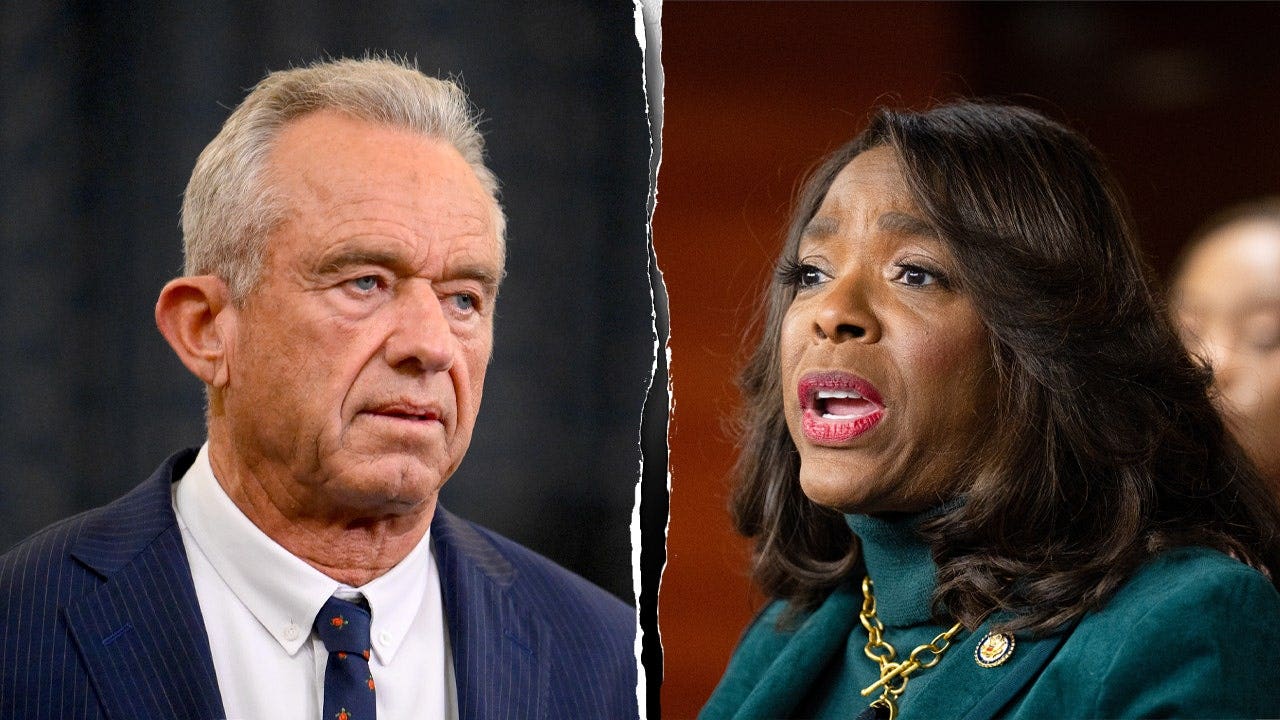
Health and Human Services Secretary Robert F Kennedy Jr. found himself in a shouting match with a congresswoman after she questioned him about previous comments he made about Black children during a budget hearing Thursday.
Rep. Terri Sewell, D-Ala., confronted Kennedy about remarks he made during a 2024 podcast interview alleging that all Black children are overmedicated and need to be "reparented."
"Mr. Secretary, you’ve already admitted that you are not a board-certified physician, and you’ve already admitted you did not go to medical school. Have you ever reparented or parented, I should say, a Black child?" Sewell asked Kennedy.
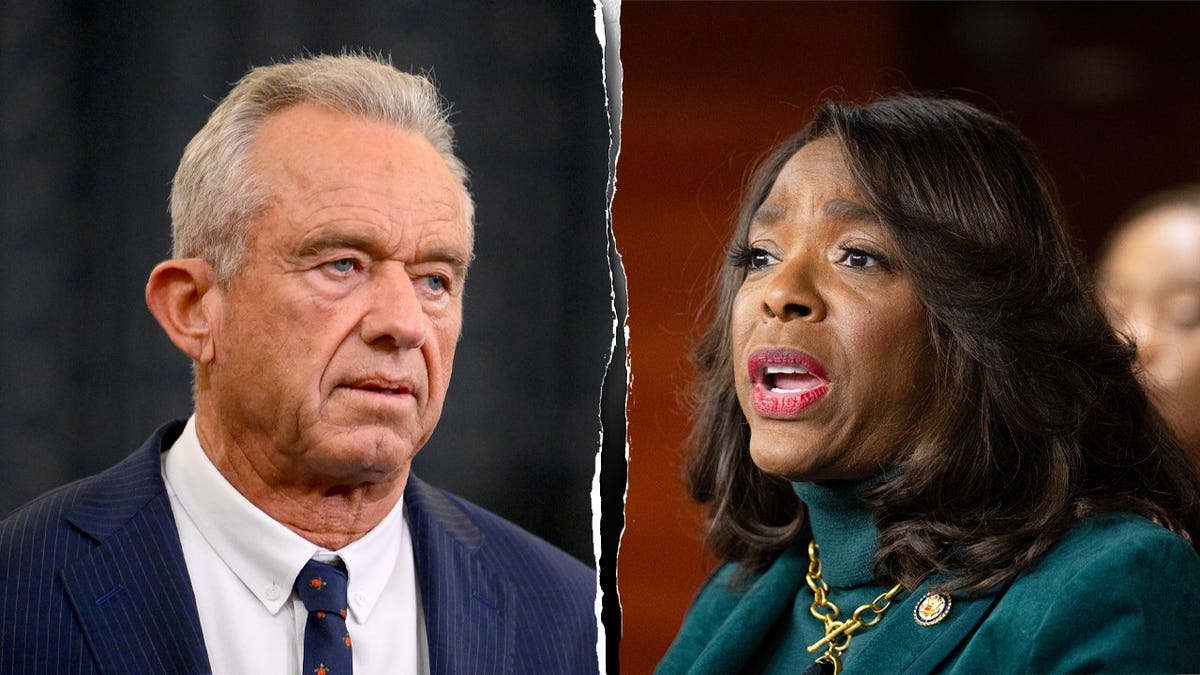
U.S. Secretary of Health and Human Services Robert F. Kennedy Jr. and Rep. Terri Sewell, D-Ala. (Getty Images)
At the time of the podcast, Kennedy was a candidate in the 2024 presidential election. Throughout the interview, he explored various campaign promises, including a plan to fight the drug epidemic by creating "rehabilitation facilities" in rural areas. The facilities would mirror "wellness farms" he encountered during his time in the Peace Corps.
"Rehabilitation facilities that I’m going to start in rural areas all over the country — where any American can go for free, anyone who is dependent on drugs, either legal drugs or illegal drugs, psychiatric drugs — which every Black kid is now just standardly put on Adderall, SSRIs, benzos, which are known to induce violence," Kennedy said on the "Earn Your Leisure" podcast.
"And those kids are going to have a chance to go somewhere and get reparented — to live in a community where there’ll be no cellphones, no screens. You’ll actually have to talk to people."
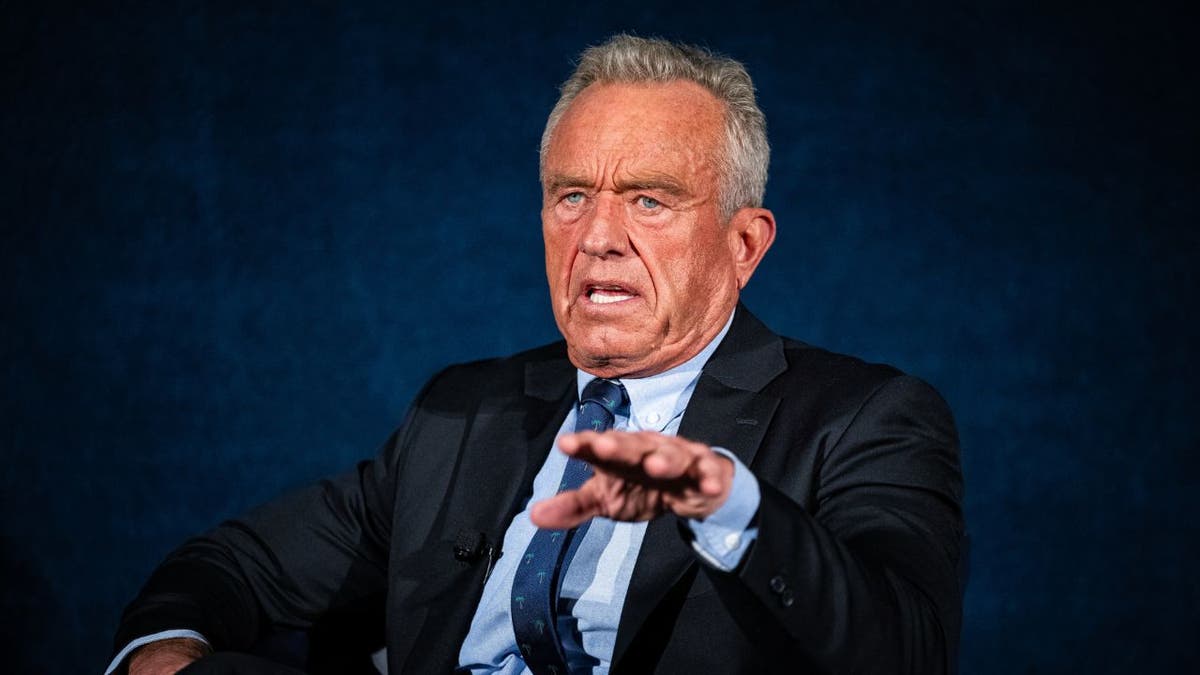
Health and Human Services Secretary Robert F. Kennedy Jr. speaks during an announcement addressing mental health and addiction initiatives in Washington, D.C., Feb. 2, 2026. (Graeme Sloan/Bloomberg via Getty Images)
For several minutes, the pair bickered back and forth over whether Kennedy made those remarks. Standing behind Sewell, an aide held a poster board displaying Kennedy's remarks.
Kennedy said he didn't know what the phrase "reparented" meant and denied ever saying it.
"You absolutely said it," Sewell said.
But Kennedy refused to answer Sewell's question about whether he had ever reparented or parented a Black child. He accused Sewell of "making up" those remarks.
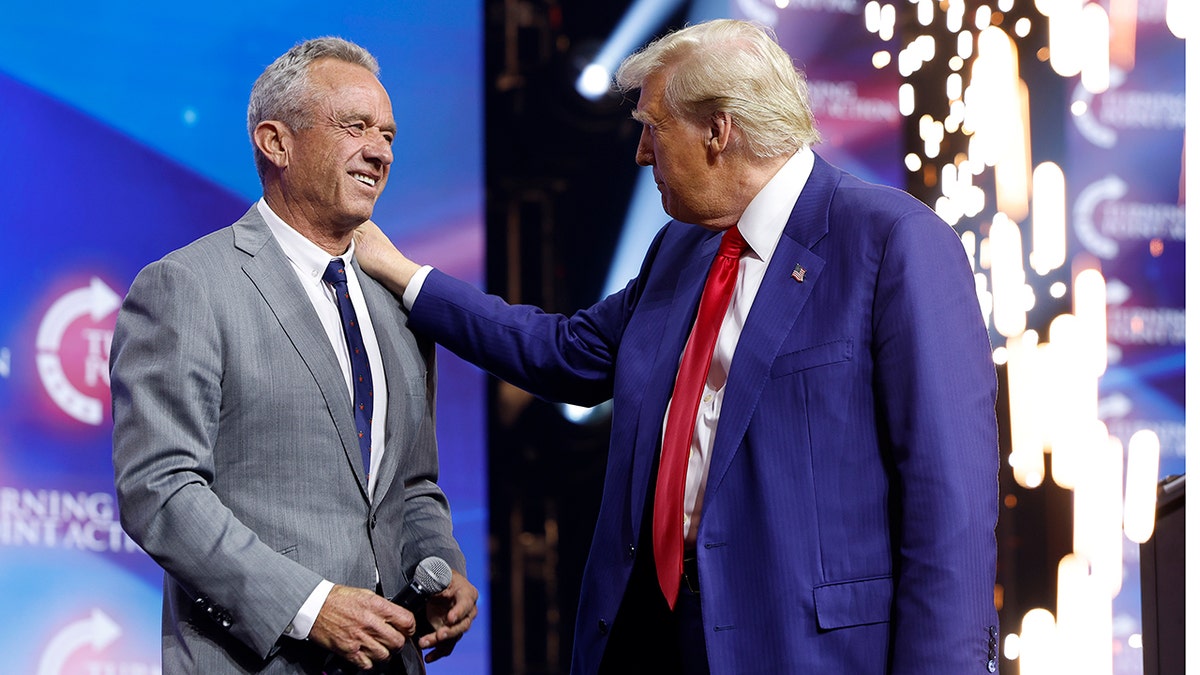
Republican presidential nominee and former President Donald Trump welcomes Robert F. Kennedy Jr. to the stage at a Turning Point Action campaign rally at the Gas South Arena Oct. 23, 2024, in Duluth, Ga. (Anna Moneymaker/Getty Images)
"I am absolutely not making this up. Mr. Secretary, in your opinion, what factors should the federal government consider when reparenting a Black child who has been on ADHD or ADD [medication]? That’s rhetorical, sir," Sewell said.
An HHS spokesperson told Fox News Digital that Kennedy's comments on the podcast were taken "out of context."
"Prior to his time as secretary, he described these communities as spaces where individuals, particularly young people facing alienation, mental health challenges, and rising rates of despair could undergo a form of ‘reparenting,’ HHS said.
"In psychotherapy terms, reparenting involves developing the emotional regulation, discipline, boundaries and self-worth that may not have been established in childhood, through consistent care, accountability and supportive relationships."
Elaine Mallon is a writer for Fox News Digital and Fox Business covering national politics.
Get the latest updates from the 2024 campaign trail, exclusive interviews and more Fox News politics content.
Read the full story at Fox News.
For complete details, visit the original sources linked above.
Comments
Post a Comment