Top Stories; Dems sidestep past ‘refuse illegal orders’ demands as they challenge Trump’s Iran war authority
Top Stories — Saturday, April 18, 2026
What is trending in the USA today? Here is Breaking News:
- Dems sidestep past ‘refuse illegal orders’ demands as they challenge Trump’s Iran war authority — Fox News
- Iran could use detained Americans as ‘sweetener’ in nuclear talks, ex-hostage envoy warns — Fox News
- Iran War Live Updates: Uncertainty Remains at Strait of Hormuz After Reopening Announcement — nyt News
Dems sidestep past ‘refuse illegal orders’ demands as they challenge Trump’s Iran war authority
Source: Fox News • Published: 4/18/2026, 1:30:58 PM
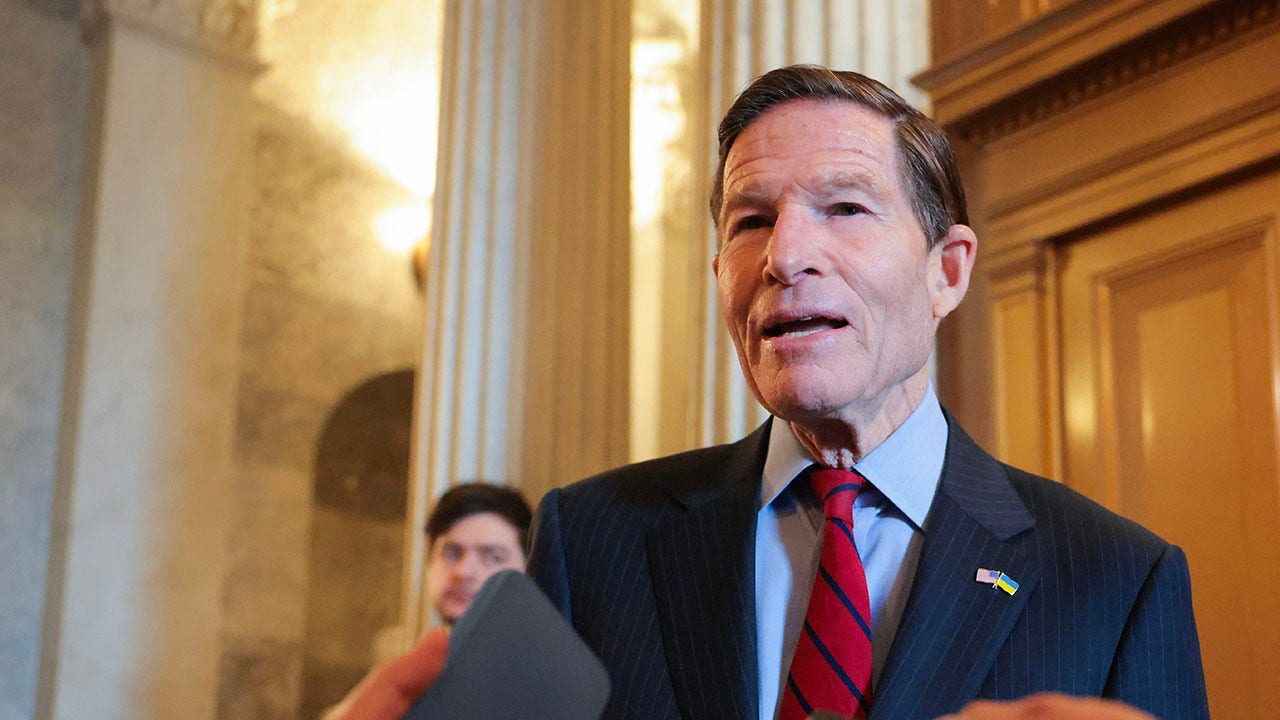
Amid ongoing hostilities with Iran, Democrats brushed off past calls from some figures in their party for U.S. armed forces to "refuse illegal orders," even as they broadly maintained that President Donald Trump's use of the military is on shaky footing without lawmaker approval.
"The troops are in no way to blame for this illegal war. Responsibility lies solely and simply with the president," Sen. Richard Blumenthal, D-Conn., said.
"We support the troops always. They’re following orders," Rep. Daren Soto, D-Fla., said. "This is about a debate of whether we should be there or not."
The comments come just months after six members of Congress with military backgrounds urged service members to disregard unconstitutional directives.
"You must refuse illegal orders," Sen. Elissa Slotkin, D-Mich., said. "Don’t give up the ship."
The six lawmakers included: Slotkin, Sen. Mark Kelly, D-Ariz., Rep. Chris Deluzio, D-Pa., Rep. Maggie Goodlander, D-N.H., Rep. Chrissy Houlahan, D-Pa., and Rep. Jason Crow, D-Colo.
The lawmakers did not immediately respond to Fox News Digital’s requests for comment when asked about what those calls meant in the context of the conflict with Iran.
Efforts to pass a war powers resolution that would curb Trump’s military powers in Iran have failed amid a steep partisan divide over whether the president’s actions fall within what the Constitution permits without congressional approval.
A war power resolution that would have forced Trump to remove U.S. forces from Iran failed in the House of Representatives in a 213-214 vote on Thursday.
Democrats, citing the War Powers Act of 1973, note that the law requires a president to secure approval from lawmakers before engaging in a conflict that goes past 60 days.
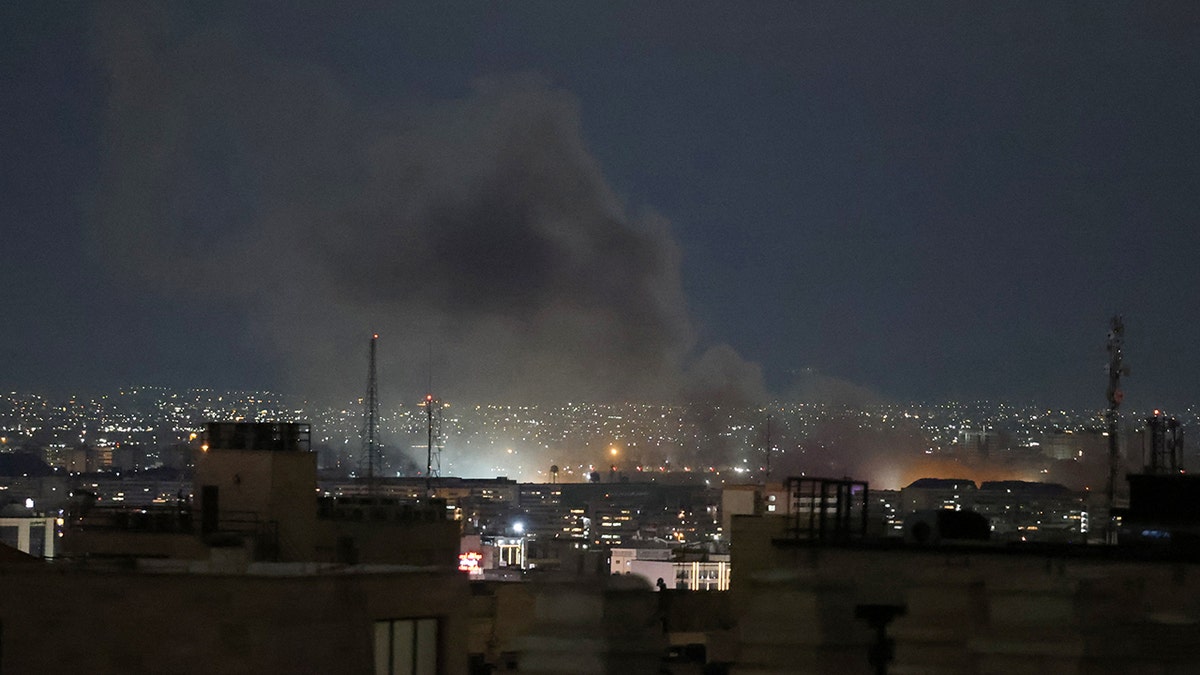
A plume of smoke rises from the site of a strike in Tehran early on March 28, 2026. (Atta Kenare/AFP)
"The president says it’s an ‘excursion’ which it’s not," Rep. Jonathan Jackson, D-Ill., said. "We have to call it for what it is. It is a war."
Republicans and other advocates for the conflict have noted the war with Iran hasn’t hit that mark yet.
Sen. John Fetterman, D-Pa., joined Republicans in rebuffing challenges to the president’s authority.
"I’ve been the only Democrat who has supported Epic Fury," Fetterman said, referring to the Iran conflict’s operational name.
"And now we’re 48 days into this. None of this has been illegal," he added.
Even so, Democrats have blasted the president for dragging the country into a conflict that they say is far from a meaningful resolution.
Blumenthal called on the administration to provide lawmakers with more information about a possible timeline for resolution and more details about the conflict's status.

Sen. John Fetterman, D-Pa., speaks to a reporter as he arrives at the U.S. Capitol for a vote on Wednesday, Dec. 3, 2025. (Bill Clark/CQ-Roll Call, Inc)
"One of the complaints — and it's bipartisan — we don’t have any accurate information about how the blockade is going, what the costs of the war are, even in a classified setting," Blumenthal said.
Although Trump has said U.S. and Iran talks are working towards ending the conflict for good, it remains unclear if ceasefire talks will render a permanent cessation of hostilities.
Leo Briceno is a politics reporter for the congressional team at Fox News Digital. He was previously a reporter with World Magazine.
Get the latest updates from the 2024 campaign trail, exclusive interviews and more Fox News politics content.
Read the full story at Fox News.
Iran could use detained Americans as ‘sweetener’ in nuclear talks, ex-hostage envoy warns
Source: Fox News • Published: 4/18/2026, 1:30:17 PM
A former lead hostage negotiator under the first Trump and Biden administrations warned that the Iranians are tougher negotiators than the Russians, Chinese and even the Taliban, noting that several Americans are still wrongfully detained in Iran and should be included in any peace talks.
Roger Carstens, the U.S. former Special Presidential Envoy for Hostage Affairs, said in an interview with Fox News that six American citizens are being held captive in Iranian prisons — each of them previously held in Evin prison in Tehran, known for its harsh conditions. He said the Iranians will likely use the American hostages as a "sweetener" to ensure negotiations go in "the direction of Iran" as the United States seeks a nuclear deal and permanent ceasefire.
"Strangely, the Russians, the Chinese, the Taliban, the Venezuelans, when you start getting into hostage discussions, they tell the truth and they stick to what they promise. You can do a handshake deal with the Taliban, and they're going to follow through," Carstens said. "The Iranians. Absolutely not."
While Carstens remains confident that U.S. negotiators can secure the return of the six Americans, he stated that Iran is unlike any other foreign government he's worked with and can't be trusted.

Roger D. Carstens poses in the Getty Images Portrait Studio Presented by IMDb and IMDbPro at SXSW 2025 on March 09, 2025 in Austin, Texas. (Robby Klein)
He said the Iranians are the sort of negotiators likely to pull a "fast one" right up until the last moment.
"You cannot trust the Iranians up until the last second," Carstens said. "If you were landing a plane in either Geneva or even Tehran, to get your Americans, you better be out there with a clipboard making sure that the people coming on the plane are the people that you bargained for."
Only two of the American hostages have been publicly identified: Kamran Hekmati, 61, and Reza Valizadeh, 49.
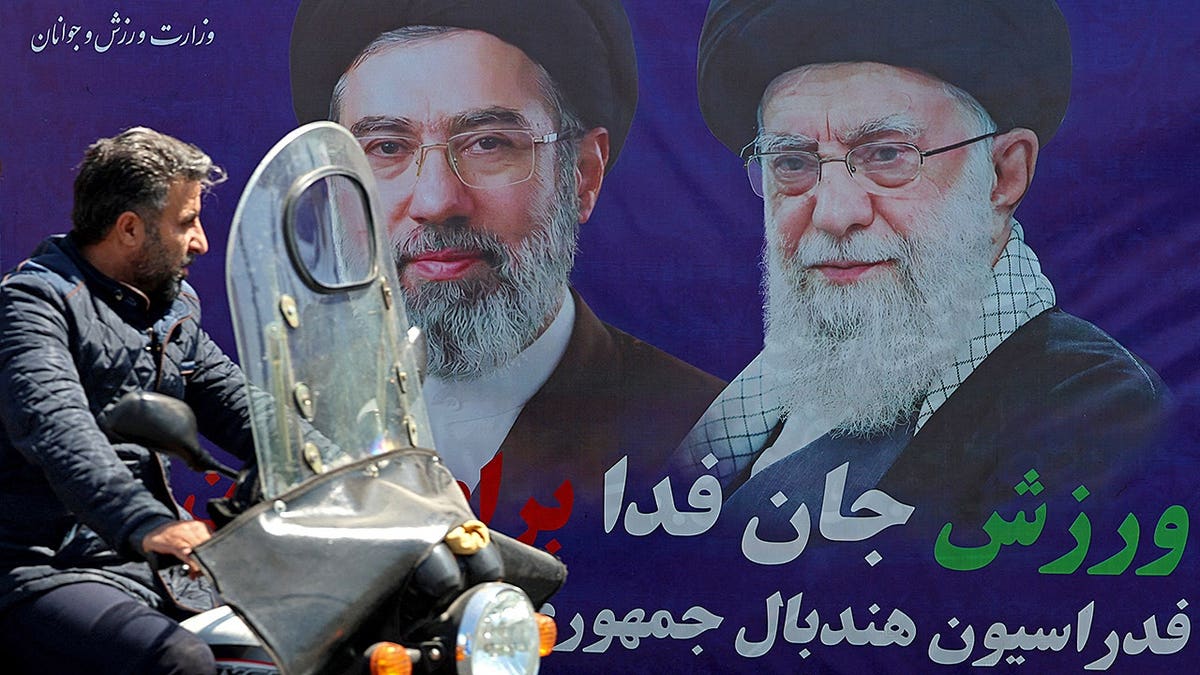
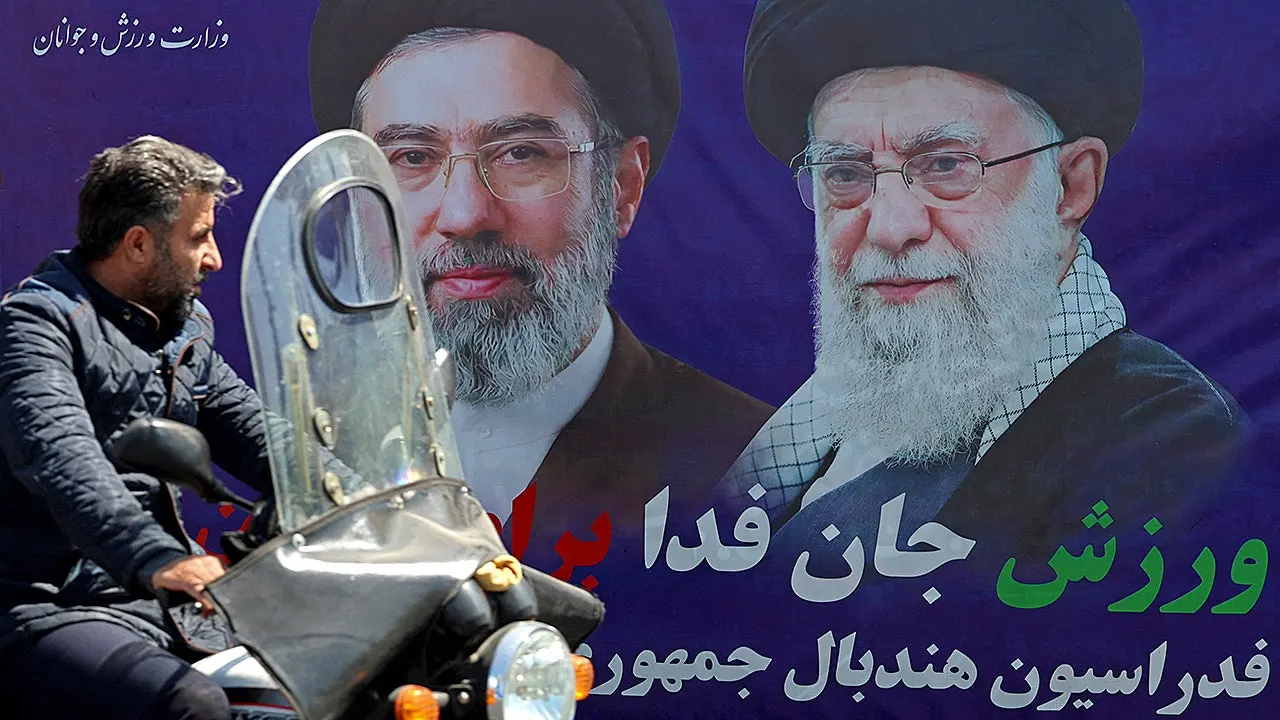
A motorist rides past a banner featuring images of Iran's slain Supreme Leader Ayatollah Ali Khamenei and his son Mojtaba Khamenei along a street in Tehran on April 15, 2026. (AFP/Getty Images)
Hekmati is a Jewish American who also holds Iranian citizenship. He was imprisoned 11 months ago after being charged and convicted of visiting Israel in the past 10 years.
Like Hekmati, Valizadeh holds dual Iranian and American citizenship. He previously worked for the U.S.-funded Radio Farda, covering corruption and election manipulation in Iran. Valizadeh was arrested in September 2024 during a visit to see family and was sentenced after being convicted of working with a hostile government.
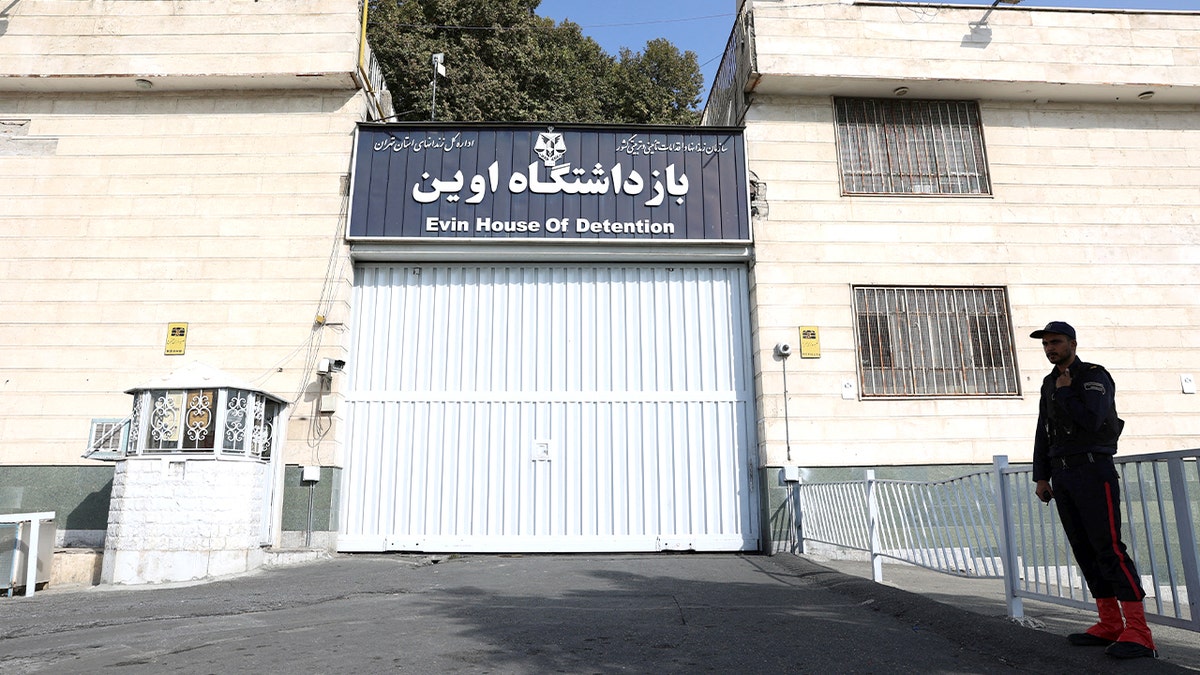
A view of the entrance of Evin prison in Tehran, Iran Oct. 17, 2022. (Majid Asgaripour/WANA)
Carstens suggested it was unlikely there was any time for the Americans and Iranians to discuss the release of the six Americans during the 21-hour marathon peace talks in Pakistan earlier this month.
"I think the Iranians are going to be smart enough to keep these people healthy and ready to throw on to a negotiating table," Carstens said. "The question in my mind during these negotiations is not whether they'll be at risk or pulled off, but rather, what's it going to take, and how will we, the United States, value them [the hostages]?"
President Donald Trump does not mention the release of American hostages in his four objectives for ending the Iran war. Carstens is calling for the return of the hostages to be a fifth objective.
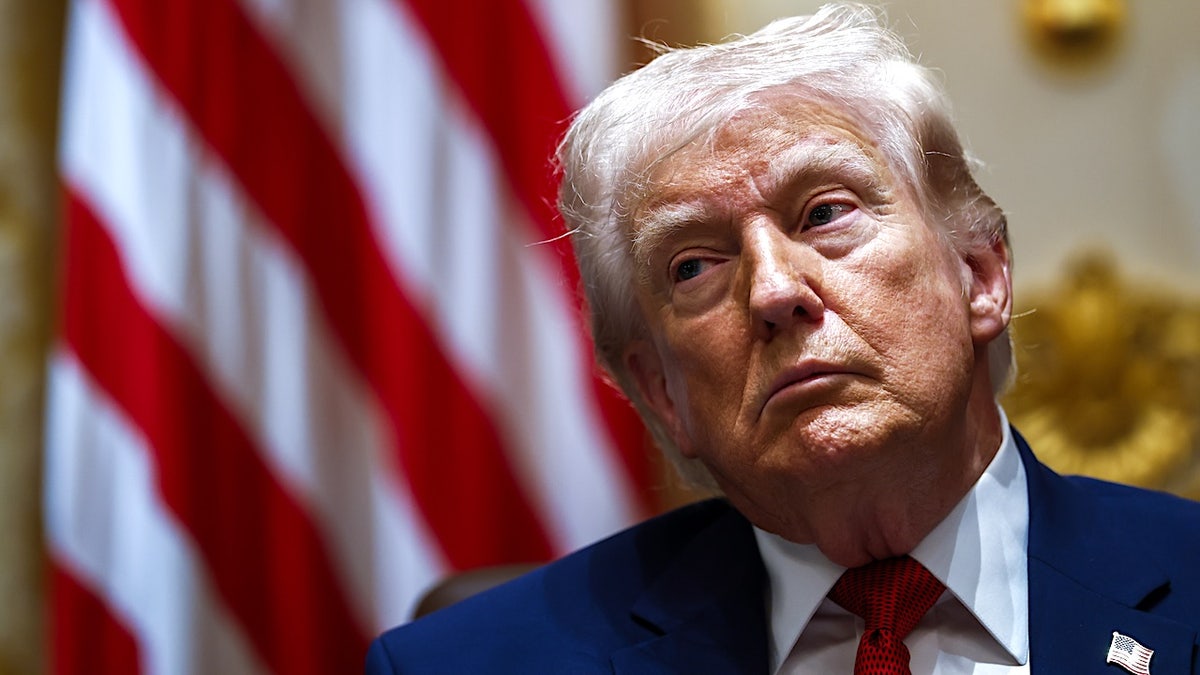
President Donald Trump hosted his second Cabinet meeting of 2026 and the 11th of his presidency. (Will Oliver/EPA/Bloomberg)
"Let's make this an official ask, and when we go in, not only ask for it officially, but hold ourselves accountable to getting the job done," Carstens said. "The good news is Trump has a great record in bringing Americans home."
A senior White House official told Fox News Digital that future peace talks with Iran are under discussion, but nothing has yet been scheduled.
"President Trump is always concerned about Americans detained abroad, which is why he has brought over 100 individuals — a record number — home from around the world," White House spokesperson Anna Kelly said in a statement to Fox News Digital.
Fox News Digital reached out to the State Department for additional comment.
Jennifer Griffin currently serves as a national security correspondent for FOX News Channel (FNC) and is based out of the Washington D.C. bureau. She joined the network in October 1999 as a Jerusalem-based correspondent.
Get the latest updates from the 2024 campaign trail, exclusive interviews and more Fox News politics content.
Read the full story at Fox News.
Iran War Live Updates: Uncertainty Remains at Strait of Hormuz After Reopening Announcement
Source: nyt News • Published: 4/18/2026, 1:20:55 PM

Beirut11:36 a.m. April 18
The status of the Strait of Hormuz was unclear on Saturday even as both President Trump and Iran raised hopes that the strategic waterway had been reopened to ship traffic and an end to the six-week-old war was in sight.
Seyed Abbas Araghchi, Iran’s foreign minister, said on Friday that the Strait of Hormuz was “completely open” for all commercial ships on a “coordinated route” approved by Tehran during the cease-fire. But Iranian officials said on Friday that vessels would still need permission to travel through the strait.
Mr. Trump framed the announcement as a breakthrough but added that the American blockade of Iran’s ports would remain in place until a deal was reached to end the war. Iran’s top negotiator, Mohammad Bagher Ghalibaf, said the passage would not remain open if the blockade continued.
Ships did not return in large numbers to the strait, a key route for global oil and gas supplies, shipping analysts said on Friday. The two-week truce period expires next week.
The announcement of the strait’s reopening strengthened the hope that the United States and Iran were nearing a framework for more talks to reach a lasting peace deal.
The Strait of Hormuz has been one of Tehran’s biggest sources of leverage in the conflict. Iran effectively shut down the strait in retaliation for U.S. and Israeli strikes, choking oil and gas supplies and sending fuel prices soaring across the world.
The announcement of its reopening brought immediate relief to energy markets, sending international oil prices tumbling to around $90 a barrel at one point on Friday. The Trump administration also extended a sanctions exemption on the sale of some Russian oil on Friday. The goal of this exemption was to lower oil prices by allowing countries to legally purchase crude oil that the United States had blacklisted.
Hopes for an end to the war were also boosted by the 10-day cease-fire in Lebanon that went into effect on Friday. The deal prompted celebrations in Lebanon as thousands of displaced families made their way home. Mr. Trump and U.S. officials have denied any connection between the cease-fire and the Iran talks, though analysts called that implausible.
The president expressed optimism late Friday about the negotiations with Iran that he said were happening over the weekend. “I expect things to well,” he said.
Here’s what else we are covering:
Iranian threat: The Islamic Revolutionary Guards Corps’ small and fast boats have been the main threat stymying shipping through the Strait of Hormuz. Read more ›
Mixed messages: Even as Mr. Araghchi said the strait was open, other Iranian officials had different things to say, appearing to assuage fears that Iran was giving up its leverage. Read more ›
Part of Iran’s airspace and some of its airports reopened on Saturday morning, the country’s Civil Aviation Organization announced. Iran had shut down its airspace after U.S.-Israeli airstrikes began on Feb. 28.
“Accordingly, air routes in the eastern sector of the country’s airspace are open for international flights transiting through Iran,” the organization said in a statement published by the state news agency. Flight operations would “gradually resume,” it added.
Top officials from Pakistan, a key mediator between the United States and Iran, went on several high-profile trips this week. Field Marshal Syed Asim Munir, the army chief, concluded a three-day visit to Iran, the Pakistani military said on Saturday. Munir’s meetings included talks with Mohammad Bagher Ghalibaf and Foreign Minister Abbas Araghchi, who are on the Iranian negotiating team.
Separately, Prime Minister Shehbaz Sharif and Foreign Minister Ishaq Dar were flying back to Pakistan after visiting Saudi Arabia, Qatar and Turkey for talks, Dar said on social media on Saturday.
Iranian warships sunk by U.S. and Israeli attacks litter naval harbors along the Persian Gulf coast, but what is sometimes called a “mosquito fleet” lurks in the shadows.
It’s a flotilla of small, fast, agile boats designed to harass shipping, and it forms the heart of the naval forces deployed by the Islamic Revolutionary Guards Corps, a force separate from Iran’s regular navy.
These boats, and especially the missiles and drones that the Guards navy can launch from them, or from camouflaged sites onshore, have been the main threat stymying shipping through the Strait of Hormuz.
Iran had vowed to keep the strait closed until there was a cease-fire in Lebanon. On Friday, senior Iranian officials made conflicting statements about whether that truce had prompted Iran to open the strait. Some suggested that the continued U.S. blockade made doing so impossible, while the Guards navy commander said that any opening would involve the military supervising all transits.
Welcoming the initial Iranian announcement of the opening, President Trump pronounced the Hormuz situation “over,” while stressing on social media that the U.S. blockade of Iranian ports would remain in place until a peace deal was reached.
The task of keeping the strait closed would fall to the Guards navy.
“The I.R.G.C. navy works more like a guerrilla force at sea,” said Saeid Golkar, an expert on the Guards and a political science professor at the University of Tennessee at Chattanooga.
“It is focused on asymmetrical warfare, especially in the Persian Gulf and the Strait of Hormuz,” he added. “So instead of relying on big warships and classic naval battles, it depends on hit-and-run attacks.”
During the war, at least 20 vessels were attacked, according to the International Maritime Agency, a United Nations agency. The Guards navy rarely claimed the attacks, which analysts said were most likely carried out by drones fired from mobile launchers on land, which generate a faint footprint, difficult to trace.
On April 8, after a two-week cease-fire in the war was announced, Gen. Dan Caine, chairman of the Joint Chiefs of Staff, said more than 90 percent of the regular navy’s fleet, including its main warships, sat at the bottom of the ocean.
An estimated half of the Guards navy’s fast attack boats were also sunk, General Caine said, but did not specify how many. Estimates of the overall number range from hundreds to thousands; it is difficult to count them.
The boats are often too small to appear on satellite images, and they are moored along piers within deep caves excavated along the rocky coastline, ready to be deployed in minutes, analysts said. Their arsenal poses a major threat to commercial ships in the gulf and the strait.
“It remains a disruptive force,” said Admiral Gary Roughead, a retired chief of U.S. Naval Operations. “You never quite knew what they were up to and what their intentions were.”
The Guards land forces were formed soon after the 1979 Islamic Revolution because its leader, Ayatollah Ruhollah Khomeini, did not trust the regular army to protect the new government.
The Guards navy was added around 1986. The regular navy had proved reluctant during the Iran-Iraq war to attack oil tankers from Iraq’s financial backers, Kuwait and Saudi Arabia, said Farzin Nadimi, a specialist on the Guards navy at the Washington Institute, a policy think tank in the U.S. capital.
Eventually those attacks ratcheted up, and the United States then deployed warships to escort tankers. One of them, the USS Samuel B. Roberts, almost sank after hitting an Iranian mine. In a subsequent battle, the U.S. Navy scuppered two Iranian frigates and a number of other naval vessels.
Three years later, the Iranians watched as the U.S. laid waste to the Iraqi military during the first Persian Gulf war.
That combination of events convinced Iran that it could never prevail in a direct confrontation with the U.S. military, so it developed a stealth force to harass ships in the gulf, Mr. Nadimi said.
The Guards navy has an estimated 50,000 men, he said, and divides its forces into five sectors along the gulf, including some presence on many of the 38 gulf islands that Iran controls.
Overall, it has constructed at least 10 well-hidden, fortified bases for attack boats. One, Farur, is the center of operations for the naval special forces, whose equipment, even their sunglasses, are modeled on their U.S. counterparts.
“The I.R.G.C. navy has always believed that it is at the forefront of the confrontation with the Great Satan, and has been in constant friction with the Americans in the gulf,” Mr. Nadimi said.
Iran started by using recreational boats mounted with rocket-propelled grenades or machine guns, naval analysts said. Over the years it built a range of specially designed small boats, as well as miniature submarines and marine drones. Those boats often reach speeds of more than 100 knots, or more than 115 miles per hour.
The Guards navy also recently developed larger, more sophisticated warships, many of which were targeted in the war, said Alex Pape, the chief maritime expert at Janes, a defense analysis firm. Those damaged included its largest drone carrier, the Shahid Bagheri, a converted container ship that could also launch anti-ship missiles.
To counter a potential swarm of smaller boats, U.S. warships have high-caliber cannons and other weaponry, experts said. Commercial vessels, though, have no way to fend off such attacks.
But the Iranians have never tested swarm attacks of small boats in combat, said Nicholas Carl, an Iran expert at the American Enterprise Institute, a Washington think tank.
Since President Trump on Monday imposed a naval blockade on ships traveling from Iranian ports, even the most powerful U.S. warships are avoiding spending any time patrolling in the vicinity of the narrow Strait of Hormuz. There is little room to maneuver and almost no warning time to ward off a drone or a missile fired from nearby, experts said.
The U.S. warships enforcing the blockade are likely to remain outside the strait, in the Gulf of Oman or even farther, in the Arabian Sea, where they can monitor shipping traffic but are far more difficult for the Guards to attack, experts said. On Wednesday, Iran warned that it could expand operations into the Red Sea, another key shipping route in the region, through its proxy force in Yemen.
The Guards navy has long played games of cat-and-mouse with the U.S. military inside the gulf. Admiral Roughead remembers that in the 1990s and 2000s, the small attack craft would approach American warships at high speeds and then veer off when they were half a mile away.
Drone warfare has amplified the danger level, he said. Drones are cheap and sometimes hard to detect, but they can inflict significant damage on a warship costing billions of dollars.
Occasionally the Guards navy has fought directly with American or other forces. In early 2016, it captured two small U.S. naval boats. The 10 sailors, filmed on their knees, were later released unharmed. The episode caused an uproar in the United States.
Brig. Gen. Mohammad Nazeri, a founder of the Guards naval special forces, who led that attack, achieved cultlike status in Iran. He inspired a reality show on state television, “The Commander,” which ran for five seasons.
Each season, about 30 contestants competed for the chance to become a naval commando. They demonstrated their survival skills or feats of daring like jumping off cliffs into the gulf. After each round, viewers voted for their favorite “hero.”
Just two days after Treasury Secretary Scott Bessent said the United States would not extend a sanctions exemption on the sale of some Russian oil, the Treasury Department did just that on Friday, issuing one for about a month.
The renewed license will be in effect until May 16 and supersede the sanctions waiver on Russia that expired on April 11.
The Trump administration has loosened restrictions on Russian oil exports since the war in the Middle East began to rattle energy markets in March. The goal was to lower oil prices by allowing countries to legally purchase hundreds of millions of barrels of crude oil that the United States had blacklisted.
Mr. Bessent said at a White House briefing on Wednesday that the federal government would not renew the sanctions exemption on Russian oil that was stranded at sea, as well as one on Iranian oil that is set to expire on Sunday.
“That was oil that was on the water prior to March 11,” he said, referring to when the United States first lifted sanctions on Russian oil. “So all of that has been used.”
The last-minute renewal of Russia’s sanctions exemption came as Iran announced earlier on Friday that the Strait of Hormuz, a vital waterway that once carried a fifth of the world’s oil, was completely open to all commercial ships.
President Trump celebrated the move on social media, claiming that “Hormuz Strait situation is over” and that Iran had agreed to never close the waterway again.
Iran made no such commitment. Its foreign minister, Seyed Abbas Araghchi, only went so far as to say that the waterway would be open “for the remaining period of cease-fire.” The cease-fire between the United States and Iran is set to expire next week with American and Iranian negotiators expected to meet for another round of peace talks in Pakistan soon.
Mr. Trump has downplayed the economic repercussions of the conflict and brushed aside soaring oil and gas prices since the start of the war on Feb. 28. The price of regular gasoline in the United States jumped 25 percent from February to March, the highest monthly percentage increase on record. The price of Brent crude, the global benchmark for oil, has failed to mellow despite the release of a record amount of oil from countries’ strategic reserves.
While news of the strait reopening prompted a sharp decline in oil prices on Friday, the future of the waterway remained murky. Iran and the United States were still at odds over the U.S. military’s blockade of Iranian ports. Mr. Araghchi, who is also Iran’s top negotiator, said the country would close the strait again if the U.S. military continued its blockade of Iranian ports.
Reporting from Washington and New York
President Trump’s announcement that Iran had agreed to “completely open” the Strait of Hormuz bolstered hopes that the two governments were keeping alive a cease-fire agreement reached last week and nearing a framework for further negotiations to reach a lasting peace deal.
The announcement came a day after Mr. Trump said U.S. and Iranian teams would probably meet this weekend for a second round of talks, as Iranian officials said the sides were nearing agreement on a document that sets a formal framework and a 60-day clock for negotiations.
It also followed Israel’s agreement on Thursday to pause its military campaign in Lebanon, which Iran had called a violation of its cease-fire deal with the United States.
Shadowing the optimism was a warning from Tehran that ships could again be denied passage through the strait if Mr. Trump does not lift the U.S. naval blockade he placed on Iranian ports this week. Writing on his Truth Social account on Friday, Mr. Trump said the blockade will remain in place until any deal with Iran is “100% complete.” The U.S. military affirmed that the blockade would last until Mr. Trump ended it.
Iran’s parliament speaker, Mohammad Bagher Ghalibaf, warned in a social media post that if the United States continued its blockade, the Strait of Hormuz would not remain open, and that passage would be based on Iranian authorization. Mr. Ghalibaf, a lead Iranian negotiator in Islamabad last weekend, said that Mr. Trump on Friday had made several false claims but did not specify which he was referring to.
Earlier on Friday, Mr. Trump had said that with the Strait of Hormuz reopened, the process of clinching a final peace deal with Iran would “go very quickly.” But analysts called that unlikely.
“We’re still miles away from a comprehensive agreement,” said Ali Vaez, an Iran expert with Crisis Group, a global conflict resolution organization.
Writing on his Truth Social account on Friday, Mr. Trump also said that the naval blockade he placed on Iranian ports this week would remain in place until his negotiations with Tehan are “100% complete.” It is unclear how that ultimatum might change Iran’s negotiating posture. The U.S. military affirmed that the blockade would last until Mr. Trump ended it.
The path to a deal continues to run through Pakistan, whose army chief, Field Marshal Asim Munir, has been encamped in Tehran since Wednesday. Mr. Munir has been facilitating talks over a three-page memorandum of understanding that establishes a general framework for a deal, according to three senior Iranian officials, who spoke on the condition of anonymity because they were not authorized to speak publicly about sensitive diplomacy.
Pakistan hosted a first round of direct talks between U.S. and Iranian officials last weekend, and the sides nearly reached agreement on the document, according to Iran’s foreign minister, before the session ended in public acrimony. The White House has not confirmed that claim and did not immediately respond to requests for comment.
But U.S. officials said the White House was optimistic that a deal was relatively close, even if key issues remain unresolved. In several brief interviews with reporters on Friday, Mr. Trump suggested that Washington and Tehran had reached agreements on Iran’s nuclear program and the release of billions of dollars of frozen Iranian funds. But those matters remain unresolved and are the trickiest part of the negotiations, the U.S. officials said.
American officials briefed on the talks said that Mr. Trump’s remarks were intended to press Iran toward agreement. All the officials spoke on the condition of anonymity because they were not authorized to speak publicly about sensitive diplomacy.
The Iranian and Pakistani officials said the memo would set a 60-day window for further talks to resolve matters including Iran’s nuclear program, which Mr. Trump wants halted, and Iran’s demands for relief from U.S. economic sanctions.
But even two months is most likely an unrealistic time frame, experts said, if only given the technical complexity of matters like retrieving Iran’s 970 pounds of highly enriched uranium — at least some of which is believed to be buried under the rubble of U.S. airstrikes last summer.
“Making these deals durable requires rigor and clarity, which takes expertise and time,” said Jon Finer, who spent countless hours negotiating a 2015 nuclear agreement with Tehran as chief of staff to Secretary of State John Kerry. “The risk of rushing is that you don’t sweat the details and miss something important or you don’t actually have a meeting of the minds at all, and it unravels.”
Mr. Vaez added that the Trump administration’s diplomatic track record shows little skill at nailing down the fine points of complicated negotiations. In Gaza, Ukraine and the Democratic Republic of Congo, the Trump administration’s efforts to settle conflicts faltered over misunderstandings and ambiguities.
“They need to pin down every single detail. And that requires the kind of diplomacy that this administration has demonstrated again and again it is not adept at,” Mr. Vaez said.
Israel also remains a wild card in the Iran talks, a day after Mr. Trump appeared to force a reluctant Prime Minister Benjamin Netanyahu to accept a cease-fire in Lebanon in order to secure Iran’s agreement to reopen the Strait of Hormuz.
U.S. officials deny any connection between the Iran talks and Israel’s war against Lebanon-based Hezbollah, Iran’s most important proxy force. But analysts called that implausible, saying that Mr. Trump clearly decided his needs in Iran outweighed Mr. Netanyahu’s determination to smash Hezbollah.
Mr. Trump only bolstered that view when he wrote on social media on Friday of Israel’s attacks on Lebanon: “They are PROHIBITED from doing so by the USA. Enough is enough.”
Mr. Netanyahu “had no choice,” said Aaron David Miller, a veteran Middle East negotiator now with the Carnegie Institute for International Peace. Mr. Miller noted that Mr. Netanyahu was counting on Mr. Trump’s support ahead of Israeli elections expected this fall. “He couldn’t say no, let alone cross Trump.”
But other analysts said that Iranian leaders remain suspicious of Mr. Netanyahu, who supports continuing the joint U.S.-Israeli war on Iran, ordered strikes killing much of Iran’s political leadership, and, they fear, might try to scuttle Mr. Trump’s peace efforts.
Mr. Trump made several heady claims of diplomatic progress on Friday, saying in an interview with Axios that he believed he could achieve a deal with Iran “in a day or two” and telling a NewsNation reporter that Iran had agreed to stop enriching uranium. But Mr. Trump has made numerous exaggerated claims over the course of the war about the state of his negotiations with Tehran.
It is possible that Iran has offered to suspend uranium enrichment — the process that refines the fissile material needed for a nuclear bomb — for a finite period of time. Iran has previously offered to stop enrichment for 5 years. But Mr. Trump has demanded that Iran permanently agree to “zero enrichment” on its own soil, a position Iran has rejected for decades.
The Iranian officials said that Iran has agreed to suspend its enrichment activity for only 10 years, followed by another 10 years of minimal enrichment for laboratory research.
Iran has also agreed to dilute the stockpile and either keep it on its own soil under the watch of international inspectors, or ship it to Russia. Dilution would also take place in phases sequenced to the release of Iranian funds and lifting of American sanctions, the Iranian officials said.
Iran is also seeking access to an estimated $27 billion in assets frozen by the United States, mostly in the form of oil revenues held in Iraq, Qatar, Japan, Germany and China.
“The United States will not negotiate through the press, and anything not announced by President Trump or the White House should be considered speculation,” said Anna Kelly, a White House spokeswoman.
Even if the sides can reach an agreement in theory, it remains unclear how they can overcome the extreme mistrust and commit to action. Mr. Trump has depicted Iran’s leaders as “crazy” and “lunatics.” Iranian officials say that Mr. Trump has repeatedly burned them, and some say it would be folly to trust his word.
They note that in his first term, Mr. Trump unilaterally exited the 2015 nuclear deal even though Tehran was complying with its terms and imposed heavy economic sanctions on Iran.
In June and then again in February he began diplomatic talks with Tehran over its nuclear program only to launch military strikes without first declaring those negotiations dead.
While many analysts argue that Iran gained an upper hand over Mr. Trump by demonstrating its ability to close the Strait of Hormuz and choke global energy and chemical supplies, there were new signs of Iran’s own dire economic position, which Trump officials have insisted will force Iran to accept an agreement.
On Wednesday the Iranian government spokeswoman Fatemeh Mohajerani said that Iran may have sustained at least $270 billion in damages from the war, according to initial assessments.
And Iran’s main business newspaper, Donyaye Eghtesad, reported on Friday that reconstruction would take at least 12 years. Each month of fighting amounted to a five-year economic setback, the paper said, adding that total losses were triple the government’s annual budget.
Tyler Pager and Eric Schmitt contributed reporting.
Adm. Brad Cooper, the head of U.S. Central Command, said on Friday that the blockade against ships entering or exiting Iranian ports would remain until President Trump suspended it.
“As the president announced earlier today, U.S. forces in the Middle East continue to fully enforce the maritime blockade against ships entering or exiting Iranian ports in coastal areas,” Admiral Cooper said in a conference call with reporters. “It will remain in effect until further notice.”
So far, 19 Iran-linked tankers or cargo vessels have returned to the country’s ports after a line of more than a dozen U.S. Navy ships strung across the Gulf of Oman intercepted them, and ordered them by radio to reverse course, the admiral said.
None of the commercial ships have fired on U.S. Navy ships or aircraft or had armed Iranian navy escorts, he added.
Admiral Cooper said that U.S. intelligence analysts are monitoring “several vessels of interest,” both inside and outside the blockade boundary, that could try to evade the blockade.
“We have eyes on every single one of them,” he said.
Gen. Dan Caine, the chairman of the Joint Chiefs of Staff, said on Thursday that U.S. military commanders elsewhere in the world, and especially in the Indo-Pacific region, would “actively pursue any Iranian flagged vessel or any vessel attempting to provide material support to Iran.”
The United States is currently monitoring “a handful” of such vessels, said a U.S. military official, who spoke on condition of anonymity to discuss operational matters. A spokeswoman for U.S. Indo-Pacific Command declined to comment on any ongoing or future operations.
A 10-day cease-fire that Lebanon and Israel agreed to appeared to be holding on Friday, but absent from the agreement was one of the two warring parties: Hezbollah, the Iran-backed, Lebanese militia that the Israeli military had been fighting.
In statements after the U.S.-brokered truce was announced, Hezbollah made vague reference to the cease-fire but did not commit to adhering to it. The group set off the latest round of fighting last month by attacking Israel in solidarity with Iran, soon after the start of the U.S.-Israeli bombing campaign there. Israel responded to Hezbollah’s attacks by launching airstrikes across Lebanon and widening a ground invasion of the country’s south.
The truce’s viability could hinge on Lebanon’s ability to curb Hezbollah, which it has struggled to do for decades.
For years, the Lebanese government has been caught between Western demands to disarm the group, which the United States has long designated a terrorist organization, and fears of inflaming sectarian tensions, which were at the heart of a bloody 15-year civil war in Lebanon that ended in 1990.
Hezbollah is a Shiite militant group that emerged in the 1980s with Iranian backing and grew into Lebanon’s most powerful fighting force. To its supporters, it was a protector of the Shiite Muslims of Lebanon from Israel, which occupied southern Lebanon for nearly 20 years, as well as from other sects’ militias in the country. It also ran a network of social services like schools, clinics and hospitals.
Hezbollah still has political influence in Lebanon, though less than it once did. The group exerts de facto control over large areas of the country’s south and poses a credible challenge to the Lebanese government’s authority.
In 2023, Hezbollah attacked Israel in solidarity with Hamas, the Palestinian group that is also backed by Iran. Israel responded with brutal force, wiping out many of Hezbollah’s top commanders, including its leader, Hassan Nasrallah; razing much of its infrastructure; and forcing it to use a chunk of its weapons arsenal.
In December 2024, the rebel uprising that toppled Bashar al-Assad — Syria’s longtime dictator and a key regional patron of Hezbollah — dealt the group another blow.
“Over the course of the 2000s, 2010s, and even into the 2020s, there was a sense that the balance of power was in favor of Hezbollah,” said Andrew Arsan, a professor of Arab history at Cambridge University. “But the war between Israel and Hezbollah from October 2023 weakened the party, both militarily as well as politically.”
After a 2024 cease-fire with Israel, Hezbollah largely avoided retaliating even as the Israeli military maintained forces in southern Lebanon and carried out near-daily airstrikes.
So, many were surprised by the intensity of Hezbollah’s barrages against Israel beginning in March. It indicated that the group had kept a sizable arsenal of rockets, missiles and drones, as well as the capacity to produce weapons locally — which was increasingly crucial for its survival as a fighting force without Syria’s backing.
The 2024 truce with Israel mandated that Lebanon take steps to disarm Hezbollah. Lebanon’s army said in January that it had made progress in efforts to restrict Hezbollah’s access to weapons, which Israel called encouraging but far from sufficient.
During the most recent fighting, the Lebanese government in effect designated Hezbollah an outlaw group by declaring its military activities illegal. The government also pushed to root out Iranian influence more broadly, including by ordering the expulsion of Tehran’s ambassador in Lebanon.
But Hezbollah’s response to those moves underscored the limits of Beirut’s authority. The group issued veiled threats to reignite domestic strife, and Iran’s ambassador, Mohammad Reza Shibani, refused to leave.
Reporting from Srifa, Kfar Dounine, Qasmiyeh, and Tyre in southern Lebanon

A 60-year-old woman did not know what she would find when she returned to her home in Srifa, a village in southern Lebanon.
The woman, Mona Nazal, had fled north in early March, when the war between Israel and Hezbollah reignited. She had not been back since. But as a temporary cease-fire went into effect on Friday morning, she rushed to her car and drove for six hours until she reached the village entrance.
Along the main street, there was almost nothing left. The pharmacy was a pile of rubble. The produce shop and tobacco stores had been cleaved in half. The roof of the wheat mill had partially caved in. Not a single building was intact.
“Gone, gone, it’s all gone,” she cried, stumbling across the dusty piles of concrete in what used to be her bedroom. “Where is the floor? Where are my drawers? I can’t even find a pillow.”
Ms. Nazal was one of thousands of people who flocked to Lebanon’s devastated south on Friday to take stock of their homes, as the temporary cease-fire between Israel and the Iran-backed militia Hezbollah went into effect.
The U.S.-brokered truce was welcomed with relief across Lebanon, which has been battered by Israeli airstrikes over the past six weeks in the second major war the country has endured in two years. The latest outbreak of fighting, which began last month after Hezbollah fired on Israel in solidarity with Tehran, has killed more than 2,100 people and displaced over a million in Lebanon, according to Lebanese authorities.
But even as families returned to their homes, many remained uneasy and uncertain about the days to come.
Unlike the cease-fire that ended the last outbreak of war in 2024 — which was indefinite — the truce announced on Thursday was set to last just 10 days. Israel has said that its forces, which invaded southern Lebanon last month, will remain in place during the pause, increasing fears that the conflict could give way to a prolonged occupation.
“I can’t express the joy I’m feeling. We didn’t sleep,” said Israa Jaber, 54, as she sat in a vehicle in traffic heading south. “But for this joy to be complete they have to extend this temporary truce. If we have to leave again, I can’t describe how disappointing it would be.”
Ms. Jaber joined the throng of cars clogging the country’s main coastal highway. Many were loaded with suitcases, mattresses and blankets that people had grabbed when they fled or collected in the weeks they spent living in relatives’ homes or schools that have been turned into shelters.
“Even if my home is destroyed, I will stay on the land — I just want to be back,” said Abbas Shami, 40, as he hopped out of his stationery car and tightened yellow string that held down three mattresses that he had stacked on his car’s roof.
His car was at the edge of a four-lane traffic jam that stretched for miles along the highway and lead to a bottleneck at the Litani River, which divides northern and southern Lebanon. Israel had bombed all of the main bridges across the river in recent weeks, so cars had to snake one by one along a makeshift dirt crossing next to where a bridge once stood in Qasmiyeh, a town near the coast.
Soumaya Ahmed Fadel, 46, stood on the partially destroyed bridge and watched as Lebanese Army soldiers in excavators tried to widen the one-lane crossing. Her 12-year-old son, Ghalab, leaned against her, clutching the bottom of her jacket. “I just want to sleep in my bed,” he said.
“That’s if we find our house intact,” his mother reminded him.
After she and her family were caught in the traffic on their way home to the village of Touline, Ms. Fadel walked a few miles, squeezing between cars with her son who said he could not wait to get home. She did not tell him what she had already learned on the local news: Much of their village had been destroyed.
“I am too tired of war,” she said. “Since I was born, I’ve been living from one war to another war to another war.”
Beyond the bottleneck at Qasmiyeh, the traffic thinned as people took off along winding roads through the southern hills and valleys to their villages.
Just outside the village of Kfar Dounine, Inaya Yousef, 46, drove in her family’s rickety BMW, the bottom of the car scraping against the pavement at every turn. Mattresses poked out from its trunk, and three massive bags filled with clothes, food and children’s toys weighed on the roof.
When the car’s engine finally gave out on a steep hill near their home, Ms. Yousef and her children clambered out of the car. As a strong gust of wind swept across the valley, Ms. Yousef spread her arms.
“Breathe! Breathe!” she yelled. “This is the smell of home.”
As the day drew on, that sense of relief mingled with the harsh realities of what awaited many when they returned.
Samira Nazal, 45, arrived to find her home in Srifa completely destroyed. Late Friday afternoon, she was picking through the rubble, looking for anything she could salvage. What she wanted to find most, though, was an old family photo album. “It’s the most precious thing we have,” she said, standing on the rubble of her home.
Her 70-year-old neighbor, Wahab Saadiyha Dakroub, leaned on a twisted piece of metal from the grocery store that had once been under Ms. Nazal’s apartment. When she saw another neighbor walked by, she gasped.
“Hello! Hello!” She cried out, throwing her arms around her. “Welcome back, my dear.”
Nearby in the seaside city of Tyre, the streets remained relatively quiet on Friday as its residents remained on edge. A barrage of Israeli strikes had hit the city at 11:56 p.m. Thursday night, four minutes before the cease-fire took effect.
The strikes leveled four adjacent buildings and was the most destructive single bombing in Tyre to occur during the war, local authorities said.
By late Friday afternoon, emergency workers had recovered 14 bodies from the wreckage and were looking for seven others who were presumed dead under the rubble.
Standing across the road, Amad Mounwiss, 40, stood quietly taking in the scene. Her 20-year-old son had been visiting his grandfather in one of the apartment buildings and died in the strikes.
They had already recovered his body, she explained. But she thought that maybe looking at the wreckage, being close to where he stood only hours earlier — alive — would help her make sense of it all.
“Why? Why?” she asked, fighting back tears. “There’s no reason for this.”
Read the full story at nyt News.
For complete details, visit the original sources linked above.
Comments
Post a Comment