Top Stories — Saturday, April 25, 2026
What is trending in the USA today? Here is Breaking News:
- The climate tech IPO window could finally be cracking open — TechCrunch
- Trump Seeks to Abolish Iran’s Nuclear Stockpile, a Problem He Helped Create — nyt News
- FLASHBACK: Obama tried to make Trump a punchline at 2011 dinner before rise stunned Washington — Fox News
The climate tech IPO window could finally be cracking open
Source: TechCrunch • Published: 4/25/2026, 10:03:00 PM


Climate tech startups are capital intensive, timelines are long, and the technology is often considered “first of its kind.” What’s more, a key value proposition is addressing pollution — an externality that is, at best, poorly priced by the market. Those aren’t the qualities stock pickers tend to favor.
And yet, public markets appear to be warming to climate tech startups — or at least some of them.
This week, nuclear startup X-energy went public, raising $1 billion in an upsized share offering that appears to have delivered a windfall for its investors, including Amazon. Retail investors apparently can’t get enough, with the stock popping 25% in its first hour of trading. Also this week, geothermal startup Fervo said it filed for an initial public offering. The size of the Fervo IPO has yet to be disclosed, but private investors have valued the company at around $3 billion, according to PitchBook.
The move to go public aligns with what investors told TechCrunch at the end of last year. After years of tepid attitudes toward climate tech companies, they expected public markets to start welcoming energy-related startups. Nearly every investor that weighed in on the question said the startups with the best chances of going public specialize in either nuclear fission or enhanced geothermal. Fervo, specifically, was mentioned several times.
Thank data centers for that. The AI craze has taken a trend of rising demand for electricity and made it sexy and salable. Companies that were already betting on the upswing lucked into a trending narrative that coincided with their technological maturity. Fortune certainly favors the prepared.
The IPOs are also certain to please investors, letting them return capital to their LPs. The recent dearth of IPOs has kept a chunk of climate tech funding locked up, at a time when many funds would like to start cashing out.
But it’s not just about cashing out.
Yet for all that success, a wide swathe of climate tech will probably be left out of the IPO wave.
Companies that aren’t entangled in energy markets will have to find other ways to press on — and without access to the deep pockets the public market provides. The divergence suggests the climate tech world is starting to go K-shaped, a trend which Mark Cupta, managing director at Prelude Ventures, suggested when I spoke to him a little over a week ago.
Companies stuck on the poorer side of the IPO window still have private investors to lean on. But there, too, a K-shaped trajectory is starting to appear.
Venture capital and growth funds raised about $6.5 billion last year, according to Sightline Climate. That’s the same as in 2021, but because there are more funds today, each fund is now smaller. For founders, that could be bad news since funds have less to draw on. On the upside, more competition could drive better fundraising results.
At the same time, the big funds keep getting bigger. Infrastructure dominated climate tech fundraising last year, with 42 funds raising 75% of all dollars in the sector, according to Sightline Climate. That success will spill over into the startup side if it’s a company with a mature technology that is ready to build big.
Sightline said that many new infrastructure funds are specializing in renewables, grid technologies, and energy storage. In other words, the K-shape isn’t going away anytime soon.
When you purchase through links in our articles, we may earn a small commission. This doesn’t affect our editorial independence.
Tim De Chant is a senior climate reporter at TechCrunch. He has written for a wide range of publications, including Wired magazine, the Chicago Tribune, Ars Technica, The Wire China, and NOVA Next, where he was founding editor.
De Chant is also a lecturer in MIT’s Graduate Program in Science Writing, and he was awarded a Knight Science Journalism Fellowship at MIT in 2018, during which time he studied climate technologies and explored new business models for journalism. He received his PhD in environmental science, policy, and management from the University of California, Berkeley, and his BA degree in environmental studies, English, and biology from St. Olaf College.
You can contact or verify outreach from Tim by emailing tim.dechant@techcrunch.com.
Read the full story at TechCrunch.
Trump Seeks to Abolish Iran’s Nuclear Stockpile, a Problem He Helped Create
Source: nyt News • Published: 4/25/2026, 10:02:26 PM

As President Trump seeks a path forward in the war he began with Iran, he is confronting the complicated legacy of his decision, eight years ago, to cancel what he has called “a horrible, one-sided deal.”
That Obama-era agreement suffered from flaws and omissions. It would have expired after 15 years, leaving Iran free after 2030 to make as much nuclear fuel as it wanted. But once Mr. Trump withdrew from the deal in 2018, the Iranians went on an enrichment spree much sooner, leaving them closer to a bomb than ever before.
Now, Mr. Trump’s negotiators are dealing with the consequences of that decision, which he made over the objections of many of his national security advisers at the time. Underscoring the challenges, Mr. Trump abruptly called off on Saturday a round of talks in Pakistan.
Much recent attention has focused on Iran’s half ton of uranium that has been enriched to a level just shy of what is typically used in atom bombs. The majority of it is thought to be buried in a tunnel complex that Mr. Trump bombed last June. But those 970 pounds of potential bomb fuel represent only a small fraction of the problem.
Today, international inspectors say, Iran has a total of 11 tons of uranium, at various enrichment levels. With further purification, that is enough to build up to 100 nuclear weapons — more than the estimated size of Israel’s arsenal.
Virtually all of that cache accumulated in the years after Mr. Trump abandoned the Obama-era deal. That is because Tehran lived up to its pledge to ship to Russia 12.5 tons of its overall stockpile, about 97 percent. Iran’s weapon designers were left with too little nuclear fuel to build a single bomb.
Now, matching or exceeding that diplomatic accomplishment is one of the most complex challenges facing Mr. Trump and his two lead negotiators, his son-in-law Jared Kushner and his special envoy, Steve Witkoff.
Mr. Trump is acutely aware that whatever he can negotiate with the Iranians will be compared with what Mr. Obama achieved more a decade ago. While the two countries are still exchanging proposals, and could well come up empty-handed, Mr. Trump is already judging his own, yet-to-be-negotiated agreement as superior.
“The DEAL that we are making with Iran will be FAR BETTER,” Mr. Trump wrote on his social media site on Monday. The Obama-era deal “was a guaranteed Road to a Nuclear Weapon, which will not, and cannot, happen with the deal we’re working on.”
Based on Mr. Trump’s often-shifting objectives for the conflict with Iran, Mr. Kushner and Mr. Witkoff face a daunting list of negotiation topics, many of which the Obama team failed to address. They have to find a way to limit Iran’s ability to rebuild its arsenal of missiles. (The 2015 deal never addressed Iran’s missile capability, and Tehran ignored a United Nations resolution imposing limits.)
They need to find a way to fulfill Mr. Trump’s mandate to protect anti-regime protesters, whom Mr. Trump promised to help in January when they took to the streets. In fact, those protests were among the triggers for the American military buildup that ultimately led to the Feb. 28 attack.
And they must negotiate a reopening of the Strait of Hormuz, which the Iranians shut down after the American-Israeli attacks, a move Mr. Trump was clearly unprepared for. Now Iran has discovered that a few inexpensive mines and threats to ships have given it huge leverage over the global economy, pressure it can dial up or down in ways that nuclear weapons cannot.
But it is the fate of the atomic program that lies at the negotiations’ heart. As in the 2015 talks, the Iranians declare they have a “right” to enrich under the Nuclear Nonproliferation Treaty, one they refuse to give up. But that still leaves room for “suspension” of all nuclear efforts for some number of years. (Vice President JD Vance demanded 20 years when he met his Pakistani interlocutors two weeks ago, only to have Mr. Trump declare a few days later that the right period was “unlimited.”)
William J. Burns, the former C.I.A. chief who played a lead role in the Obama-era negotiations, said in The New York Times on Friday that a good deal would require “tight nuclear inspections, an extended moratorium on the enrichment of uranium and the export or dilution of Tehran’s existing stockpile of enriched uranium in exchange for tangible sanctions relief.”
He also called for the Trump administration to delineate every term. “Unless the lines are clearly drawn and strictly monitored,” Mr. Burns said, “the Iranians will paint outside them.”
That is exactly what happened when Mr. Trump pulled out of the Obama agreement in 2018 and replaced it with nothing. At the time, Iran did not have a single bomb’s worth of uranium. Then it started enriching with a vengeance.
In the current war, Mr. Trump has spoken publicly about a possible raid to seize Iran’s half ton of near-bomb grade material, which could make roughly 10 weapons. But he has not talked about the overall 11-ton cache and the threat it poses to the United States and its allies.
It is hardly a new problem. In 2006, Iran began enriching uranium on an industrial scale. While it described its aims as peaceful and civilian in nature, its aggressive moves convinced experts that Tehran wanted to build a bomb.
The alarms rang louder in 2010, when Iran began enriching uranium to 20 percent. That level of purity marks the official dividing line between civilian and military uses. Iran said it wanted the 20 percent fuel for a research reactor at the University of Tehran.
The 20 percent enrichment alarmed the Obama administration. It put the Iranians on the road to the 90 percent fuel used to make a warhead light and compact enough to fit atop a missile. (It is possible to make a weapon from 20 percent fuel, but it would be so large and heavy that a truck, boat or aircraft would be needed to deliver it.)
In the Obama-era pact, the Iranians were prohibited from enriching fuel to a purity level greater than 3.67 percent, which is sufficient to fuel nuclear reactors for civilian power. The country’s entire stockpile was limited to about 660 pounds. The constraints were supposed to remain in place for 15 years, until 2030. But the Iranians were permitted to continue the low-level enrichment, and they built more efficient centrifuges.
That loophole turned out to set them up well for what happened after Mr. Trump scrapped the agreement three years later and reimposed economic sanctions. The Iranians responded by blowing past all those limits.
Early in 2021, just before Mr. Trump left office, Iran reinstituted its goal of raising the enrichment level to 20 percent.
Then a mysterious blast knocked out power at Natanz, which is Iran’s main enrichment complex. Iranian officials blamed it on Israeli sabotage, and retaliated by raising part of its stockpile to the 60 percent level, the biggest jump in the history of its enrichment program. That was just a hairbreadth away from the highest military grade.
From early 2021 to early 2025, the Biden administration tried, unsuccessfully, to negotiate new limits. Throughout the negotiations, Iran kept enriching, expanding its cache of 60 percent fuel.
Then, in June 2025, Mr. Trump bombed Iran’s enrichment plants at Natanz and Fordo, as well as uranium storage tunnels and other facilities at Isfahan. He declared that the nuclear program had been “obliterated.”
Officially the U.S. government was more circumspect, saying the program had been “set back.” But if “Operation Midnight Hammer” did, in fact, cripple much of Iran’s atomic infrastructure, the Trump administration said little or nothing about the survival of Iran’s cache of enriched uranium, which the International Atomic Energy Agency has estimated at 10.9 tons, with purity levels ranging from 2 percent to 60 percent.
One of the few officials who did discuss it was Mr. Witkoff, who called the stockpile “a move towards weaponization — it’s the only reason you would have it.” Iran, he added, could turn its most enriched fuel into roughly three dozen bombs.
While public discussion has focused on whether a U.S. commando team could retrieve Iran’s half ton of uranium enriched to 60 percent, nuclear experts say Tehran could turn the entire 11 tons into bomb fuel, if it can activate new centrifuges, probably underground, to boost its levels of enrichment.
Edwin S. Lyman, a nuclear expert at the Union of Concerned Scientists, said Iran’s stockpile could yield roughly 35 to 55 weapons depending on its skill in making not only the bomb’s fuel core but such nonnuclear parts as detonators that spark the chain reactions.
Thomas B. Cochran, a nuclear weapons expert who wrote an influential study on enrichment levels, concluded that Iran’s stockpile was sufficient for 50 to 100 bombs if further enriched.
For the United States, the location of the 11-ton stockpile is a major uncertainty. For Iran, it’s political leverage.
“Yes, a lot of their top scientists have been killed,” said Gary Samore, who advised the Obama White House on Iran’s nuclear program. “But they still have the basic industrial capacity to produce nuclear weapons if they decide to do that.”
Iran has another card in the nuclear game — uncertainty over the exact location of a new enrichment complex that Tehran was about to declare on the eve of the 12-day war with Israel last June. The International Atomic Energy Agency reported that a disclosure meeting set for June 13, 2025, was “canceled due to the commencement of the military attacks on that day.”
Analysts now believe that Iran may have set up the plant in the maze of mountain tunnels that adjoin its sprawling Isfahan industrial site. That’s near where Tehran is thought to store the bulk of its uranium stockpile, raising the possibility that Iran harbors a deeply buried industrial site that could conduct new rounds of fuel enrichment.
“We can’t bomb away their knowledge,” said Matthew Bunn, a nuclear specialist at Harvard. And since a plant to enrich uranium can be “comparable in size to a grocery store,” he added, the mountainous terrain of Iran offers many places to hide a clandestine bomb effort.
William J. Broad has reported on science at The Times since 1983. He is based in New York.
David E. Sanger covers the Trump administration and a range of national security issues. He has been a Times journalist for more than four decades and has written four books on foreign policy and national security challenges.
Read the full story at nyt News.
FLASHBACK: Obama tried to make Trump a punchline at 2011 dinner before rise stunned Washington
Source: Fox News • Published: 4/25/2026, 9:45:02 PM
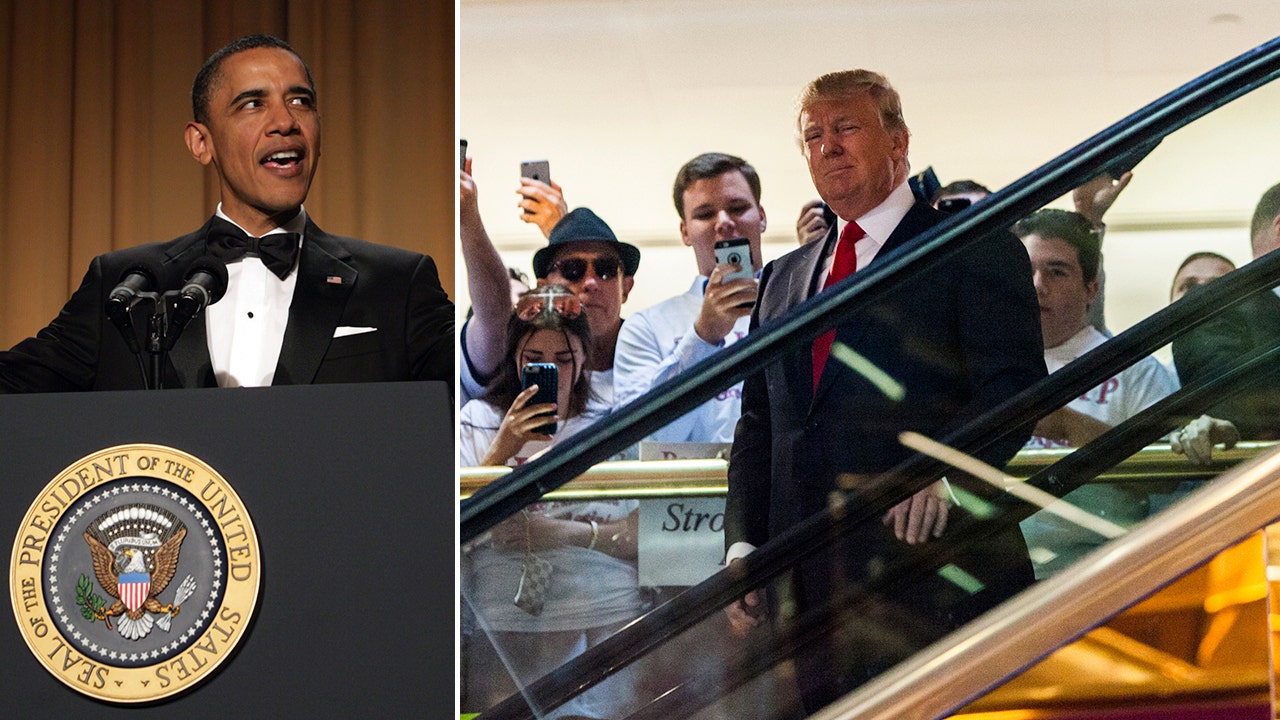
President Donald Trump will attend the White House Correspondents' Dinner on Saturday, marking his first appearance at the annual event as commander in chief after skipping it throughout his first term.
The decision puts Trump back at a Washington ritual long tied to his fraught relationship with the press and political establishment. His return also revives memories of the 2011 dinner, when then-President Barack Obama and comedian Seth Meyers mocked him from the dais at a moment that later became a widely discussed part of Trump’s political story.
"Donald Trump is here tonight," Obama said at the 2011 dinner. "Now, I know he's taken some flak lately, but no one is happier, no one is prouder to put this birth certificate matter to rest than The Donald."
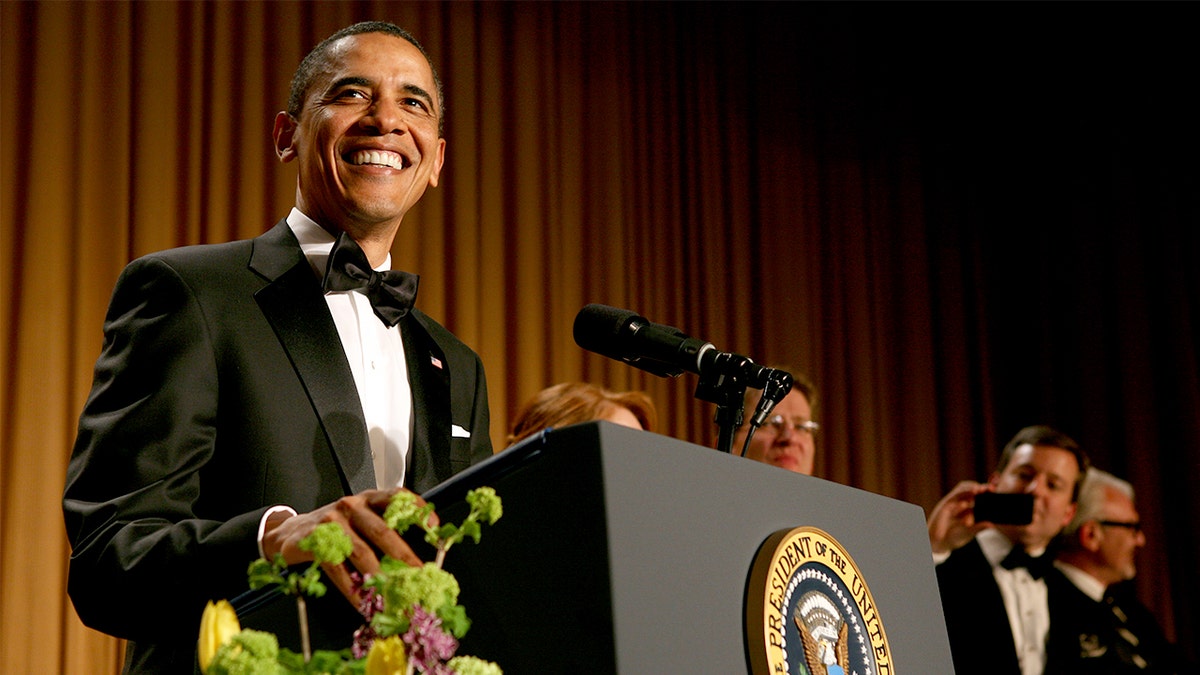
President Trump attends the White House Correspondents' Dinner for the first time as commander-in-chief after being roasted by Obama in 2011. (Martin H. Simon-Pool/Getty Images)
"And that's because he can finally get back to focusing on the issues that matter — like, did we fake the moon landing? What really happened in Roswell? And where are Biggie and Tupac?" he continued. Trump had publicly called for the release of Obama’s birth certificate, which the State of Hawaii did release that year.
The exchange underscored longstanding tensions between Trump and the Washington establishment that predated his entry into politics.
Speculation mounted that the jabs helped fuel Trump’s eventual decision to launch a presidential run, culminating in a stunning upset victory in 2016. Trump had denied that Obama’s 2011 jokes prompted his candidacy, telling The Washington Post in 2016 that "there are many reasons I’m running, but that’s not one of them."
"Donald Trump has been saying that he will run for president as a Republican, which is surprising since I just assumed he'd be running as a joke," comedian Seth Meyers added when he took the podium that night.
Trump told Fox News' "The Five" earlier this year he was treated "rudely and crudely" during the dinner, which he said influenced his decision not to attend while he was first in office.
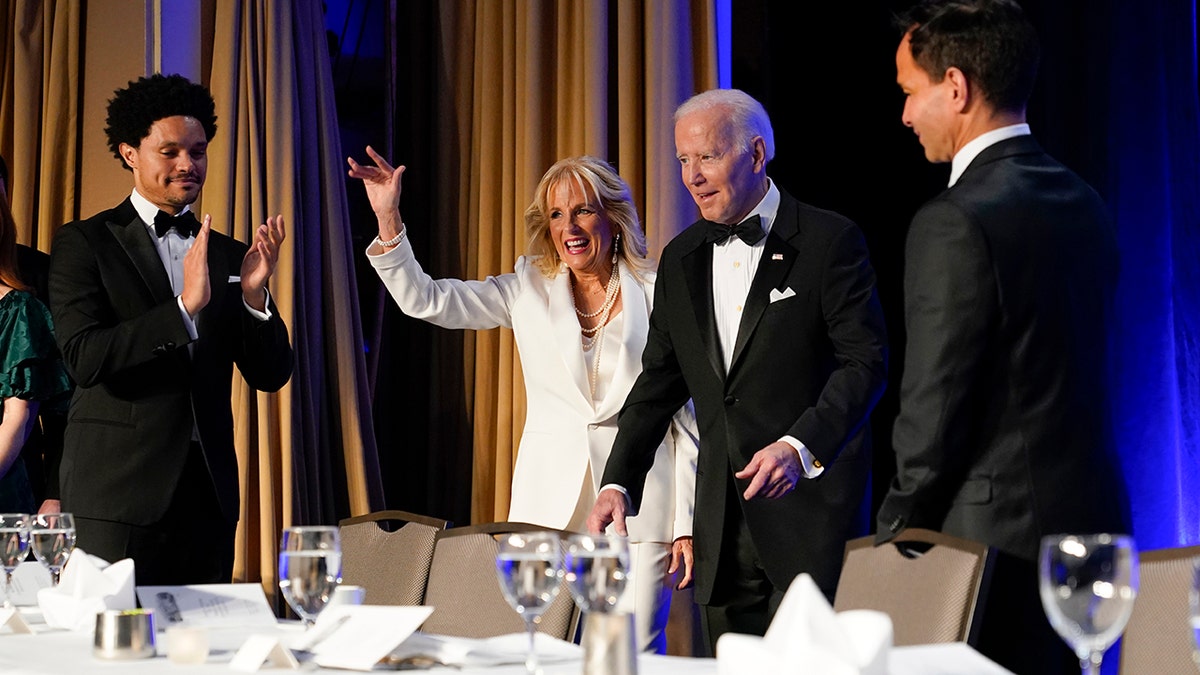
President Joe Biden and first lady Jill Biden arrive at the annual White House Correspondents' Association dinner in Washington on April 30, 2022, accompanied by comedian Trevor Noah. (Patrick Semansky/AP)
"The press was so nasty, I just – so I didn’t do it," said Trump.
He once again denied it was the 2011 dinner that sparked his interest in running for office.
"There is this theory: I was there while Barack Hussein Obama was speaking, and he was hitting me a little bit. Actually, it was very nice, and I was actually – I loved it. I really loved it," said Trump.

Flashback to Obama speaking at 2011 White House Correspondent Dinner and Trump coming down escalator to announce presidential bid. (Martin H. Simon-Pool/Getty Images, CHRIS KLEPONIS/AFP via Getty Images)
Trump announced he would attend this year’s dinner as part of America’s 250th birthday celebration. The first lady will join him.
"The White House Correspondents Association very nicely asked the President to join them at their annual dinner this year as the Honoree, which he gladly accepted," White House spokesman Davis Ingle previously told Fox News Digital.
Trump did not attend during his first term due to a contentious relationship with the media at the height of coverage of the Russia investigation.
The banquet was paused during the COVID-19 pandemic and revived in 2022 during President Biden’s administration. Trump also did not attend last year.
Ashley J. DiMella reports on politics for Fox News Digital.
Get the latest updates from the 2024 campaign trail, exclusive interviews and more Fox News politics content.
Read the full story at Fox News.
For complete details, visit the original sources linked above.
Comments
Post a Comment