Top Stories — Thursday, September 11, 2025
What is trending in the USA today? Here is Breaking News:
- Trump's pressure on Europe to slap 100% tariffs on India and China raises eyebrows — CNBC
- Pam Bondi says death penalty a possibility for Iryna Zarutska killer — Fox News
- Luxury brands bet on $160 lipsticks and $1,400 accessories to combat industry slump — CNBC
Trump's pressure on Europe to slap 100% tariffs on India and China raises eyebrows
Source: CNBC • Published: 9/11/2025, 12:03:08 PM

Reports that U.S. President Donald Trump asked the European Union to slap tariffs of up to 100% on China and India for their Russian oil purchases has raised eyebrows on both sides of the Atlantic, with Europe seen as unlikely to acquiesce to the White House's request.
Trump made the proposal — first reported by the Financial Times and confirmed to CNBC by two sources familiar with the matter — when he was called into a meeting with senior U.S. and EU officials in Washington on Tuesday. The U.S. was also prepared to "mirror" any tariffs imposed by Europe on the two countries, the FT's report added. The White House has yet to respond to CNBC's request for comments.
Asked to comment on Trump's bid, a European Commission spokesperson told CNBC Wednesday it could not disclose meeting details due to confidentiality, noting, "The EU has engaged with all relevant global partners, including India and China, in the context of its sanctions enforcement efforts. This engagement will continue."
The commission pointed to its 19th measures package its preparing against Moscow, saying it had "added new sanctions tools which allow us to target circumvention through third countries" and that the U.S. was a "crucially important partner" in Brussels' efforts to pile pressure on Russia's war economy.
Asking the EU to impose tariffs on key Russian energy clients India and China was seen as another way to punish their trade with Moscow and put pressure on Russia to end the war in Ukraine.
Yet European officials appear wary of alienating China and India, and the timing of Trump's request has raised eyebrows because it Washington is negotiating a trade deal with New Delhi.
The U.S. has already imposed a 50% tariff on India, which includes a 25% punitive duty it for its Russian oil purchases. India says the tariffs are "unfair, unjustified and unreasonable," while calling out the U.S. and the EU's trade with Russia.
Ian Bremmer, founder of Eurasia Group, told CNBC Wednesday that the White House's latest demand on the EU was "hard to square with Trump's efforts to get to a trade deal with India and China, which he prioritizes over getting a ceasefire in Ukraine (let alone things like Transatlantic collective security and deterrence," Bremmer said in emailed comments to CNBC.
"It looks more like an attempt to shift responsibility for a stronger response to Europe, creating political cover for American inaction on the sanctions front while avoiding a direct hit to U.S.-China relations."
The EU is unlikely to acquiesce, analysts say. Not only would the bloc be wary of adopting Trump's contentious tariffs strategy and burning its own bridges with India and China — despite an economic rivalry with the Asian superpowers — but the EU has its own complicated trading relationship with Russia.
"Everyone knows if the Europeans haven't been able to wean themselves off Russian energy themselves more than 3.5 years into the war, they sure as hell aren't going to cut themselves off from their top goods import supplier," Eurasia Group's Bremmer stated.
Other analysts noted that Europe, unlike Trump, has an aversion to imposing tariffs as part of a trade playbook, arguing that the bloc shouldn't be drawn into his trade wars.
"No one in Europe believes tariffs are an effective trade policy tool ... Europe would prefer diplomacy to address issues, rather than outright trade war," Bill Blain, market strategist and founder of London-based Wind Shift Capital, said in his Morning Porridge newsletter on Wednesday.
"Europe's response should be 'no.' Trump kicked the hornets nest – let him deal with the consequences. But let's see what happens," Blain concluded.
The EU has a complicated trading relationship with Russia. This is likely to prevent the bloc from punishing other nations for doing business with Moscow, when the EU does so too — albeit at a far lower level than before the Ukraine war began in 2022.
The EU's bilateral trade with its neighbor stood at 67.5 billion euros ($78.1 billion) in 2024, according to European Commission data, with the EU's imports were worth 35.9 billion euros and dominated by fuel and mining products. EU exports to Russia totaled 31.5 billion euros in 2024.
The EU has struggled to wean itself off Russian gas and LNG (liquefied natural gas) imports completely. Russia's share of EU imports of pipeline gas dropped from over 40% in 2021 to about 11.6% in 2024, while Moscow accounted for less than 19% of total EU pipeline gas and LNG imports in 2024, the commission's data notes.
The U.S. has encouraged its European allies to switch to U.S. LNG.
Trump said the EU had pledged, as part of its framework trade deal with the U.S. — which saw 15% tariffs imposed on the bloc's exports to the States — to purchase U.S. LNG, oil and nuclear energy products with an expected offtake valued at $750 billion over the next three years.
U.S. Secretary of Interior Doug Burgum told CNBC Wednesday that the Trump administration is looking to drive up the U.S.' market share of the energy sector in Europe.
"[Exporting] LNG would be one of the easiest things, [you can] put it on a ship, send it over here. Displace Russian gas, drive their market share to zero in Europe and drive U.S. market share up. That's great for America, great for our allies, and we stop funding Russia's side of the war," he told CNBC at Gastech 2025.
Pam Bondi says death penalty a possibility for Iryna Zarutska killer
Source: Fox News • Published: 9/11/2025, 11:30:41 AM
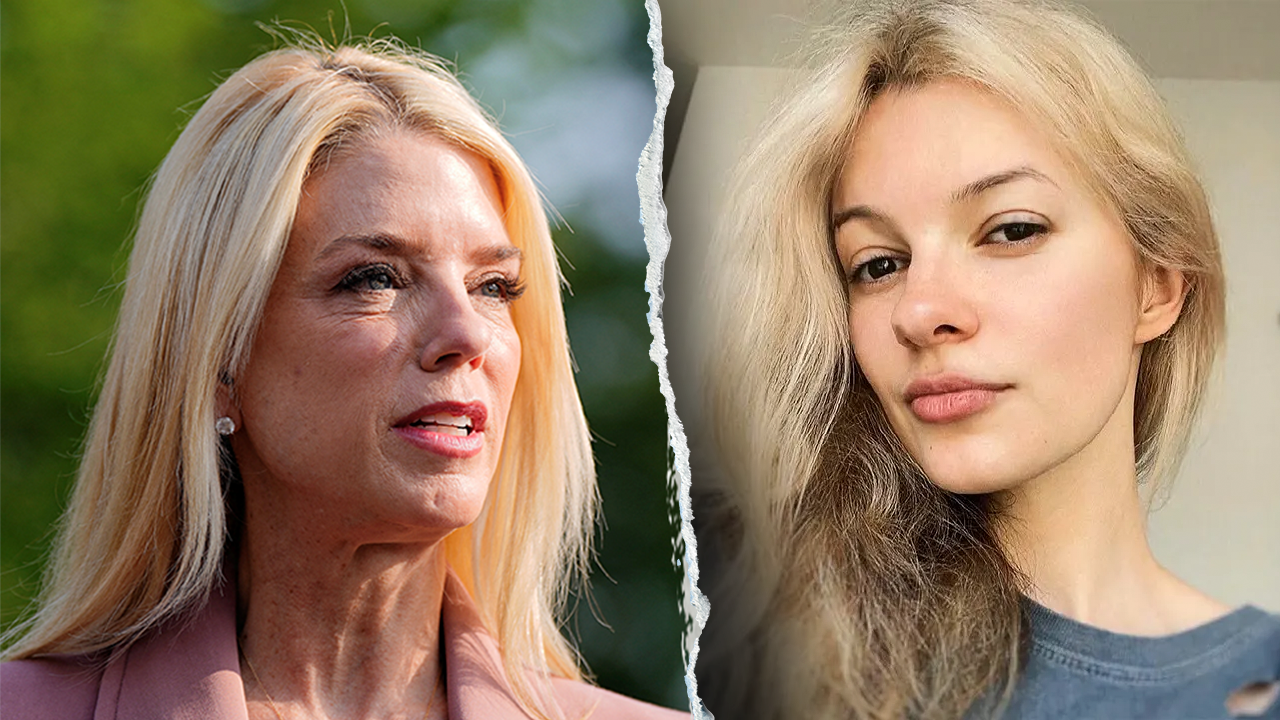
Following President Donald Trump's call for swift action, U.S. Attorney General Pam Bondi shared that the Justice Department may seek the death penalty for Iryna Zarutska's killer.
Speaking with reporters on Wednesday, Bondi shared that Zarutska's alleged murderer, Decarlos Brown Jr., has been arrested and that he is being charged federally.
"We have arrested him. We are charging him federally because it was a murder on mass transit," said Bondi.
"This young woman died a horrific, horrific death, as we all saw, captured on video," she went on, adding, "It was horrible."

Decarlos Brown Jr. (left) is being charged with fatally stabbing Ukrainian refugee Iryna Zarutska (center). U.S. Attorney General Pam Bondi (right) said the death penalty is "on the table." (Mecklenburg County Sheriff's Office (MCSO) and Reuters and Evgeniya Rush/GoFundMe)
"The steps are, we charge, then we indict. Then, legally, we make the decision whether or not to seek the death penalty. That is certainly on the table once he is indicted for this horrific crime," explained Bondi.
Zarutska, a 23-year-old refugee from Ukraine, was stabbed to death while riding a light rail train in Charlotte. The stabbing, captured on video, took place on Aug. 22 at around 10:30 p.m. as Zarutska was on her way home from work at a pizza restaurant. Still in her uniform, Zarutska sat down in front of a man, later identified as Brown, wearing a red hoodie. Moments later, the man pulled out a knife and stabbed her to death, with several bystanders looking on.
Brown, 34, was arrested shortly after the incident and hospitalized before being charged with first-degree murder. Police confirmed that Brown and Zarutska did not know one another.

Iryna Zarutska cowers as her attacker towers over her. (NewsNation via Charlotte Area Transit System)
Court records, previously reported by Fox News Digital, show Brown has a history of arrests dating back to 2011, including charges of felony larceny, robbery with a dangerous weapon, and communicating threats. Most charges were later dropped.
On Tuesday, Trump called for the government to respond to the spate of killings in the U.S. with decisive action, saying, "We have to be vicious just like they are."
He blamed Democratic leaders in major American cities for adopting "catch and release" policies "for thugs and killers."
"In Charlotte, North Carolina, we saw the results of these policies when a 23-year-old woman who came here from Ukraine met her bloody end on a public train," said the president. "She was slaughtered by a deranged monster who was roaming free after 14 prior arrests."

White House Press Secretary Karoline Leavitt speaks about the fatal stabbing of a Ukrainian woman, Iryna Zarutska, aboard a North Carolina train during a press briefing at the White House in Washington, D.C., Sept. 9, 2025. (Jonathan Ernst/Reuters)
"We cannot allow a depraved criminal element of violent repeat offenders to continue spreading destruction and death throughout our country. We have to respond with force and strength," said Trump.
In a Truth Social post, Trump wrote, "The ANIMAL who so violently killed the beautiful young lady from Ukraine, who came to America searching for peace and safety, should be given a 'Quick' (there is no doubt!) Trial, and only awarded THE DEATH PENALTY. There can be no other option!"
Fox News Digital's Emma Bussey contributed to this report.
Peter Pinedo is a politics writer for Fox News Digital.
Get the latest updates from the 2024 campaign trail, exclusive interviews and more Fox News politics content.
Read the full story at Fox News.
Luxury brands bet on $160 lipsticks and $1,400 accessories to combat industry slump
Source: CNBC • Published: 9/11/2025, 10:42:05 AM

With nearly all shoppers facing a sense of sticker price shock, some luxury fashion lines are experimenting with new, less pricey products in a bid to remain relevant and attract new consumers.
Louis Vuitton's long-awaited beauty collection hit branded stores and concessions last month, marking the latest iteration for the 171-year-old LVMH-owned luxury titan.
And while the signature scented lipsticks don't come cheap at $160 a pop, it indicates a wider shift among luxury players trying to get more shoppers through the door without diluting their flagship offerings.
"I think this is a very appropriate move," Luca Solca, sector head for global luxury goods at Bernstein, who has extensively studied diversification of luxury brands, told CNBC via email.
"Mega-brands would be wise not to sell too many of their core products and use lower absolute price categories to engage with a broader [range of] aspirational consumers," he noted.
With esteemed makeup artist Pat McGrath as creative director, Louis Vuitton may be hoping that the range of 55 lipsticks, 10 lip balms and eight eyeshadow palettes — and an accompanying $2,890 mini trunk carry case — will appeal to her cult following of young, U.S. consumers.
It follows similar expansions into cosmetics by brands such as Prada, LVMH's Celine, Dries Van Noten and, soon, Miu Miu. "Beauty is an attractive category from a financial viewpoint, as it offers high GM% [gross margins]," Bernstein said in a note in March.
Meanwhile, the explosive popularity of Labubu keychains has birthed a new wave of extravagant bag charms, including from Coach, Longchamp and a $1,420 option from Louis Vuitton, as brands bet that the "treatonomics" trend will tempt shoppers to splurge on little luxuries even as they cut back on bigger ticket items.
The luxury diversification comes as the sector grapples with an industry-wide slowdown, U.S. tariffs, and wider cost pressures.
"Brands are utilizing the playbook from 2015, 2016," Jelena Sokolova, senior equity analyst at Morningstar, said via email, referring to another period of softness in the industry, amid a dip in Chinese demand.
"Back then, brands turned to streetwear, e.g. sneakers, smaller handbags and bag charms," she said. "Those efforts have proved quite successful in the past with growing share of millennial consumer buying, supported by a general pick-up in sentiment."
This time around, the luxury industry has been under pressure since 2022, when a Covid-era boom gave way to malaise as consumers grew weary of steep — and often what they deemed unmerited — price increases.
Bank of America Securities said in a 2022 report that the sector's revenue and growth going forward would be determined by three factors: doubling the total addressable market (TAM) including with new products; increasing cultural relevance; and ongoing brand reinvestment to increase desirability.
"New categories grow the TAM and increase cultural relevance," Ashley Wallace, managing director, European consumer discretionary at Bank of America Securities, and one of the report's authors, told CNBC via email.
Other examples of new luxury categories include footwear, eyewear, perfume and small leather goods.
Lower price entry points can, in turn, bring a younger and broader consumer base into a brand's ecosystem, with the hope that shoppers will then develop a sense of brand loyalty over time.
"Younger customers have become increasingly engaged with luxury supported by cultural relevance, online engagement and advertising. As these customers move up the income ladder, accumulate more assets and intergenerational transfer of wealth continues, this younger generation will control a greater share of global wealth and consumption power therefore underpinning the structural tailwind of luxury demand," BofA Securities said in the report.
LVMH's Chief Financial Officer Cecile Cabanis acknowledged that strategy during the French luxury conglomerate's second quarter earnings call in July.
"You also need to connect with the younger generation," she told investors. "You also need to have some offer where you can meet them, onboard them and then they can go through your value ladder."
"We refuse to do that with cheap bags. The way we do it is Vuitton. Vuitton is always the best desirability, always the best quality. So you use accessible product categories in order to do it: perfume, small leather goods, and there are a few others. That's really how we work on [the] portfolio," she said.
But brands have a fine balance to strike in broadening their appeal without diluting the exclusivity of their labels.
Sokolova said that the push into new, lower price categories ought to be done alongside the expansion of a brand's more expensive product offerings, to ensure it continues to cater to more affluent consumers.
Some brands have learnt that lesson the hard way. Heavy discounting from the likes of Burberry and Gucci in the past has left them struggling to regain their status among high spenders.
Whether brands' latest phase of category diversification will prove successful in the current era of economic pressures and compressed consumer spending still remains to be seen, however.
"It was successful 10 years ago. So far, it's [too] early to say," Sokolova said.
"Any brand has to establish itself with the new generation of consumers, otherwise its appeal will age together with the current buyers. [But] ultimately, aspirational consumers are more economically sensitive so stronger economy is needed for them to sustainably grow purchases."
For complete details, visit the original sources linked above.
Comments
Post a Comment